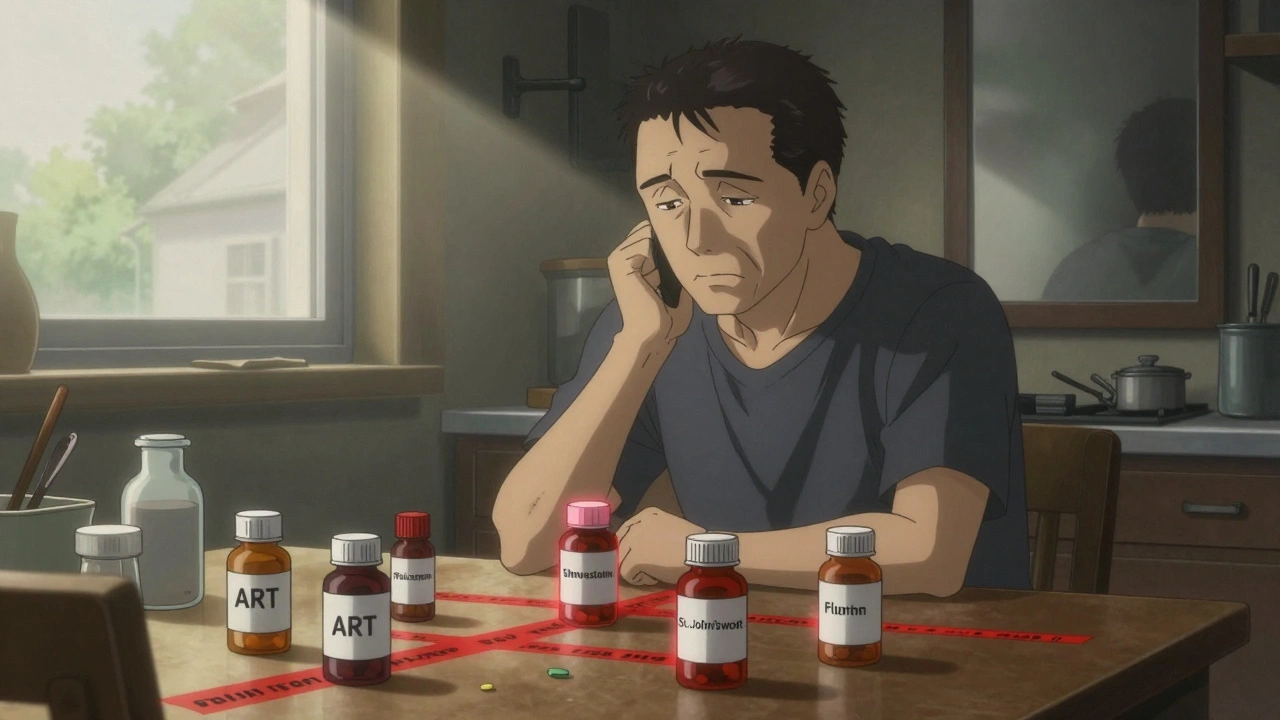
Antiretroviral Interactions: What You Need to Know About Drug Conflicts
When you’re taking antiretroviral therapy, a combination of drugs used to treat HIV by stopping the virus from multiplying. Also known as ART, it’s life-saving—but it doesn’t play well with everything else in your medicine cabinet. Even common over-the-counter pills, herbal supplements, or other prescription drugs can mess with how your HIV meds are absorbed, broken down, or cleared from your body. This isn’t just about reduced effectiveness—it can lead to dangerous spikes in drug levels, organ damage, or even treatment failure.
One major player in these conflicts is the CYP3A4 enzyme, a liver protein that breaks down many drugs, including key antiretrovirals like protease inhibitors and non-nucleoside reverse transcriptase inhibitors. If something blocks this enzyme—like grapefruit juice or certain antibiotics—your HIV meds build up to toxic levels. If something speeds it up—like St. John’s wort or some seizure meds—your meds get flushed out too fast, letting the virus bounce back. And it’s not just about HIV drugs. Many people on ART also take meds for high blood pressure, depression, or cholesterol, and those can collide too. A study from the CDC found nearly 1 in 4 people on HIV treatment were taking at least one drug with a known harmful interaction.
It’s not just about what you take—it’s about timing, dose, and even your diet. Some antiretrovirals need to be taken on an empty stomach, others with food. Skipping meals or mixing them with the wrong snack can cut absorption in half. And if you’re using supplements like magnesium or calcium antacids, they can bind to your meds and stop them from working. The good news? Most of these risks are avoidable. You don’t need to guess. Doctors and pharmacists have tools to check these combinations, and you can too. Just keep a full list of everything you take—prescriptions, vitamins, weed, sleep aids, even that turmeric capsule—and bring it to every appointment.
What you’ll find below are real, practical guides from people who’ve been there. From how grapefruit affects your meds to why that new painkiller might be risky, these posts cut through the noise. You’ll learn which drugs are safe to mix, what to avoid at all costs, and how to spot early warning signs of trouble—like unexplained fatigue, rash, or weird nausea. No fluff. No jargon. Just clear, actionable info to help you stay healthy while staying on track with your treatment.