Gut Microbiome Medication Interaction Simulator
Predicted Clinical Outcome
Select options to see how the microbiome affects your medication.
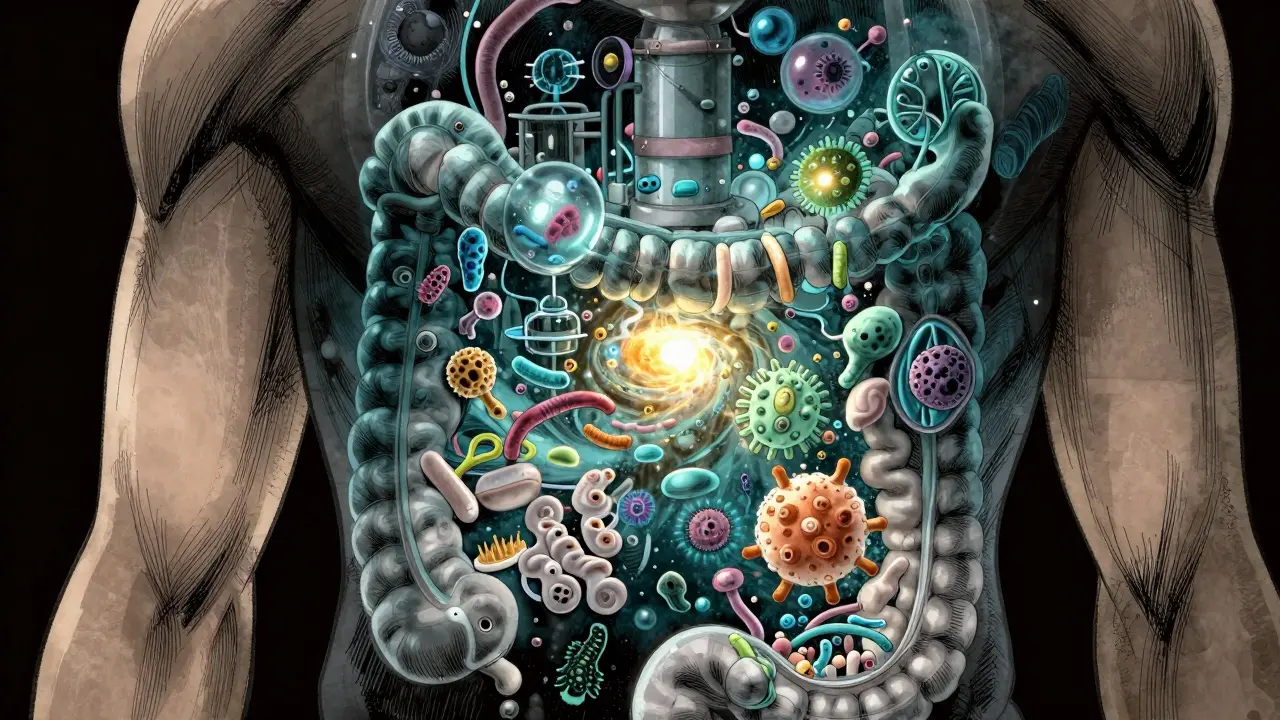
Ever wonder why a medication works like a charm for one person but causes a total disaster for another? For decades, doctors blamed genetics or liver function. But there is a hidden player in your gut that often holds the real answer. Your gut microbiome is the massive community of trillions of microorganisms living in your gastrointestinal tract. These bacteria don't just help you digest food; they act like a secondary chemical plant, processing the drugs you swallow before they even hit your bloodstream.
This isn't just a theoretical curiosity. In a landmark study published in Science, researchers from Yale discovered that gut bacteria can actually transform harmless drugs into toxic compounds. In some cases, these microbes were responsible for 20% to 80% of the toxic metabolites circulating in the body. If you've ever had a "mysterious" reaction to a pill that your doctor couldn't explain, your microbes might have been the ones rewriting the chemical script.
The Chemical Factory in Your Colon
Most of us think of drug metabolism as something that happens in the liver. While the liver is the heavy lifter, the colon is where the real microbial magic-or mayhem-happens. In the colon, bacterial density is staggering, reaching 1011 to 1012 CFU/mL. Because food and medicine can linger here for 24 to 72 hours, your bacteria have plenty of time to tinker with your medication.
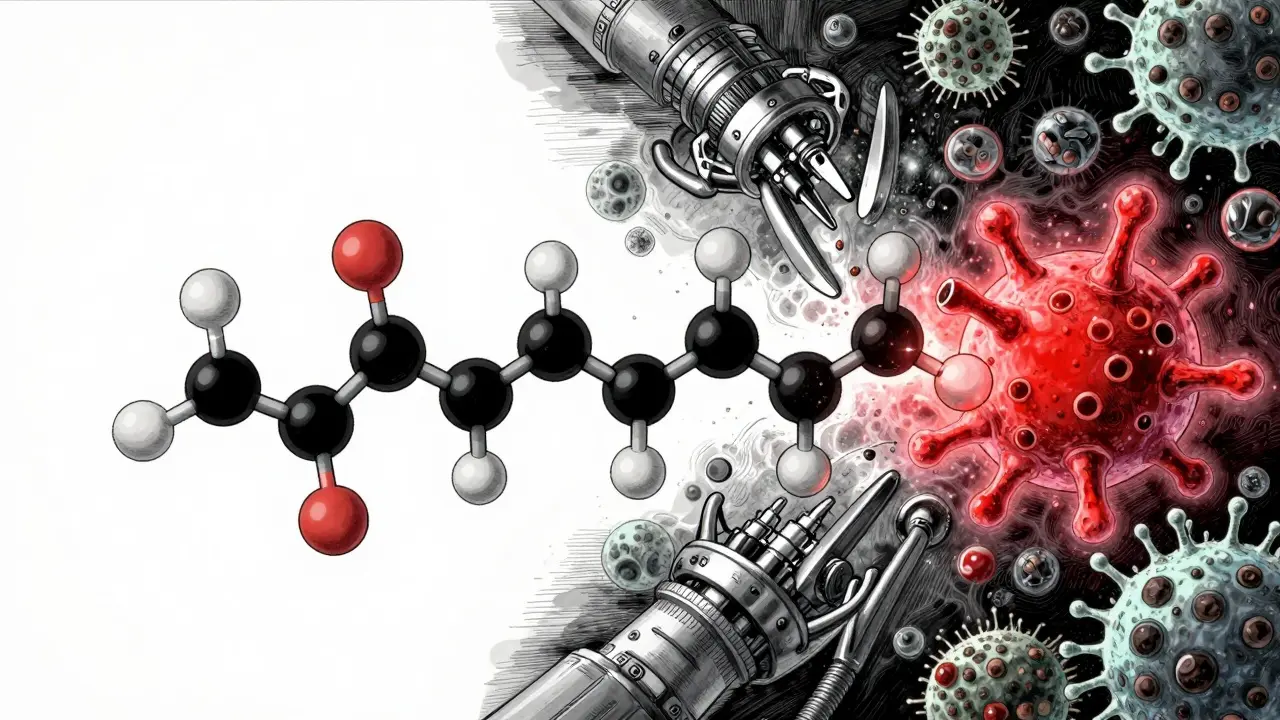
The microbiome uses several metabolic reactions to change drugs. According to research by Wilson and Nicholson, there are seven primary ways these bacteria manipulate chemicals: acetylation, deacylation, decarboxylation, dehydroxylation, demethylation, dehalogenation, and conjugate hydrolysis. Essentially, they can chop off pieces of a molecule, add new ones, or flip a chemical switch that turns a drug "on" or "off."
Take the drug Digoxin, used for heart conditions. Some people experience a 30% variation in how this drug works. Why? Because a specific bacterium called Eggerthella lenta can actually inactivate the drug. If you have a lot of these bacteria, the drug doesn't work as well; if you don't, the drug stays potent. Your biological "fingerprint" is literally changing your dose.
When the Microbiome Creates Toxic Side Effects
The most dangerous scenario is when bacteria turn a safe drug into a poison. This is common in oncology. Consider Irinotecan, a chemotherapy drug. The body breaks it down into a non-toxic form called SN-38-glucuronide. However, many patients have bacteria that produce an enzyme called beta-glucuronidase. This enzyme strips the safety shield off the drug, converting it back into the toxic SN-38 right in the gut.
The result? Severe, dose-limiting diarrhea that hits 25% to 40% of patients. This isn't a random side effect; it's a direct result of the bacterial enzyme activity. In fact, when researchers used inhibitors to block that specific enzyme, they saw a 60% to 70% reduction in the severity of the diarrhea. This proves that the side effect wasn't caused by the drug alone, but by the drug's interaction with the microbiome.
| Drug Name | Microbiome Action | Clinical Outcome | Impact Level |
|---|---|---|---|
| Irinotecan | Beta-glucuronidase reactivation | Severe intestinal damage/diarrhea | High Toxicity |
| Digoxin | Inactivation by Eggerthella lenta | Reduced drug efficacy | Variable Response |
| Prontosil | Activation via azoreductase | Drug becomes active (prodrug) | Essential for Efficacy |
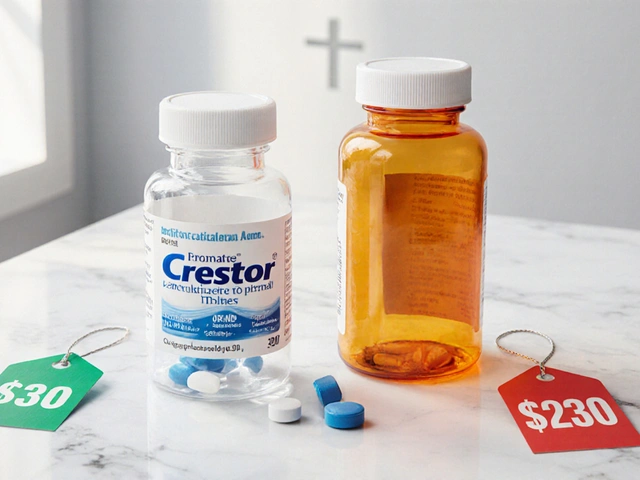
| Lovastatin | Microbiome-mediated absorption | Reduced cholesterol control | 35% Efficacy Drop |
The Double-Edged Sword of Antibiotics
We know antibiotics kill bad bacteria, but they are like a wildfire-they take out the good ones too. This creates a massive problem for drug metabolism. If your medication relies on bacteria to be activated (a "prodrug"), taking an antibiotic can stop your medicine from working entirely.
For example, the drug Prontosil requires bacterial azoreductase to work. In studies, when mice were treated with antibiotics, the efficacy of Prontosil plummeted from 90% down to just 12%. The drug was still there, but the "key" to unlock it-the bacteria-was gone.
On the flip side, killing bacteria can sometimes reduce side effects. In rodent studies, antibiotic treatment reduced the birth-defect risks (teratogenicity) caused by the drug nitrazepam by 78%. It's a chaotic trade-off: by clearing out your gut, you might stop a toxic reaction, but you might also render your primary treatment useless.

The Shift Toward Precision Medicine
We are moving away from a "one size fits all" approach to dosing. The 2023 Nature review highlights that microbiome-drug interactions are now a priority for precision medicine. With about 63 commonly prescribed drugs affected by gut bacteria, the goal is to test your microbiome before you take the pill.
Imagine a future where your doctor orders a metagenomic sequence-a fancy way of saying they map your gut bacteria-for about $300 to $500. By knowing you have high levels of Eggerthella lenta, they might increase your Digoxin dose or switch you to a different medication entirely. This could prevent a huge chunk of the 1.3 million emergency room visits the CDC attributes to adverse drug events each year in the US.
Pharmaceutical giants like Pfizer and Merck are already on board. Since 2020, they've started adding microbiome screening to Phase I clinical trials. While this adds a few million dollars to the development cost, it's a bargain compared to the half-billion dollars in liability that can come from a drug that causes unexpected toxic reactions in a large subset of the population.
What This Means for the Average Patient
You don't need to be in a clinical trial to see these effects. If you are taking a long-term medication and start a course of antibiotics, don't be surprised if the first drug starts acting differently. The Nature review pointed out that patients on lovastatin who took long-term antibiotics saw a 35% drop in the drug's ability to control cholesterol. Your liver was still working, but the microbial partners helping the drug along were missing.
We are also seeing the rise of "designer probiotics." These aren't the generic yogurts from the grocery store. Researchers are developing personalized formulations designed to modulate specific metabolic pathways. Instead of just "adding healthy bacteria," these would be tailored to ensure your body processes a specific medication without creating toxic byproducts.
Can I change my microbiome to reduce drug side effects?
Potentially, yes. While most people use over-the-counter probiotics, clinical-grade interventions like Fecal Microbial Transplantation (FMT) or targeted enzyme inhibitors (like beta-glucuronidase inhibitors) are being studied. These can specifically block the enzymes that turn drugs into toxins, significantly reducing side effects like chemotherapy-induced diarrhea.
Do all drugs interact with gut bacteria?
No, but a surprising number do. Recent analyses identify at least 117 drugs where bacteria significantly alter pharmacokinetics. About 82% of these interactions result in reduced efficacy, while 18% lead to increased toxicity.
Why doesn't my doctor already test my microbiome?
Standardization is the biggest hurdle. While metagenomic sequencing is 95% accurate for known genes, turning that data into a dosing recommendation requires complex mathematical models. We are currently in the transition from "research" to "clinical practice," with many guidelines still being drafted by the FDA and EMA.
Are antibiotics the only thing that changes these interactions?
No. Diet, age, and other medications can also shift the composition of your gut flora. Even the drugs themselves can create a feedback loop, where the medication changes the microbiome, which then changes how the drug is metabolized.
Is this research only for cancer patients?
While oncology is leading the way (65% of new drug applications now include microbiome data), the research extends to neurology (42%) and cardiology (31%). From anti-seizure meds like clonazepam to heart meds like digoxin, the impact is widespread across many medical fields.