
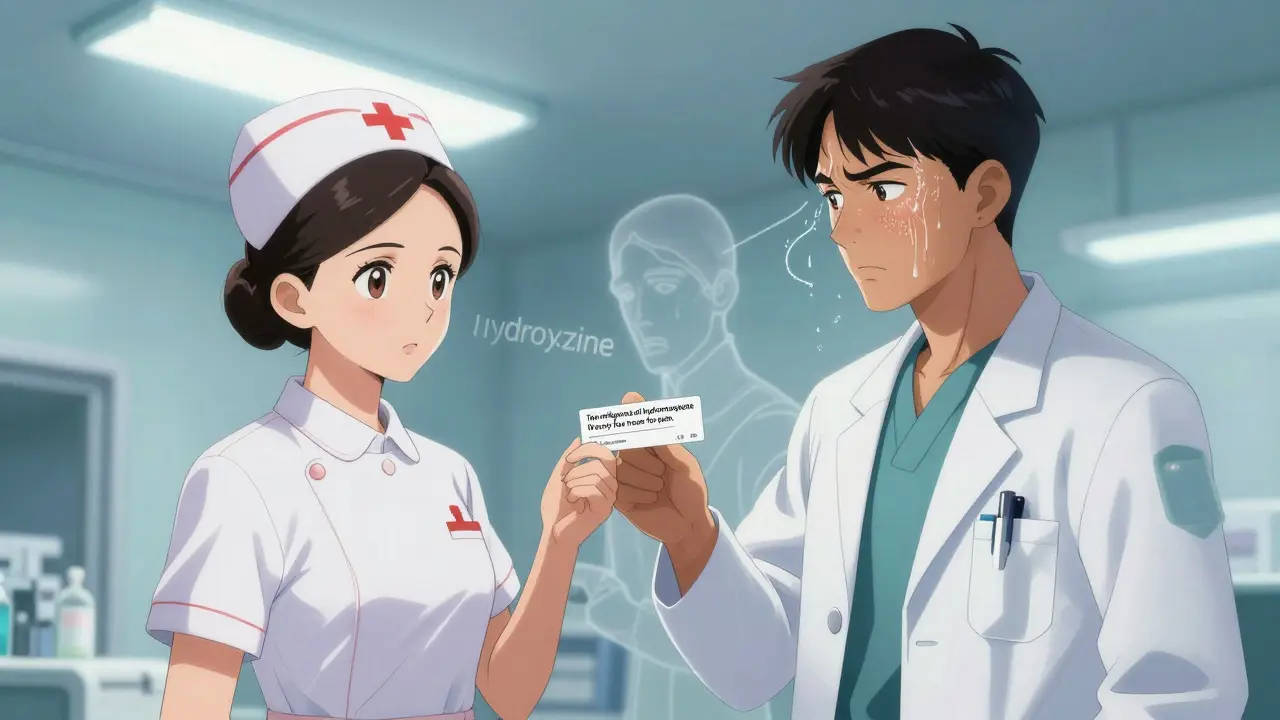
Every year, thousands of patients in U.S. hospitals are affected by medication errors - and a surprising number of them start with a simple phone call or a quick spoken order in the hallway. Verbal prescriptions are still common, even in 2025. They happen when a doctor says, "Give 5 milligrams of morphine IV now," or "Start amoxicillin 500 mg twice daily." It’s fast. It’s convenient. But it’s also dangerous.
Think about it: a nurse hears "Hydralazine" and writes down "Hydroxyzine." One letter off. One patient, one overdose. That’s not fiction. It’s a documented error from the Pennsylvania Patient Safety Authority. And it’s not rare. According to the Institute for Safe Medication Practices Canada, verbal orders have a 30-50% error rate. That’s more than 1 in 3 orders going wrong. The good news? You can cut that risk in half - and sometimes more - by following simple, proven steps.
Why Verbal Prescriptions Still Exist
You might wonder: if electronic systems are so accurate, why do we still use verbal orders? The answer is simple - sometimes, there’s no time.
In the ER, a trauma patient arrives with internal bleeding. The surgeon needs epinephrine stat. Waiting to log into the system, type the order, wait for approval - that delay could cost a life. In the operating room, sterile fields make typing impossible. During shift changes, when the night nurse hands off to the day team, critical orders get passed along verbally. Even in outpatient clinics, when EHRs are down or the provider is juggling three patients at once, verbal orders happen.
They’re not going away. The Joint Commission and CMS still allow them. In fact, as of 2025, about 10-15% of all medication orders in hospitals are still verbal. In emergency departments, that number jumps to 25-30%. In ambulatory care - think urgent care or small clinics - it’s even higher, around 20-25%. So if you work in healthcare, you need to know how to do this safely.
The One Rule That Saves Lives: Read-Back
The single most effective tool to prevent errors from verbal prescriptions? Read-back verification. It’s not optional. It’s mandatory under The Joint Commission’s National Patient Safety Goal 2E, which has been in place since 2006.
Here’s how it works:
- The prescriber gives the full order: "Give 10 milligrams of hydromorphone IV every 4 hours for pain."
- The receiver repeats it back word-for-word: "You want 10 milligrams of hydromorphone IV every 4 hours for pain?"
- The prescriber confirms: "Yes, that’s correct."
That’s it. Sounds basic? It is. But in a 2006 study by the Agency for Healthcare Research and Quality, hospitals that enforced read-back saw a 50% drop in verbal order errors. Nurses on AllNurses.com have shared stories where read-back caught a 10-fold dosing error between hydralazine and hydroxyzine - two drugs that sound nearly identical. Without that repeat, the patient could have died.
Don’t skip this step. Even if the prescriber is your boss. Even if they’re in a hurry. Even if you’ve worked with them for 10 years. That’s when mistakes happen.
How to Say It Right: Phonetics, Numbers, and No Abbreviations
It’s not just about repeating. It’s about how you say it.
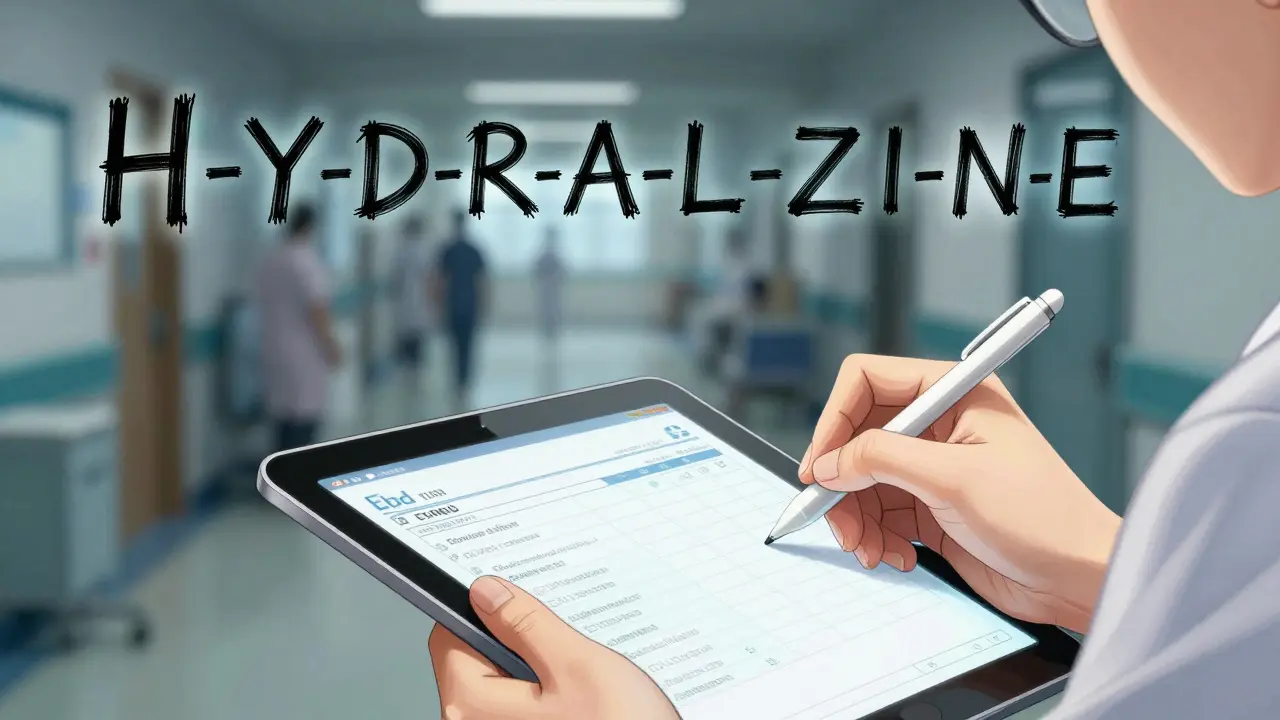
Drug names? Spell them out. Loudly. Clearly. Say "A-M-P-I-C-I-L-L-I-N," not just "ampicillin." Say "H-Y-D-R-A-L-A-Z-I-N-E," not "hydra-lazine." The ISMP Canada guidelines from 2020 specifically call this out. Sound-alike drugs like Celebrex and Celexa, Zyprexa and Zyrtec, or Hydralazine and Hydroxyzine are common culprits in errors. One study found that 34% of verbal order mistakes come from these confusing names.
Numbers? Say them two ways. "Fifteen milligrams. One-five milligrams." That catches "15" vs. "50" or "1.5" vs. "15." A nurse in Dallas told me last year how she caught a wrong dose of insulin because the doctor said "ten units" - she repeated it as "ten, one-zero" - and he corrected himself: "No, one unit. I meant one unit." That’s a life saved.
And never use abbreviations. Ever. "BID" becomes "twice daily." "QID" becomes "four times a day." "PO" becomes "by mouth." "IM" becomes "intramuscular." "SC" becomes "subcutaneous." The Joint Commission banned these abbreviations in 2004. They’re still used - and they still cause mistakes. A 2021 Medscape survey found that 68% of nurses had a near-miss every month because of unclear or abbreviated orders.
High-Alert Medications: When Verbal Orders Are Forbidden
Not all drugs should be ordered verbally. Some are too dangerous.
The Pennsylvania Patient Safety Authority and Washington State Department of Health both say: no verbal orders for chemotherapy unless it’s to hold or stop treatment. Same with insulin, heparin, and opioids - unless it’s a true emergency.
Why? Because the margin for error is razor-thin. One extra milligram of insulin can send a patient into a coma. One extra 10 mg of morphine can stop breathing. In 2006, a premature infant in a NICU received a lethal dose of antibiotics because two orders - ampicillin and gentamicin - were spoken at once. The nurse wrote down the wrong one. The baby died.
Today, most hospitals have policies that block verbal orders for these drugs unless the prescriber is physically present and the order is immediately documented. If you’re asked to take a verbal order for insulin or fentanyl, say no. Redirect the prescriber to the EHR. If they refuse, escalate it. That’s your job.
Documentation: The Only Real Record
Here’s the hard truth: the only real record of a verbal prescription is in the memory of the person who heard it - and the person who wrote it down. If it’s not documented, it didn’t happen.
Every verbal order must be written into the electronic health record immediately - within minutes, not hours. The documentation must include:
- Patient’s full name and date of birth
- Exact medication name (spelled out)
- Dosage with units (e.g., "5 mg," not just "5")
- Route (IV, IM, PO, etc.)
- Frequency (e.g., "every 6 hours")
- Indication (why it’s being given - "for pain," "for hypertension")
- Name and title of the prescriber
- Date and time the order was given
- Date and time it was transcribed
CMS requires authentication within 48 hours. But top hospitals like Johns Hopkins require it before the shift ends. That’s the standard you should aim for. If you’re the nurse taking the order, transcribe it right then. Don’t wait. Don’t assume the doctor will do it later.
What Happens When It Goes Wrong
Errors from verbal prescriptions aren’t just statistics. They’re real people.
A 72-year-old woman in Texas was given 10 times her normal dose of digoxin because the doctor said "0.125 mg" and the nurse heard "1.25 mg." The patient went into cardiac arrest. She survived - but had permanent kidney damage.
A man in Florida received a double dose of warfarin because the order was spoken during a loud ambulance transfer. The nurse didn’t read back. He bled internally. He died.
These aren’t outliers. They’re preventable. And they happen because people skip steps. They assume. They rush. They don’t spell things out.
How to Build a Culture of Safety
Technology helps - but culture saves lives.
A 2020 survey by The Joint Commission found that 63% of nurses said prescribers resist read-back. Why? Because they think it’s slow. Because they’re embarrassed. Because they don’t want to be questioned.
Fixing that starts with training. ECRI recommends 3-5 supervised verbal order transactions before staff are cleared to do it alone. But training isn’t enough. You need to normalize asking questions.
Use scripts. "Just to be safe, can you spell that for me?" "Can you say the dose again?" "Is this for pain or anxiety?" Make it part of your routine. Make it okay to say, "I’m not sure - can we double-check?"
Hospitals that do this well have quiet, respectful cultures. Nurses feel safe speaking up. Prescribers don’t get defensive. Everyone knows: safety isn’t about blame. It’s about getting it right.
What’s Next? The Future of Verbal Prescriptions
Electronic systems are getting smarter. Voice recognition is improving. KLAS Research predicts verbal orders will drop to 5-8% by 2025. But Dr. Robert Wachter, writing in NEJM Catalyst in 2023, says this: "Some clinical moments will always need a voice. A surgeon in the OR. A paramedic in the field. A nurse during a code blue."
That means safety protocols aren’t going away. They’re becoming more critical.
The FDA is working on standardizing how high-risk drug names are pronounced - a move that could cut confusion by half. States are tightening rules. By 2025, 42 states have made read-back verification part of nursing licensure requirements.
So whether you’re a nurse, doctor, pharmacist, or medical assistant - your role in this system matters. You’re not just a messenger. You’re the last line of defense.
Next time someone gives you a verbal order, don’t just write it down. Repeat it. Spell it. Confirm it. Document it. That’s not bureaucracy. That’s what keeping someone alive looks like.
Are verbal prescriptions still legal in the U.S.?
Yes, verbal prescriptions are still legal and permitted under CMS and The Joint Commission regulations. However, they must follow strict safety protocols, including mandatory read-back verification and immediate documentation. Some states and institutions have additional restrictions, especially for high-alert medications like insulin, heparin, and opioids.
What’s the biggest cause of verbal prescription errors?
The biggest cause is sound-alike drug names - like Hydralazine vs. Hydroxyzine, or Celebrex vs. Celexa. Mishearing these leads to the wrong medication being given. Other major causes include unclear pronunciation, abbreviations (like BID or PO), and skipping the read-back step.
Can a nurse refuse to take a verbal order?
Yes - and they should, if the order is unsafe. Nurses are legally and ethically responsible for patient safety. If a verbal order is for a high-alert drug in a non-emergency, lacks proper details, or comes without read-back, the nurse has the right - and duty - to ask for clarification or refuse until the order is properly documented in the EHR.
How long do I have to document a verbal order?
CMS requires authentication by the prescriber within 48 hours. But best practice is to transcribe the order into the EHR immediately - within minutes - and get it authenticated before the shift ends. Leading hospitals like Johns Hopkins require same-shift authentication to reduce delays and errors.
Why can’t we just use electronic orders all the time?
Electronic systems are ideal - and reduce errors by 37%. But in emergencies, sterile environments like operating rooms, or during rapid patient transfers, typing isn’t possible. Verbal orders fill a necessary gap. The goal isn’t to eliminate them completely, but to make them as safe as possible when they’re unavoidable.



Abby Polhill
December 22, 2025 AT 20:50Man, I’ve seen so many near-misses with sound-alike drugs. Hydralazine vs. Hydroxyzine? That’s not a typo-it’s a death sentence waiting to happen. I work in the ER, and half the time, docs just shout orders like they’re calling a play. Read-back isn’t bureaucracy-it’s your only shield. If you skip it, you’re gambling with someone’s life. And don’t even get me started on BID vs. QID. Those abbreviations should be banned with fire.
Lindsey Kidd
December 24, 2025 AT 01:41This is so important 🙏 I just had a nurse stop me mid-order because I said ‘ten units’ instead of ‘ten, one-zero.’ She saved my butt-and probably a patient’s life. Read-back isn’t annoying, it’s sacred. Let’s normalize asking for spelling, even if you’ve worked with someone for 15 years. Safety > ego. 💪
Austin LeBlanc
December 24, 2025 AT 21:12Oh please. You’re overcomplicating this. I’ve been doing this for 20 years and I’ve never had a problem. Everyone knows what ‘hydralazine’ sounds like. You think nurses are stupid? They’re not. You’re just creating unnecessary friction because you’re scared to trust your colleagues. Read-back is a formality, not a lifesaver. Stop treating healthcare like a courtroom.
Aurora Daisy
December 26, 2025 AT 09:59Of course Americans need a 12-step protocol just to say ‘give 5mg.’ In the UK, we just say it, write it, and move on. You’ve got more regulations than a tax audit. I’ve worked in three NHS hospitals and never once had a misheard order. Maybe your system’s broken because you’ve lost the ability to trust a human voice. Just say the damn drug name clearly. No need for a TED Talk.
Isaac Bonillo Alcaina
December 27, 2025 AT 08:15Let’s be precise: the Joint Commission mandates read-back under NPSG.2E. The Agency for Healthcare Research and Quality documented a 50% reduction in errors when enforced. The ISMP Canada 2020 guidelines explicitly prohibit phonetic ambiguity in high-alert medications. Your casual dismissal of these protocols is not only irresponsible-it’s a violation of professional standards. If you’re not following these, you’re not practicing medicine. You’re winging it.
Harsh Khandelwal
December 28, 2025 AT 13:44Bro, I think the whole system’s rigged. They want you to read back because they’re hiding something. Why do they need to spell out every drug? Why not just let the AI handle it? I heard a nurse say they’re testing voice-recognition implants in the OR. They’re gonna replace us with bots and then blame us when it fails. Meanwhile, we’re stuck spelling out ‘H-Y-D-R-A-L-A-Z-I-N-E’ like we’re in a spy movie. Who’s really controlling this?
Delilah Rose
December 29, 2025 AT 10:19I’ve been a nurse for 18 years, and I’ve seen everything-from the guy who yelled ‘morphine’ during a code blue to the new intern who wrote ‘500mg’ instead of ‘5mg’ because he didn’t hear the decimal. I used to think read-back was slow, but after I caught a 10x insulin dose because I asked for the number twice, I became a fanatic. It’s not about trust-it’s about redundancy. Humans mishear. Machines misread. But if you say it, repeat it, write it, and confirm it, you’re building layers of safety. And honestly? It’s kind of beautiful how something so simple can be so powerful.
Spencer Garcia
December 30, 2025 AT 11:11Read-back works. Spell out drug names. No abbreviations. Document immediately. That’s it. No fluff. Just do it.
Bret Freeman
January 1, 2026 AT 05:25Let me tell you about the time my attending screamed ‘FENTANYL 100 MCG IV’ during a trauma and I didn’t read it back because I didn’t want to look ‘weak.’ He was right-she coded 20 minutes later. Turned out he meant 10 MCG. I didn’t say a word. I just cried in the supply closet. That’s the cost of silence. Don’t be me. Say it back. Even if your boss glares. Even if you’re tired. Even if you’re wrong. Better to look foolish than bury someone.
Blow Job
January 2, 2026 AT 16:17Yo, I just started my first hospital rotation and I was terrified to ask for read-back. But then I did-and my preceptor said, ‘Good. You just passed your first real test.’ Turns out, everyone’s secretly scared of messing up. We just pretend we’re not. So stop pretending. Ask for spelling. Say the dose twice. Write it down before you leave the room. That’s not being extra. That’s being a professional. And honestly? It feels damn good to know you didn’t screw someone over today.
Christine Détraz
January 4, 2026 AT 14:01I used to think this was all overkill until my cousin ended up in the ICU because a nurse mixed up ‘Hydroxyzine’ and ‘Hydralazine.’ She was supposed to get it for anxiety. Instead, she got a blood pressure crusher. She survived, but her kidneys never recovered. That’s not a statistic. That’s my cousin. I used to roll my eyes at ‘protocols.’ Now I repeat every order out loud-even when I’m alone. Because if you’re not the one who caught the mistake, you’re the one who caused it. And nobody deserves that.