
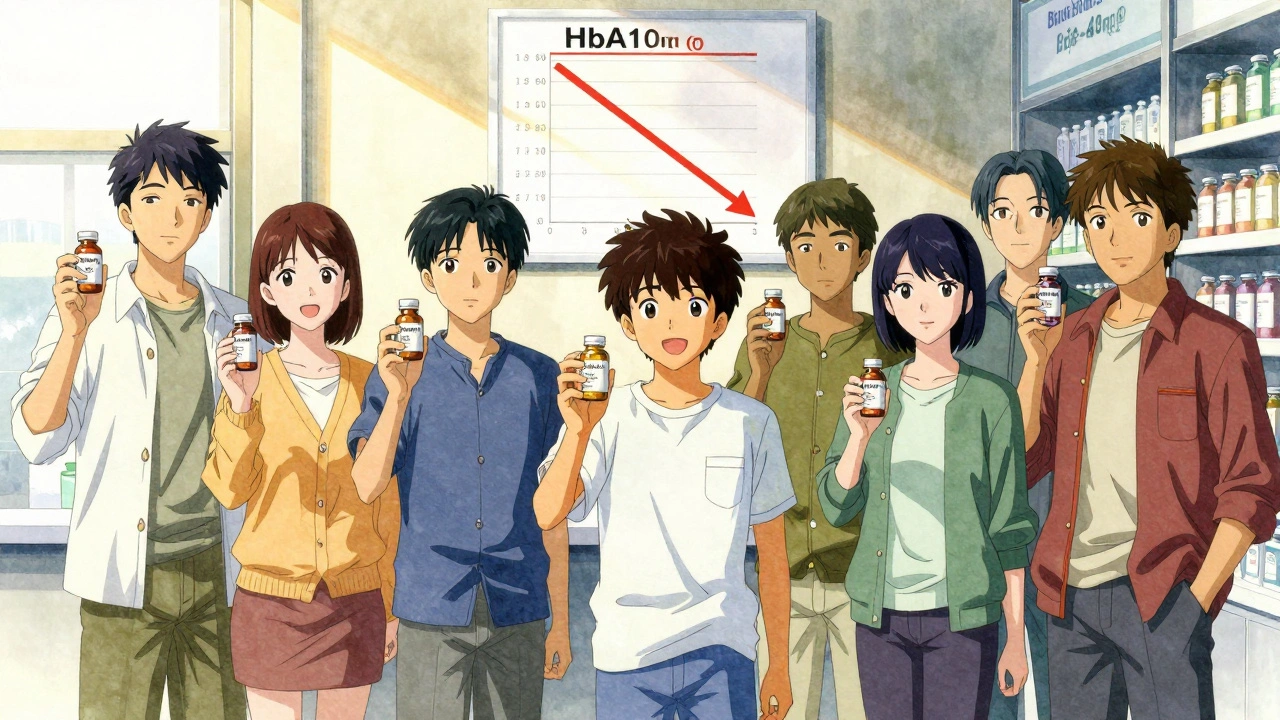
Managing Type 2 diabetes often means taking more than one pill a day. Over time, many people find that metformin alone isn’t enough to keep blood sugar in check. That’s where diabetes combination medications come in-two drugs in one tablet, designed to work together and simplify your routine. But here’s the real question: can you switch to a cheaper generic version without risking your health?
What Are Diabetes Combination Medications?
Diabetes combination medications mix two different types of blood sugar-lowering drugs into a single pill. Most commonly, they pair metformin-with its proven ability to reduce liver glucose output and improve insulin sensitivity-with another agent like a DPP-4 inhibitor, SGLT2 inhibitor, or sulfonylurea. These combinations aren’t just convenient; they’re clinically effective. Studies show they can lower HbA1c by 1.0% to 1.8%, compared to just 0.7% to 1.0% with a single drug. That difference matters. Every 1% drop in HbA1c reduces your risk of diabetes complications by about 35%.There are about 25 of these combo drugs on the U.S. market right now. But only five have generic versions available. The rest? Still brand-only, and often expensive. Janumet (sitagliptin/metformin), Synjardy (empagliflozin/metformin), and Jentadueto (linagliptin/metformin) are examples of newer combos that still carry high prices because of patent protections. Meanwhile, older combos like Metaglip (glipizide/metformin) and Glucovance (glyburide/metformin) have been generic for over a decade.
Why Generics Matter for Diabetes Care
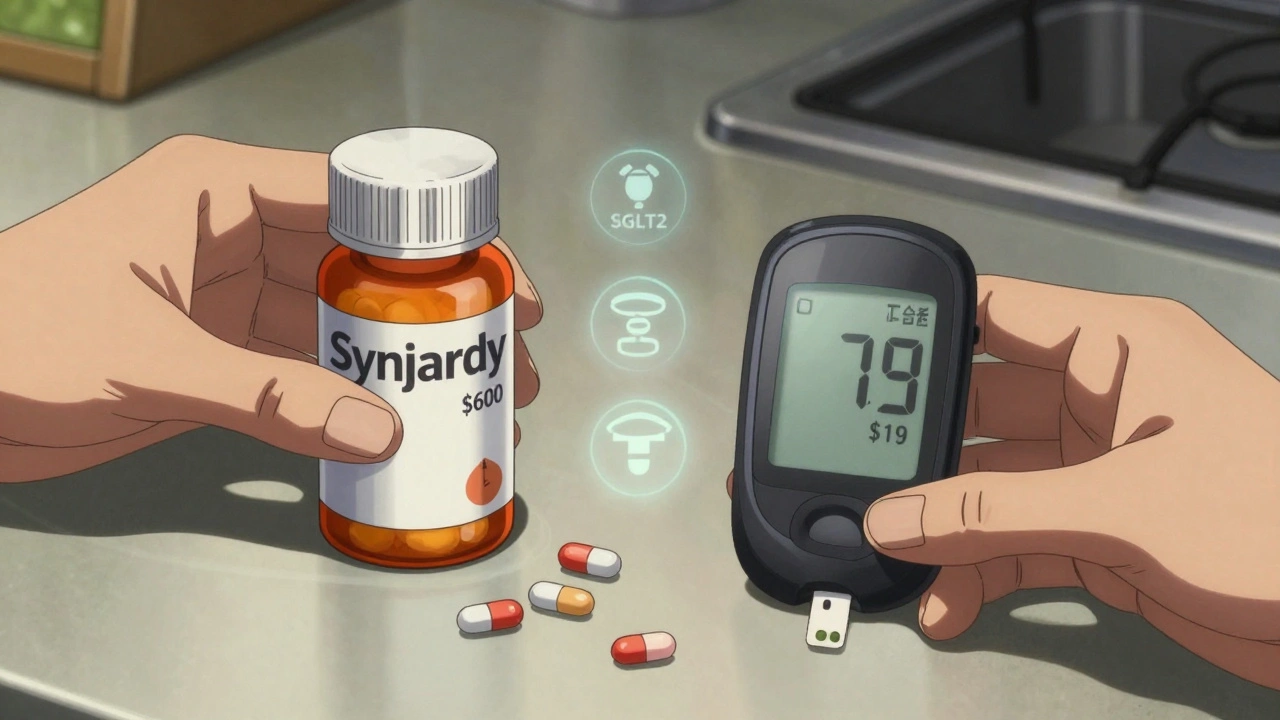
Cost is a huge barrier. A 30-day supply of brand-name Synjardy can cost nearly $600 without insurance. The generic version of Metaglip? Around $19 for the same quantity. That’s a 95% drop in price. For people on fixed incomes or with high-deductible plans, switching to generic can mean the difference between staying on treatment and skipping doses.A 2019 study in the Journal of Managed Care & Specialty Pharmacy found that patients on combination pills were 37% more likely to stick with their meds than those taking multiple separate pills. But if the cost is too high, even that benefit disappears. Generics fix that. They’re not just cheaper-they’re equally safe and effective for most people, as long as they’re approved by the FDA.
Here’s the catch: not all generics are created equal. While the active ingredients must match the brand, the inactive ingredients-like fillers and coatings-can differ. That’s why some people report changes in side effects or how the pill feels in their throat. One Reddit user shared that switching from brand Glucovance to generic caused nausea and dizziness until they adjusted their meal timing. Another mentioned swallowing issues because the generic tablet was larger.
Which Combination Medications Have Generic Versions?
As of late 2025, here’s the reality:- Metaglip (glipizide/metformin) - Generic since 2012. Available in 2.5/500mg and 5/500mg strengths. Cash price: $18-$22 for 60 tablets.
- Glucovance (glyburide/metformin) - Generic since 2010. Available in 1.25/500mg, 2.5/500mg, and 5/500mg. Cash price: $15-$20 for 60 tablets.
- Jentadueto (linagliptin/metformin) - Generic approved in May 2023, but not yet widely available due to patent delays. Expected to hit shelves in early 2025.
- Janumet (sitagliptin/metformin) - Still brand-only. Patent expired in January 2024, but generic versions are expected in late 2025 or early 2026.
- Synjardy (empagliflozin/metformin) - No generic yet. Patent protection lasts until at least 2026.
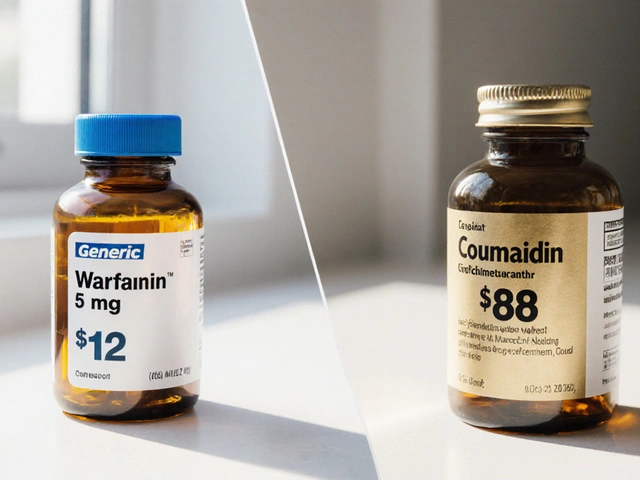
Notice a pattern? The older the combo, the more likely it’s generic. Newer drugs-especially those with SGLT2 or DPP-4 inhibitors-stay expensive longer because manufacturers extend patents on delivery systems, like extended-release (XR) coatings. And here’s the kicker: generics usually only come in immediate-release form. If your doctor prescribed Janumet XR, you can’t just switch to a generic XR version because one doesn’t exist yet.
When Substitution Works-and When It Doesn’t
Switching from brand to generic isn’t always simple. It works best when:- You’ve been stable on your current meds for six months or more.
- Your HbA1c is under control (below 7%).
- You’re on a combo with a long history of generic use, like Metaglip or Glucovance.
But avoid switching if:
- You’re on an extended-release version (XR) and no generic XR exists.
- You’ve had side effects like hypoglycemia or GI issues that could be tied to how the drug is released in your body.
- Your doctor has fine-tuned your dose based on how your body responds to the brand version.
One case from the Diabetes Daily forum stands out: a patient switched from brand Glucovance to generic and started having severe low blood sugar episodes. The issue? The generic glyburide was absorbed faster. That’s not common-but it happens. The FDA allows generics to vary by up to 25% in absorption rate compared to the brand. For most drugs, that’s fine. For diabetes meds, even small changes can affect glucose levels.
What to Do Before and After Switching
If your pharmacy automatically switches your prescription to a generic-or if you’re considering asking for one-here’s what to do:- Ask your doctor first. Don’t assume all generics are interchangeable. Some combinations are more sensitive than others.
- Check your insurance formulary. Some plans only cover generics, others require prior authorization for brand-name combos.
- Monitor your blood sugar closely. For the first 2-4 weeks after switching, test your levels 3-4 times a day-before meals and at bedtime. Look for patterns: are your numbers higher? More erratic? Do you feel more tired or shaky?
- Keep a log. Note any changes in energy, appetite, or side effects. Bring it to your next appointment.
- Call your provider if you notice problems. Don’t wait. A small adjustment in dose or timing might be all you need.
Also, be aware: generic manufacturers rarely offer patient support programs. Brand-name companies often have nurse hotlines, free glucose monitors, or copay cards that cut costs by 75-100%. With generics, you’re on your own-unless you use GoodRx, SingleCare, or manufacturer assistance programs.

The Future of Generic Diabetes Combos
The tide is turning. More than 78% of endocrinologists plan to prescribe more generic combinations in the next two years, according to the American Diabetes Association’s 2023 Economic Report. Patents for Janumet XR and other newer combos will expire between 2025 and 2027. Once they do, prices could drop by 80-90%.By 2030, experts predict the generic segment of the diabetes combo market will grow at nearly twice the rate of branded versions. That’s good news for patients. Right now, the average annual cost for a brand-name combo is around $2,850. If generics take over, that could fall to under $420-according to Congressional Budget Office projections.
But here’s the truth: cost savings shouldn’t come at the cost of safety. The FDA’s approval process for generics is strict, but real-world experience shows that some patients need the exact formulation they’ve been on. That’s why your doctor’s input matters more than your pharmacist’s automatic substitution.
Final Thoughts: Is Generic Right for You?
Generic diabetes combination medications are a powerful tool-especially for people who’ve struggled with cost or pill burden. For many, switching to Metaglip or Glucovance generics has meant better adherence, fewer skipped doses, and more stable blood sugar.But they’re not a one-size-fits-all solution. If you’re on a newer combo like Synjardy or Janumet XR, you may not have a choice yet. If you’re on an older combo and your insurance pushes you toward generic, don’t panic-but don’t skip the monitoring either.
Bottom line: Talk to your doctor. Test your numbers. Track your symptoms. And if you feel different after switching, speak up. Your health isn’t a cost-center. It’s your priority.

Lynn Steiner
December 3, 2025 AT 17:16I switched to generic Glucovance last year and my blood sugar went haywire. I felt like a zombie for two weeks. My doctor said it was 'probably just coincidence'-yeah right. I'm not some lab rat for Big Pharma's cost-cutting schemes. 😡
Alicia Marks
December 5, 2025 AT 01:13Small changes can make a big difference-keep testing, keep tracking, and don’t let anyone make you feel silly for caring about your health. You’ve got this. 💪
Paul Keller
December 6, 2025 AT 04:36It is imperative to recognize that the pharmacokinetic variability inherent in generic pharmaceuticals, while statistically permissible under FDA guidelines, may introduce clinically significant fluctuations in glycemic control among metabolically sensitive populations. The 25% bioavailability variance threshold, while acceptable for antihypertensives or analgesics, is not commensurate with the precision required in insulin-sensitive pathways. One must exercise due diligence when considering substitution, particularly in elderly patients with polypharmacy or renal impairment.
Jay Everett
December 6, 2025 AT 05:26Bro, generics are the unsung heroes of diabetes care. I was paying $500/month for Janumet until I switched to generic Metaglip-my wallet cried tears of joy, and my A1c stayed at 6.2%. Yeah, the pill’s a little bigger and tastes weird, but I’d rather chew on chalk than file for bankruptcy. 🙌 Also, GoodRx saved my life. Use it. Share it. Love it.
Rebecca M.
December 7, 2025 AT 07:21Oh wow, so now we’re supposed to be grateful that Big Pharma lets us have the *leftovers* after they milked us dry for 15 years? How noble. I’m sure the shareholders are just *dying* to see you save $580 a month. 🙃
Roger Leiton
December 9, 2025 AT 01:52Just switched to generic Glucovance last month. First week? Felt a little off-more hungry, a bit shaky. Kept logging my sugars. By week 3, I was better than before. Turns out my old brand had a weird coating that slowed absorption. Generic hit faster. My doc adjusted my dose by 0.5mg glyburide. Now I’m golden. 📊❤️
Laura Baur
December 9, 2025 AT 14:19It is not merely a matter of cost-it is a moral failure of our healthcare infrastructure that patients must gamble with their metabolic stability to afford basic care. The FDA’s 25% bioequivalence standard is a legal fiction masquerading as medical safety. One cannot reduce human physiology to a statistical bell curve and expect equilibrium. The fact that we normalize this as ‘acceptable risk’ reveals the depth of our societal decay. We are not treating disease-we are optimizing profit margins under the guise of accessibility.
Jack Dao
December 10, 2025 AT 22:13Anyone who switches generics without consulting their endo is basically playing Russian roulette with their kidneys. I’ve seen patients end up in the ER because they ‘trusted the pharmacy.’ Don’t be that guy. 🤡
dave nevogt
December 11, 2025 AT 05:03There’s something quietly tragic about how we’ve turned medicine into a transaction. We’re told to ‘take control’ of our health, but the system makes control contingent on income. I wonder-when we finally have generic Janumet XR, will we celebrate the lower price… or mourn the fact that it took 12 years of profit extraction before the option became available? The medicine works. The system doesn’t.
Arun kumar
December 11, 2025 AT 16:30in india we get all these combo generics for like $3 a month. i take metformin+glibenclamide and its fine. no drama. no stress. just pills and sugar checks. america yall… 😅
Zed theMartian
December 13, 2025 AT 03:57You all are missing the point. The real issue isn’t generics-it’s that we’re still treating diabetes with pills in 2025. We’ve got GLP-1 agonists that can reverse it. We’ve got intermittent fasting protocols that work better than metformin. Why are we still clinging to 1950s-era sulfonylureas like they’re holy relics? This isn’t progress. It’s nostalgia with a prescription pad.