
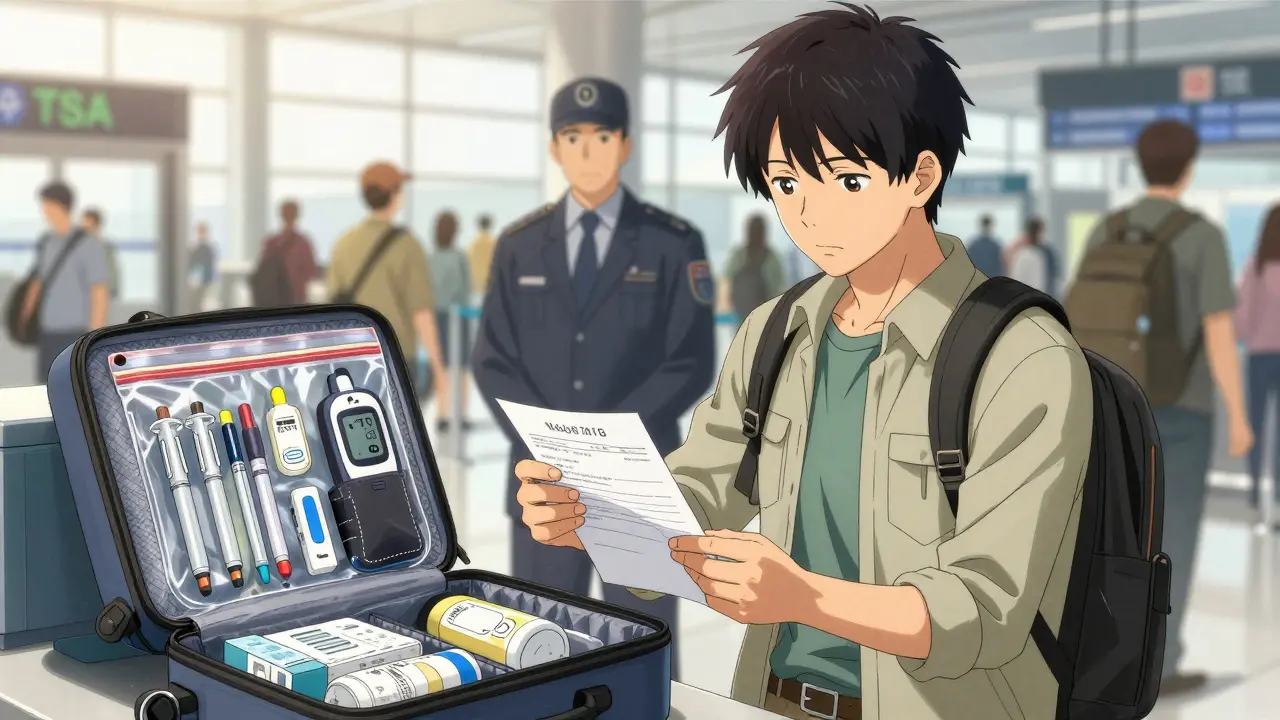
Traveling with diabetes isn’t about limiting your adventures-it’s about preparing so you can enjoy them without fear.
You’ve booked the trip. The flights are paid. The hotel is confirmed. But then it hits you: insulin, sensors, test strips, backup syringes, and who knows what else. What if your luggage gets lost? What if the plane’s baggage compartment freezes your insulin? What if your CGM dies halfway through a hike in the mountains? These aren’t hypotheticals. They’re real risks for people managing diabetes on the move.
According to the American Diabetes Association, about 1.6 million Americans live with Type 1 diabetes. Many of them travel. And those who do it right don’t just survive-they thrive. The difference? Preparation. Not perfection. Not overpacking every possible item. Just the right stuff, in the right way, with backups you can actually trust.
Insulin: Don’t Risk It in Checked Luggage
Insulin is not like your sunscreen or socks. It’s a life-saving medication that breaks down if it gets too hot or too cold. The safe storage range is between 40°F and 86°F. Checked baggage compartments? They can drop below freezing on long flights. A 2021 study in the Journal of Diabetes Science and Technology found that insulin exposed to freezing temps loses up to 30% of its effectiveness. That’s not a small drop. That’s a medical emergency waiting to happen.
Always carry insulin in your carry-on. Always. Even if you’re flying with a full cooler, even if you’re worried about TSA screening, even if your flight is only two hours. Don’t gamble with it.
For hot climates or long layovers, use a cooling sleeve like the Frio Insulin Cooling Sleeve. It’s reusable, lightweight, and keeps insulin cool for up to 45 hours without ice. No batteries. No plugs. Just soak it in water, let it gel, and toss it in your bag. Over 70% of travelers surveyed by Cottage Health in 2022 called it essential.
And here’s a pro tip: Bring twice as much insulin as you think you’ll need. Not 20% more. Not 50%. Twice. A flight delay. A lost bag. A pump failure. Any one of these can turn a weekend trip into a crisis if you’re short on insulin. Pack vials, pens, and backup syringes. Even if you use a pump, pack vials and syringes. You never know when your pump might stop working.
CGM Sensors and Transmitters: Pack More Than You Think
Your continuous glucose monitor (CGM) is your eyes on your blood sugar. But sensors don’t last forever. Dexcom sensors are rated for 10 days. Abbott’s FreeStyle Libre lasts up to 14. But real life isn’t a lab. Sweat, water, friction, adhesives failing-these all shorten sensor life. And if you’re hiking, swimming, or sweating through a day in Rome, you’re more likely to lose one early.
For a week-long trip, pack at least three sensors. For two weeks, pack five. And don’t forget the transmitter. If your transmitter dies and you don’t have a spare, your CGM becomes a paperweight. Always bring a backup. Same goes for the receiver if you use one.
Adhesive is just as important as the sensor itself. Skin Grip CLEAR tape is a game-changer. It’s waterproof, holds through showers and sweat, and keeps your sensor stuck even if you’re active all day. Skip the cheap tapes. They fail when you need them most.
And yes, CGMs can fail unexpectedly. Dexcom’s 2023 travel report shows 12-15% of users experience sensor failure during trips. Know the signs: erratic readings, no trend arrows, or a sensor that says “calibration required” when you haven’t touched it. Have a backup plan-your meter and strips.
Glucose Meters, Strips, and Lancets: The Old-School Backup
Even if you live by your CGM, you still need a blood glucose meter. Why? Because CGMs can give false readings. Because sensors can fail. Because you need to calibrate. Because sometimes, you just need to poke your finger and know for sure.
Bring at least 50% more test strips than you think you’ll use. If you’re going for five days and normally test five times a day, bring at least 40 strips. Better yet, bring 60. You’ll thank yourself when you’re stuck in an airport with no pharmacies nearby and your sugar is dropping fast.
Same goes for lancets. Bring extra. And batteries. Many meters use AAA or CR2032 batteries. Pack two spare sets. Don’t assume you’ll find them at the airport. In some countries, even basic diabetes supplies are hard to come by.
Before you leave, compare your meter’s reading to your CGM. If they’re off by more than 15%, check the meter’s calibration or replace the strips. A faulty meter gives you false confidence-and that’s dangerous.

Insulin Pumps: Bring the Backup Plan
If you use an insulin pump, you’re already ahead of the game. But pumps can fail. Tubing can kink. Batteries can die. And if you’re in a remote location with no access to medical help, that’s not a minor inconvenience-it’s a life-or-death situation.
Bring at least two extra infusion sets. These are the small tubes that connect the pump to your body. They’re cheap, lightweight, and easy to pack. Also bring two extra reservoirs. These hold your insulin inside the pump. If your pump stops working, you can manually fill a syringe and inject insulin until you get a replacement.
And don’t forget the backup: insulin vials and syringes. Even if you’ve never used them before, practice at home before you leave. Know how to draw insulin from a vial. Know how much to inject. This isn’t optional. It’s your safety net.
Many pump companies-like Tandem and Insulet-offer free loaner pumps if yours breaks while you’re traveling. Call them before you leave. Ask about their international programs. Register your device. Save their emergency numbers. This isn’t just advice. It’s a lifeline.
Snacks and Low Treatments: Ditch the Glucose Tablets
Low blood sugar hits fast. And when you’re rushing through security, walking through a foreign airport, or hiking up a trail, you need something you can grab in one hand. Glucose tablets? They’re bulky. Messy. And honestly, most people hate the taste.
Try fruit leathers. Pure Organic Fruit Leathers, for example, are thin, chewy, and made from real fruit. Each pack has about 15 grams of carbs-perfect for treating a low. They’re 4x6 inches, weigh less than half an ounce, and fit in your pocket. Travelers who switched from tablets to fruit leathers reported 37% fewer low-blood-sugar emergencies, according to Diabetech.info’s 2023 survey.
Keep at least three snacks in your carry-on. One in your jacket pocket. One in your purse. One in your daypack. Don’t wait until you feel shaky. Eat at the first sign of a drop: sweating, shakiness, dizziness, or irritability.
Documentation: The Most Overlooked Item
Here’s the truth: No one cares about your diabetes unless you make them care. That’s why a doctor’s letter is non-negotiable.
Dr. Anne Peters, Director of USC’s Clinical Diabetes Programs, says the single most overlooked item in diabetes travel is a printed letter from your provider. It should include:
- Your diagnosis (Type 1 or Type 2)
- Your insulin regimen (e.g., basal rate, carb ratio, correction factor)
- Your CGM model and settings
- Emergency contact info
- Any allergies or complications
Also carry a TSA Disability Notification Card. It’s free. You can download it from diabetes.org. Show it at security. It cuts screening time by 42%, according to Dr. Peters’ 2022 survey of 350 travelers.
TSA allows all diabetes supplies through checkpoints. But they have to be declared and separated from other items. Pack everything in a clear, sealable bag. That alone reduces screening time from over 8 minutes to under 5 minutes, per TSA’s 2022 data.
International Travel: Watch the Insulin Concentration
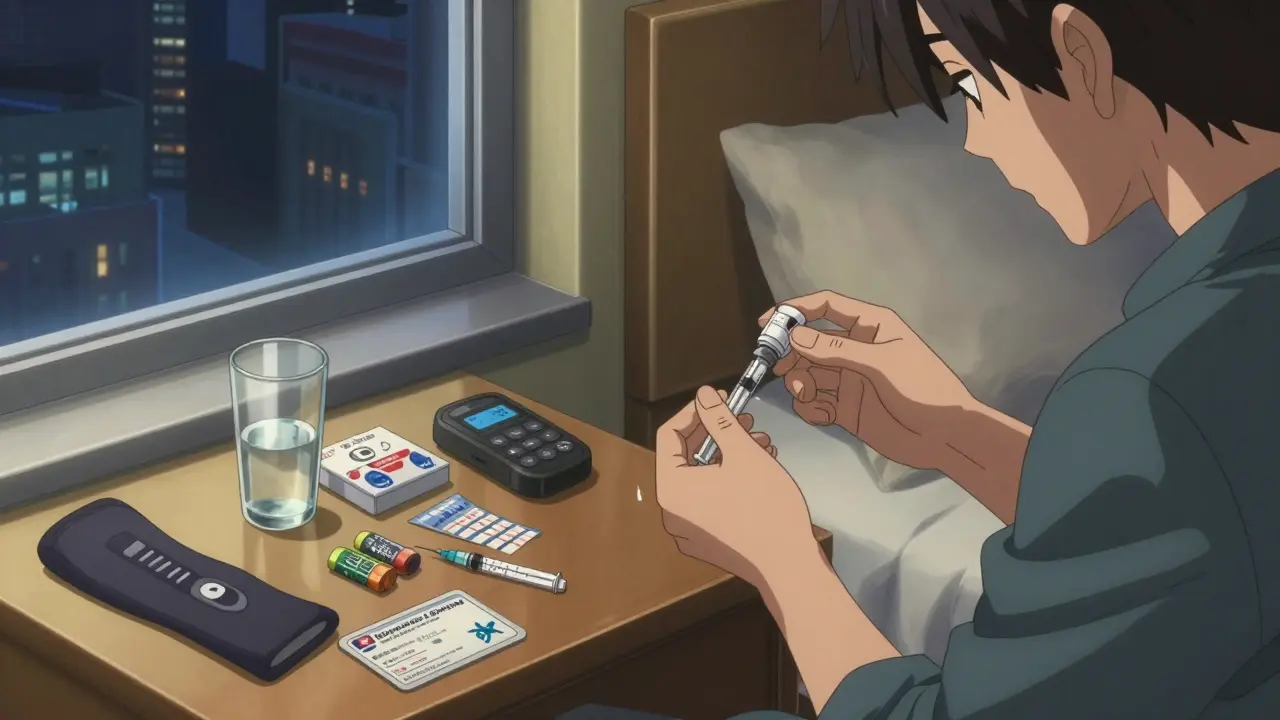
Not every country uses U-100 insulin. In parts of Europe, Asia, and Africa, you’ll find U-40 or U-80. That’s a huge difference. If you accidentally buy the wrong type, you could overdose. There are documented cases of travelers ending up in emergency rooms because they didn’t know.
Never buy insulin abroad unless you’re 100% sure of the concentration. Always bring your own. If you’re going to a country with unreliable supplies, pack extra. Beyond Type 1’s 2023 report found that 64% of countries lack consistent access to U-100 insulin.
Also check local laws. Some countries restrict carrying needles or insulin without a prescription. Research ahead of time. Call the embassy. Bring extra copies of your doctor’s letter.
Final Checklist: What to Pack
Here’s your no-fluff, real-world packing list:
- Twice the insulin you’ll need (vials, pens, syringes)
- 3-5 CGM sensors (depending on trip length)
- 1-2 spare transmitters
- Skin Grip CLEAR tape or similar adhesive
- Frio cooling sleeve or insulated travel bag
- 60+ test strips
- Extra lancets and batteries
- 2 extra infusion sets and reservoirs (if using a pump)
- 3-5 low treatments (fruit leathers, juice boxes, glucose gel)
- Doctor’s letter with care plan
- TSA Disability Notification Card
- Emergency contact list (including your endo’s number)
- Travel insurance that covers medical emergencies
Put your primary supplies in your carry-on. Put a backup set in your checked bag-except insulin. That stays with you. Always.
What to Do If Something Goes Wrong
Even with perfect planning, things happen. Here’s what to do:
- Lost insulin or supplies? Call your pump or CGM company’s 24/7 emergency line. Many offer free replacements.
- CGM not working? Use your meter. Inject insulin manually if needed. Don’t guess.
- Low blood sugar in a foreign country? Look for juice, candy, or soda. Even a can of regular Coke can save you.
- Can’t find U-100 insulin? Contact your embassy or local diabetes association. They often have lists of pharmacies that carry U-100.
One traveler on Reddit lost her entire bag on a layover in Dubai. She called Tandem. They overnighted her a new pump and insulin. She was back on track in 36 hours.
You can do this. You’ve done it before. This isn’t about being perfect. It’s about being prepared.
Can I bring insulin through airport security?
Yes. TSA allows all diabetes supplies, including insulin, syringes, and CGMs, through security. You must declare them and separate them from other items. Pack them in a clear, sealable bag for faster screening. Never check insulin-it can freeze or overheat.
How much insulin should I pack for a trip?
Pack at least twice the amount you think you’ll need. For a 7-day trip, bring enough for 14 days. This covers delays, lost luggage, pump failures, or unexpected highs and lows. Always include backup vials and syringes, even if you use a pump.
Do I need a doctor’s note to travel with diabetes supplies?
It’s not required by U.S. law, but it’s strongly recommended. A doctor’s letter explaining your condition, medications, and emergency protocols can help avoid delays at security and assist in medical emergencies abroad. Include your insulin-to-carb ratio, correction factor, and emergency contacts.
Can I use my CGM on a plane?
Yes. CGMs are allowed on planes and do not interfere with aircraft systems. You can keep them on during takeoff and landing. However, some transmitters may need to be turned off during certain phases of flight if they have Bluetooth or Wi-Fi. Check your device’s manual. Always carry a backup meter and strips.
What should I do if my insulin gets too cold or too hot?
If insulin freezes, throw it away. It’s no longer safe. If it gets too hot (above 86°F), it may lose effectiveness. Use a Frio cooling sleeve to prevent this. If you suspect your insulin has been compromised, use a new vial and monitor your blood sugar closely. Don’t risk using damaged insulin.
Are there special travel bags for diabetes supplies?
Yes. Brands like Sugar Medical and Frio make insulated travel bags designed for diabetes supplies. They keep insulin cool, organize your gear, and fit easily in carry-ons. Many travelers use them with the Frio sleeve for maximum protection. Look for ones with separate compartments for sensors, strips, and pumps.
Next Steps: Start Packing Today
Don’t wait until the night before your flight. Set aside an hour this week. Lay out everything you think you’ll need. Then double it. Test your backup syringes. Charge your transmitters. Print your doctor’s letter. Put your fruit leathers in your pocket and walk around the house. Pretend you’re at the airport. See if you can grab your supplies in one motion.
Traveling with diabetes isn’t about being perfect. It’s about being ready. And if you’re ready, you’re already ahead of most people.



Nancy Kou
December 19, 2025 AT 17:07Hussien SLeiman
December 19, 2025 AT 21:31Sarah McQuillan
December 20, 2025 AT 20:32Aboobakar Muhammedali
December 21, 2025 AT 16:03Laura Hamill
December 22, 2025 AT 17:21Alana Koerts
December 23, 2025 AT 14:39Frank Drewery
December 25, 2025 AT 07:29Edington Renwick
December 25, 2025 AT 15:21