
FDA Safety Alert Keyword Generator
Find Your Critical Keywords
Enter your specific health needs or products you use to get targeted FDA safety alert keywords. These keywords will help you receive important alerts about potential risks specific to your situation.
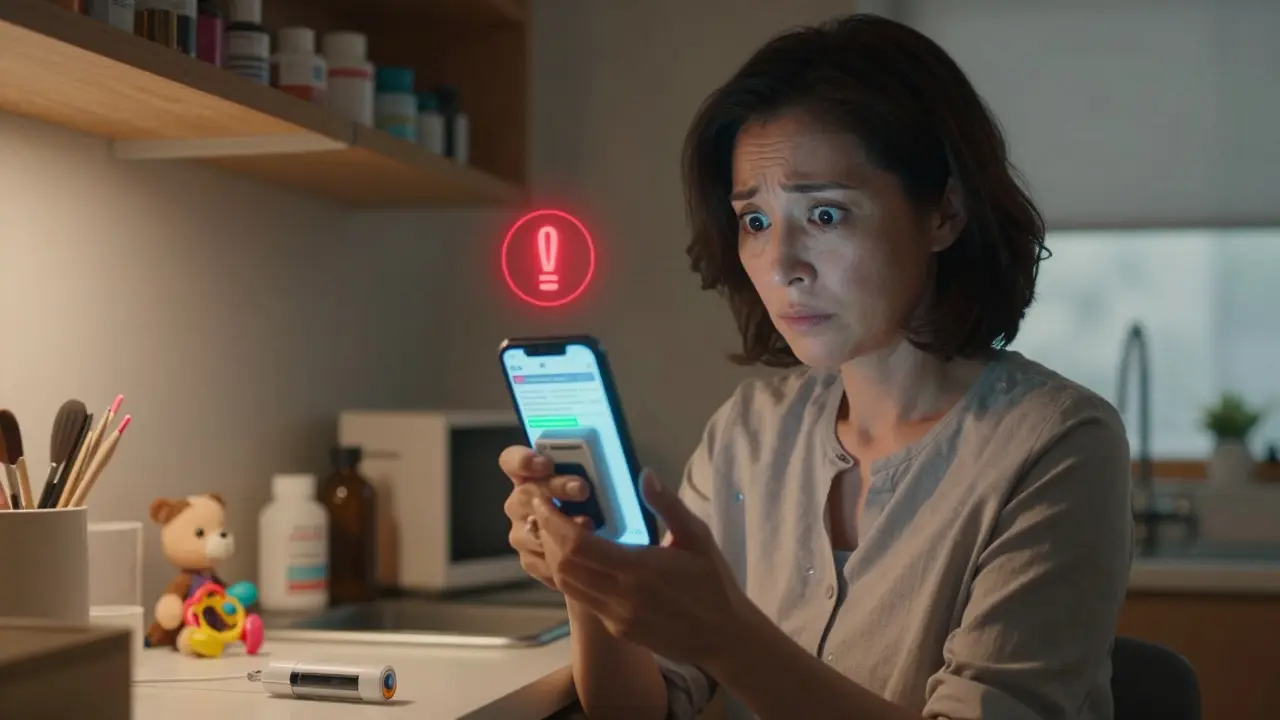
Every year, the FDA issues hundreds of safety alerts about medicines, medical devices, food, and other products. Some of these alerts mean you could be at risk-right now-if you’re using a certain pill, implant, or even a kitchen gadget. But if you’re not subscribed, you’ll never know. You might keep using a recalled insulin pump. You might give your child a supplement that’s been linked to liver damage. You might not realize your joint replacement has a higher-than-expected failure rate. These aren’t hypotheticals. They happen every single day. The FDA doesn’t send out press releases on TV or social media blasts that everyone sees. They send alerts to people who subscribe. And if you’re not one of them, you’re flying blind.
What Exactly Are FDA Safety Communications?
FDA Safety Communications are official, timely updates about risks tied to products the agency regulates. That includes prescription drugs, over-the-counter medicines, vaccines, medical devices like pacemakers and insulin pumps, food, cosmetics, and even tobacco products. These aren’t marketing notices or general health tips. They’re urgent, fact-based alerts that tell you when something is unsafe-or could become unsafe soon. There are three main types you need to know about:- Safety Communications - These are issued when the FDA has confirmed a risk. For example, a specific brand of blood pressure medication was found to contain a cancer-causing impurity. The FDA will tell you which lot numbers to check, what to do with the product, and where to get a replacement.
- Letters to Health Care Providers - These go directly to doctors and pharmacists but are also made public. They often contain new warnings about side effects, dosing changes, or interactions you might not find on the label.
- Early Alert Communications - This is the newest and most important addition. Launched in late 2024 as a pilot and expanded to cover all medical devices on September 29, 2025, Early Alerts warn you about potential dangers before a formal recall is issued. This means you get the heads-up faster-sometimes weeks earlier-when the FDA sees a pattern of injuries or malfunctions but hasn’t yet determined if it meets the legal definition of a recall.
Between January and December 2022 alone, the Center for Devices and Radiological Health issued 45 safety communications. That’s not counting drug or food alerts. And those numbers keep rising every year.
Why Subscribing Is Not Optional
You might think, “I’ll just Google it if something’s wrong.” But that’s like waiting for a smoke alarm to go off before you check your wiring. By the time a recall makes headlines, it’s often too late. The FDA doesn’t announce every alert to the public. Many only appear on their website. If you don’t check it daily-which most people don’t-you’ll miss them. Here’s what happens when you don’t subscribe:- You keep taking a medication that’s been linked to heart rhythm problems, because you never saw the update.
- Your child uses a toy teether that was recalled for choking hazards, because the store didn’t pull it yet.
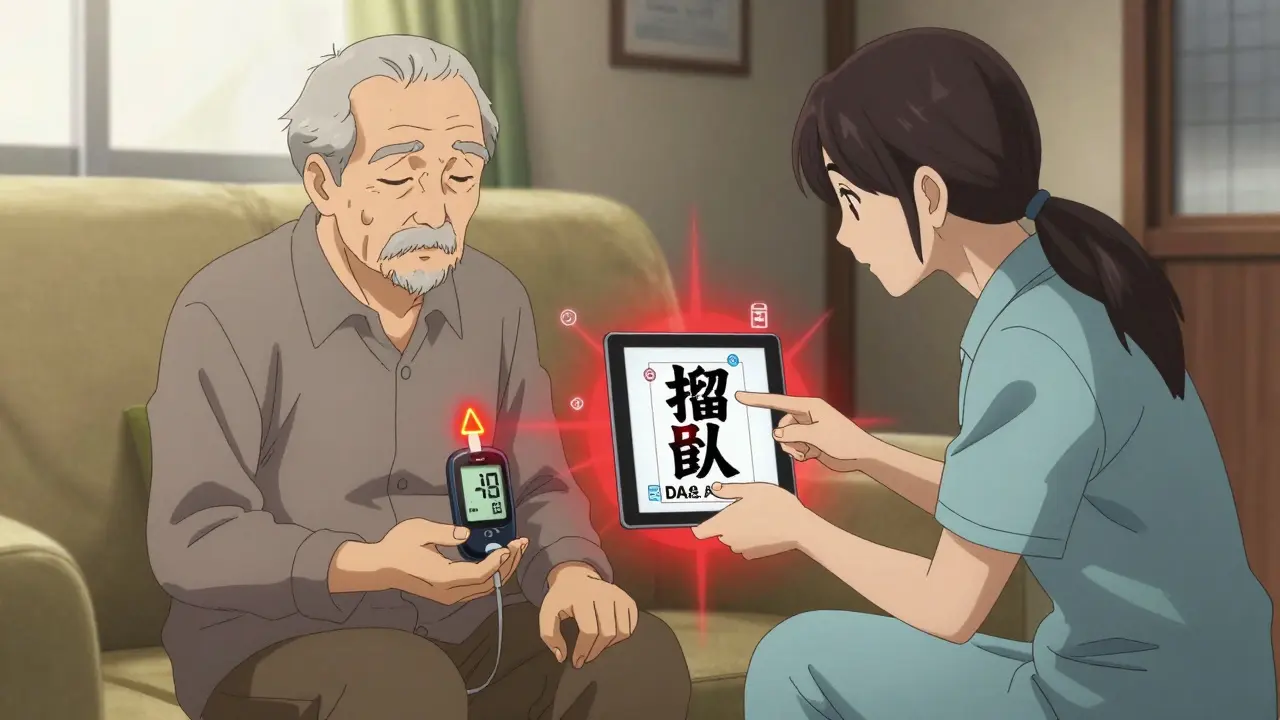
- Your elderly parent keeps using a glucose monitor that’s been found to give false readings-until they have a hypoglycemic episode.
For people with chronic conditions-diabetes, heart disease, autoimmune disorders-these alerts aren’t just helpful. They’re life-saving. And for caregivers, parents, or anyone managing someone else’s health, it’s a responsibility you can’t afford to ignore.
How the Subscription System Actually Works
The FDA’s system is simple, free, and designed for real people-not tech experts. Here’s how it works:- Go to FDA.gov/safety/alerts.
- Choose the type of product you care about: Drugs, Medical Devices, or Food and Consumer Products.
- Click “Subscribe to Email Updates.”
- Enter your email address and confirm your subscription.
That’s it. But here’s where it gets smarter: the Enforcement Report Subscription Service, updated in July 2022, lets you pick up to five custom keywords. This is the game-changer.
Instead of getting every alert about every drug or device, you get only the ones that matter to you. Examples:
- If you have a peanut allergy: subscribe to the keyword “peanut.” You’ll only get alerts about peanut-containing products that turn out to be unsafe.
- If you use a specific insulin pump model: subscribe to the model number. You’ll be notified immediately if that device has a malfunction or recall.
- If you’re a caregiver for someone on warfarin: subscribe to “warfarin.” You’ll get updates about drug interactions or new safety warnings.
This isn’t just convenient-it’s critical. Imagine getting 20 emails a week about products you don’t use. You’d start ignoring them. But with keywords, you get targeted, relevant alerts. That means you actually read them.
Who Should Subscribe-and Who’s Already Missing Out
This isn’t just for patients. It’s for:- Patients with chronic conditions - If you take daily medication or use a medical device, you’re at higher risk. Your life depends on knowing when something changes.
- Parents and caregivers - Kids’ medicines, baby formula, teething toys-all can be recalled. You need to know before it’s too late.
- Healthcare providers - Doctors, nurses, pharmacists: you’re the last line of defense. If you don’t know about a safety alert, your patients won’t either.
- Seniors and their families - Older adults often take multiple medications. A single interaction or recall can be deadly.
- Medical device manufacturers and suppliers - Yes, even businesses. These alerts help you spot trends before they become lawsuits or recalls in your own product line.
Most people think this is only for “health professionals.” It’s not. It’s for anyone who uses a pill, a patch, a pump, or a supplement. If you’ve ever bought something at a pharmacy or drugstore, you’re in scope.
What You Won’t Get (And What You Should Expect)
Some things to clarify:- You won’t get daily emails. Most people get 1-4 alerts a month. Some get none. Others get more if they’re subscribed to high-risk keywords like “insulin” or “pacemaker.”
- You won’t get marketing emails or surveys. The FDA doesn’t sell your data. These are purely safety alerts.
- You won’t get instant notifications for every minor issue. The FDA investigates before sending alerts. They don’t panic over one bad report.
- You will get clear instructions: “Stop using,” “Return to pharmacy,” “Contact your doctor,” “Check your lot number.”
Early Alerts, introduced in 2024 and expanded in 2025, are especially valuable because they include “what to do” language that mirrors what manufacturers send to customers. That means you get the same clarity as if your doctor called you personally.
What Happens If You Don’t Subscribe?
You’re not breaking the law. But you’re making a dangerous choice. In 2023, a woman in Texas continued using a recalled blood glucose monitor because she never saw the alert. She had a seizure from undetected hypoglycemia. She survived-but barely. Her story was featured in a JAMA Internal Medicine report on missed safety signals. Another case: a man in Ohio used a specific brand of knee implant for seven years. He didn’t know it had been flagged in an Early Alert in 2024 for premature loosening. By 2025, he needed revision surgery. His surgeon told him: “If you’d subscribed, you could’ve avoided this.” These aren’t rare. They’re common. And they’re preventable.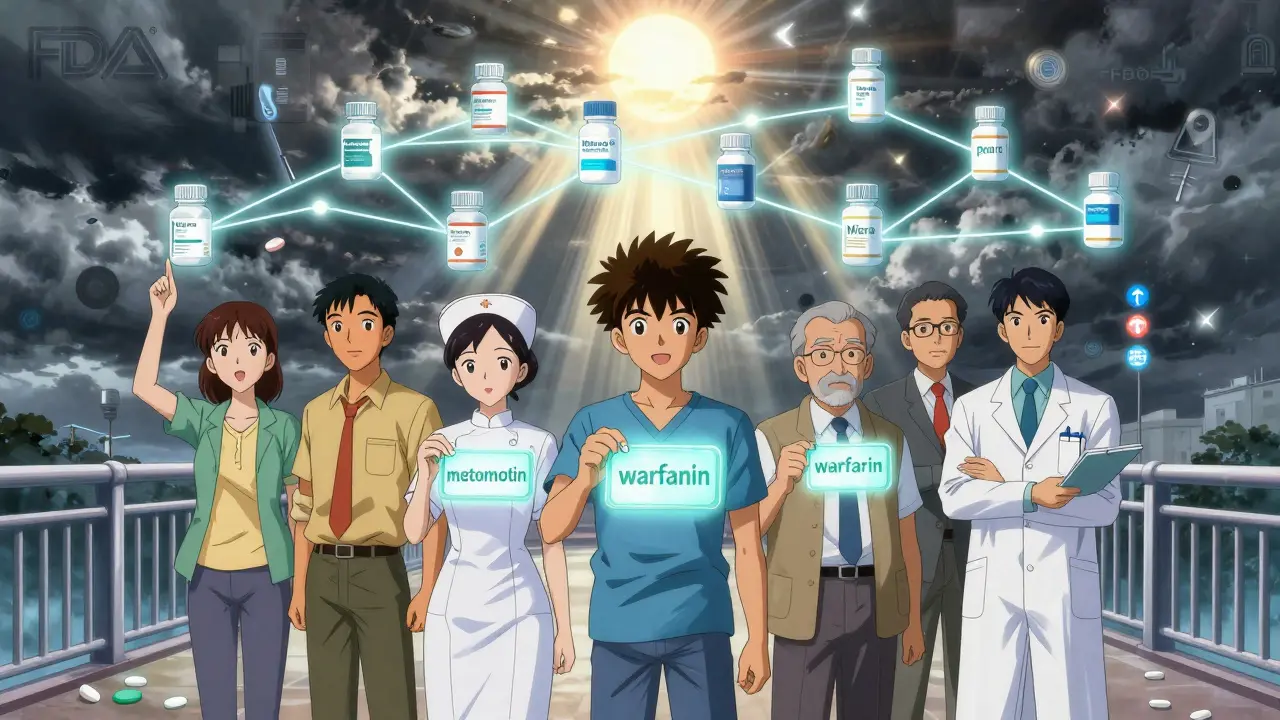
How to Set It Up Right (Step-by-Step)
1. Visit FDA.gov/safety/alerts.2. Pick the category that matters most to you: Drugs, Devices, or Food/Consumer Products.
3. Click “Subscribe to Email Updates.”
4. Enter your email and click “Submit.”
5. Check your inbox for a confirmation email. Click the link to confirm.
6. Go back to the same page and select “Enforcement Report Subscription Service.”
7. Type up to five keywords that matter to you: your medication name, device model, allergen, or ingredient.
8. Save your preferences.
Pro tip: Use exact terms. Don’t type “diabetes” if you’re on metformin-type “metformin.” Don’t type “heart monitor” if you have a Medtronic Micra-type “Micra.” Precision matters.
You can always go back and change your keywords later. No penalty. No fee. No hassle.
What’s Next? The Future of FDA Alerts
The FDA is already testing deeper integration with its Sentinel System, which tracks medication use in over 300 million people. That means in the future, alerts could become even more precise-based on real-world data, not just reports. There’s also talk of expanding Early Alerts to drugs and food. Right now, they’re only for medical devices. But if the system works as well as it has, expect it to roll out to other areas soon. The bottom line: the FDA is getting smarter, faster, and more responsive. But you have to be part of the system. Subscribing isn’t a luxury. It’s your safety net.Do I have to pay to subscribe to FDA Safety Communications?
No, it’s completely free. The FDA doesn’t charge for any of its safety alerts or subscription services. Be careful of third-party websites that claim to offer “FDA alerts for a fee”-those are scams.
How often will I get emails?
It depends on your keywords and what’s happening in the world. Most subscribers get 1 to 4 alerts per month. Some get none for months. Others get more if they’re subscribed to high-risk terms like “insulin” or “pacemaker.” You won’t be flooded with spam.
Can I subscribe to multiple categories at once?
Yes. You can sign up for Drug Safety Communications, Medical Device Safety, and Food Recalls all at the same time. Each has its own subscription page, so you’ll need to go through the process for each category separately.
What if I miss an alert? Can I see past ones?
Yes. All past safety communications are archived on FDA.gov. Go to FDA.gov/safety/alerts and click “View All Alerts” to browse by date, product type, or keyword. But don’t rely on this. Subscribing ensures you get alerts as soon as they’re issued.
Are Early Alerts the same as recalls?
No. Early Alerts come before a recall. They’re issued when the FDA sees a pattern of serious problems but hasn’t yet determined if it meets the legal definition of a recall. Think of them as a warning sign-like a check engine light. You still need to act, even if the product hasn’t been officially recalled yet.
Next Steps: Don’t Wait
You don’t need to be a doctor, a pharmacist, or a tech expert to protect yourself. All you need is an email address and five minutes. Go to FDA.gov/safety/alerts right now. Pick your category. Add your keywords. Hit subscribe.This isn’t about being paranoid. It’s about being informed. The FDA gives you the tool. You just have to use it. Don’t wait until something goes wrong. Subscribe today-and never miss an alert again.


josh plum
January 3, 2026 AT 20:32John Ross
January 5, 2026 AT 11:15saurabh singh
January 6, 2026 AT 21:00Dee Humprey
January 8, 2026 AT 13:45Jay Tejada
January 9, 2026 AT 05:49Allen Ye
January 9, 2026 AT 17:12mark etang
January 10, 2026 AT 03:20Jason Stafford
January 11, 2026 AT 12:13Mandy Kowitz
January 11, 2026 AT 21:53Justin Lowans
January 13, 2026 AT 19:52Michael Rudge
January 14, 2026 AT 06:42Rory Corrigan
January 15, 2026 AT 23:48Charlotte N
January 17, 2026 AT 11:04bob bob
January 18, 2026 AT 13:09