
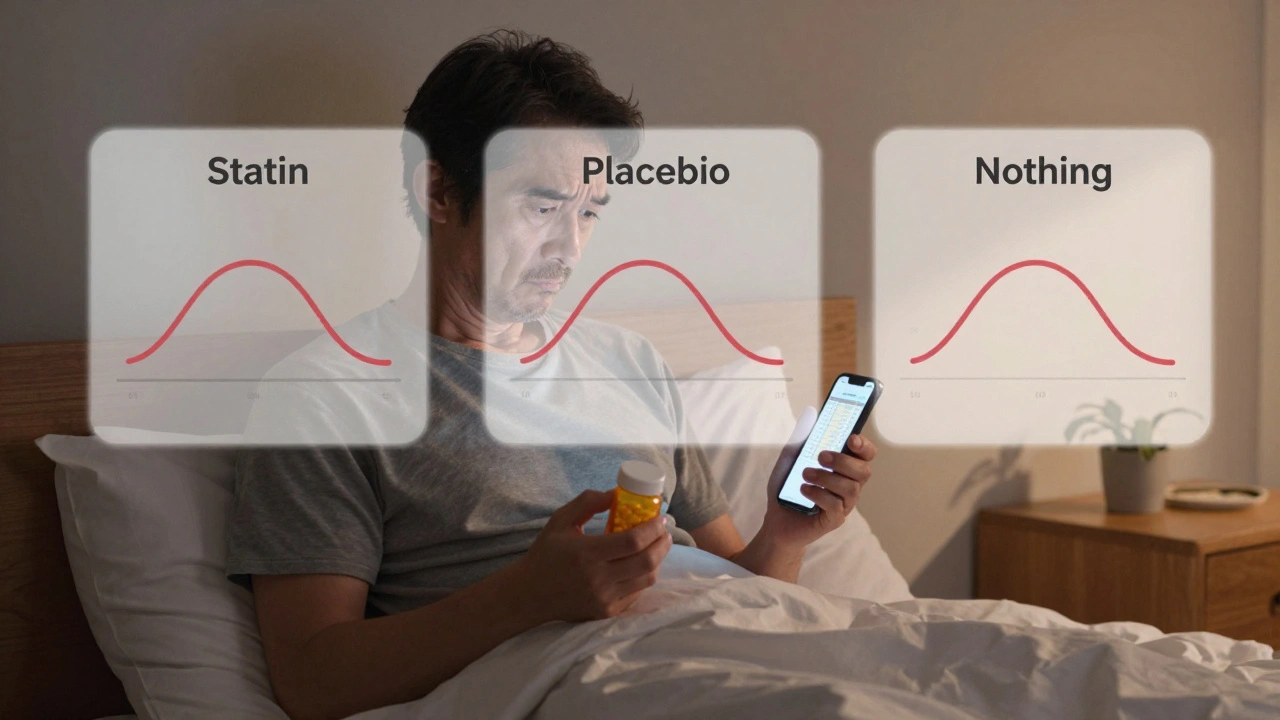
Statin Side Effect Tracker
Track your symptoms daily using a 0-100 scale to determine if your side effects are due to the statin or the nocebo effect (your expectations). This tool follows the methodology from the landmark SAMSON study.
Track Your Symptoms
Symptom Tracker
What Your Results Mean
Track your symptoms for at least 30 days to see patterns. According to the SAMSON study, if your symptom scores are similar during statin and placebo periods, you're likely experiencing the nocebo effect rather than true statin side effects.
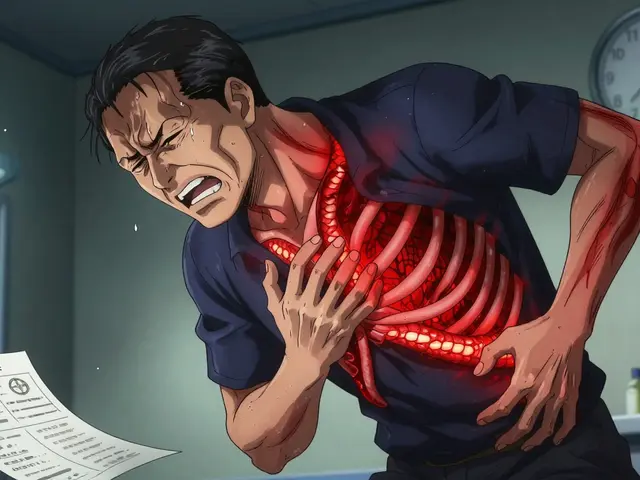
Thousands of people stop taking statins every year because they feel muscle pain, fatigue, or weakness. They blame the medicine. But what if the drug isn’t the real culprit? What if the problem isn’t the chemistry in the pill - but the fear in your mind?
What Really Causes Statin Side Effects?
Most people think if they feel bad after starting a statin, the drug must be the cause. It makes sense. You take the pill. A few days later, your legs ache. You connect the dots. But here’s the twist: in a landmark 2021 study called SAMSON, researchers found that 90% of the symptoms people blamed on statins also showed up when they took a sugar pill - with no active drug at all. This isn’t a fluke. The SAMSON trial followed 60 people who had quit statins because of side effects. Each person got 12 bottles over a year: four with atorvastatin, four with placebo, and four empty. They tracked daily symptoms on their phones using a 0-100 scale. The results? Symptoms during placebo months were almost identical to statin months. And both were much worse than when they took nothing. That’s the nocebo effect in action. It’s the opposite of the placebo effect. Instead of feeling better because you believe a treatment works, you feel worse because you believe it will hurt you.The Numbers Don’t Lie
Let’s look at the data from SAMSON:- Mean symptom score during placebo months: 15.4
- Mean symptom score during statin months: 16.3
- Mean symptom score during no-tablet months: 8.0
Why Statins? Why Not Other Drugs?
You might wonder: why do statins have this problem more than other medications? The answer isn’t fully known, but it’s likely tied to how much people hear about side effects. Statins are among the most prescribed drugs in the world. Over 39 million Americans take them. That means millions of news articles, TV ads, and warning labels. Every patient brochure says: “May cause muscle pain.” So when you start taking one, your brain is already primed to notice any ache, any tiredness, any weird feeling - and label it as the drug’s fault. Other drugs don’t get this level of attention. You don’t see billboards saying, “This blood pressure pill might make you dizzy.” So the nocebo effect doesn’t get the same boost. Even drug companies are starting to notice. Pfizer now includes nocebo education in its patient support programs. Amgen’s Repatha ads even say: “Unlike statins, which may cause symptoms due to expectation in many patients, Repatha has a different mechanism of action.” That’s not just marketing - it’s a direct nod to the science.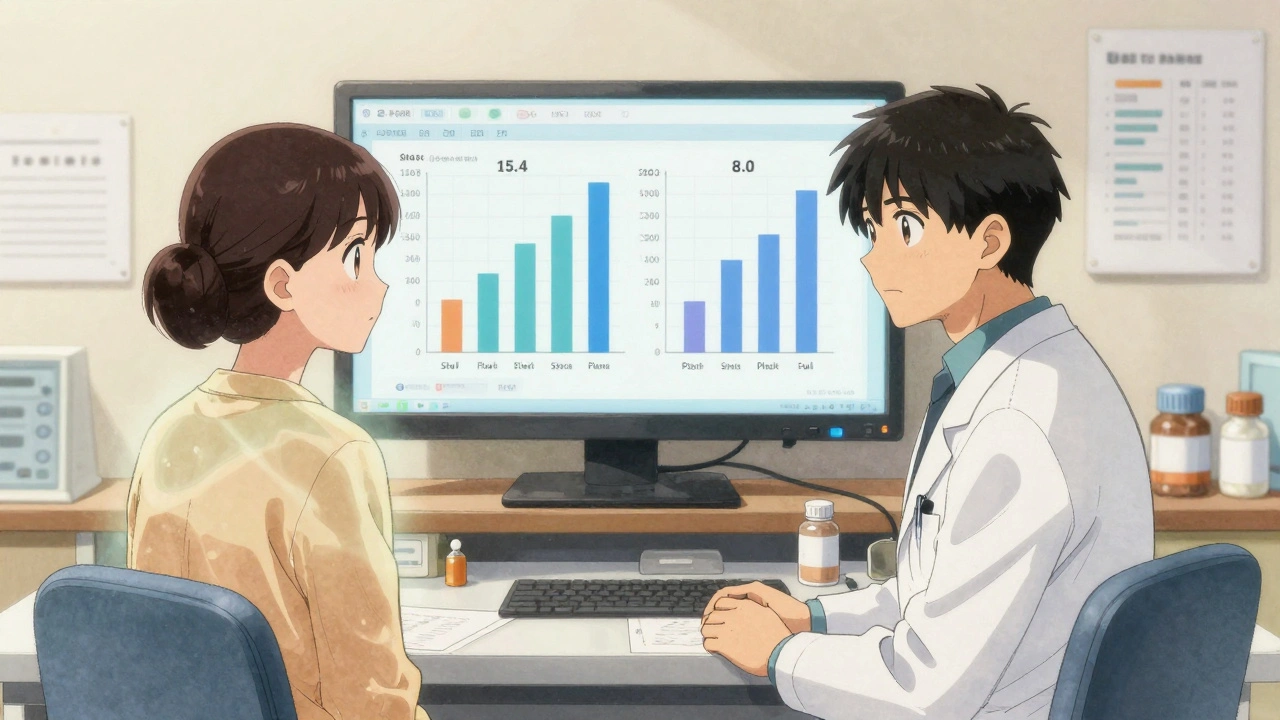
What About Real Muscle Damage?
Some people worry: if we say most side effects are psychological, are we dismissing real cases? We’re not. True statin-induced muscle damage - called myopathy - is extremely rare. About 4-5 cases per 10,000 people per year. Rhabdomyolysis, the most severe form, happens in fewer than 1 in a million. These are measurable with blood tests (CPK levels). The SAMSON trial specifically excluded people with these conditions. Their symptoms were real - but they weren’t the majority. The key is knowing the difference. If your CPK is sky-high and you’re truly weak, that’s not nocebo. That’s a medical issue. But if you feel a little sore after starting statins - and you’ve read about it online - it’s far more likely to be your mind than your muscles.How Doctors Are Changing Their Approach
Clinicians used to say: “Try a different statin.” Or “Take it every other day.” Now, they’re saying: “Let’s look at your symptom patterns.” The SAMSON method is simple: track symptoms daily for a few months using a phone app. You go through three phases: placebo, statin, and no-pill. When patients see their own graphs - showing identical pain levels on sugar pills and real pills - something clicks. In the study, half of the patients who had quit statins restarted them after seeing their data. Real-world clinics report similar results: when doctors use this approach, restart rates jump from 22% to nearly 50%. It’s not magic. It’s evidence. And it’s working.
What You Can Do If You’ve Stopped Statins
If you’ve quit statins because of side effects, here’s what to try:- Track your symptoms daily for a month - even if you’re not taking anything. Note pain, fatigue, stiffness. Use your phone’s notes or a free app.
- Ask your doctor if you can try a blinded trial. Some clinics now offer this. If not, ask for a low-dose statin (like 5mg rosuvastatin or 10mg atorvastatin) for one month, then switch to placebo for another month.
- Don’t read side effect lists before starting. Knowledge is power - but sometimes, it’s poison. Let your doctor explain the risks without the scary details.
- If symptoms return on placebo, you may have true statin intolerance. That’s rare - but treatable. Other options like ezetimibe or PCSK9 inhibitors exist.
Why This Matters More Than You Think
Stopping statins isn’t just about feeling better. It’s about staying alive. Statins reduce heart attacks and strokes by up to 50% in high-risk people. But because so many quit due to perceived side effects, we’re losing over half of those benefits. That’s not just personal - it’s public health. A 2022 study estimated that statin non-adherence due to fear of side effects costs the U.S. healthcare system $11.2 billion a year in preventable hospitalizations and deaths. The nocebo effect isn’t a myth. It’s a massive, under-recognized problem. And fixing it doesn’t need new drugs. It just needs better conversations.Final Thought: Your Mind Is Powerful
Your body doesn’t always know what’s real and what’s imagined. If you expect pain, your brain can create it. That’s not weakness. It’s biology. Statins are safe. For most people, the benefits far outweigh the risks. But if you’ve stopped them because of symptoms, don’t assume the drug is to blame. Ask for data. Track your symptoms. Give yourself a fair test. You might be surprised. And you might just save your life.Are statin side effects real, or just in my head?
For most people, the muscle pain and fatigue blamed on statins are real - but not caused by the drug. Studies like SAMSON show that 90% of these symptoms occur just as often with a sugar pill. This is the nocebo effect - your brain expecting harm and creating it. But a small number of people (less than 5%) do have true muscle damage, which can be confirmed with blood tests.
Can I trust the nocebo effect if I feel awful on statins?
Yes - but only after ruling out rare true side effects. If you have severe muscle weakness, dark urine, or a CPK level more than 10 times normal, that’s not nocebo. See your doctor. But if your symptoms are mild, come and go, and started after reading about statin side effects, the nocebo effect is likely the main cause. The best way to know is to track your symptoms over time with a placebo phase.
Why do some people still feel bad on statins even after knowing about nocebo?
Because the nocebo effect isn’t the only factor. Some people have genetic differences that make them more sensitive to statins. Others have thyroid issues, vitamin D deficiency, or are taking other drugs that interact. If you’ve tried the nocebo test and still feel bad on statins - even at low doses - your doctor can explore other causes or switch you to non-statin options like ezetimibe or PCSK9 inhibitors.
How can I test for the nocebo effect myself?
You can’t do a full blinded trial alone, but you can start tracking. Use a simple app or journal to rate your symptoms daily (0-100) for one month without statins. Then, with your doctor’s approval, try a low-dose statin for one month, keeping the same tracking. Then stop again for a month. Compare the patterns. If your symptoms are similar on statin and placebo, the nocebo effect is likely driving them.
Does this mean statins are safe for everyone?
No. Statins are safe for most people - but not all. People with liver disease, heavy alcohol use, or certain genetic conditions may be at higher risk. The nocebo effect explains why so many people quit statins unnecessarily. But if you have confirmed muscle damage or severe reactions, statins may not be right for you. The goal isn’t to force everyone to take them - it’s to make sure people who benefit aren’t scared off by misinformation.
Courtney Blake
December 11, 2025 AT 14:42Oh please. So now it's all in our heads? I've had muscle cramps so bad I couldn't walk, and my CPK was through the roof. You think I'm just scared of pills? I'm not some lab rat you can gaslight into compliance. This isn't psychology - it's corporate spin to keep profits up.
Lisa Stringfellow
December 11, 2025 AT 19:25Wow. So the entire medical establishment is just lying to us? Or maybe you're just too lazy to admit that drugs have side effects. I'm not buying it. If it was just nocebo, why do people feel better after stopping? Coincidence? Nah. I'll stick with my gut.
Kristi Pope
December 13, 2025 AT 09:50Hey - I get it. I was skeptical too. But I tracked my symptoms for 3 months like they suggested - placebo, statin, no pill. And guess what? My fatigue and aches were basically the same on sugar and real pills. I cried when I saw the graph. Not because I was mad - because I finally understood. My mind was tricking me. And now I'm back on a low dose. My heart’s safer. And I’m not miserable anymore. 💙
Aman deep
December 15, 2025 AT 00:35Bro this is so true in india too. People avoid statins because of stories from uncle ji or whatsapp forwards. But when i saw a doctor here who did same tracking with patients - 7 out of 10 restarted statins after seeing data. Mind is powerful. Not weak. Just human. 🙏
Eddie Bennett
December 15, 2025 AT 04:21I used to think this was BS. Then my mom did the SAMSON thing. She was convinced the statin was killing her. But her symptoms? Same on placebo. Same on no pill. Only when she stopped tracking did she realize she was always tired - statin or not. It didn't fix everything, but it gave her back control. That’s huge.
Sylvia Frenzel
December 15, 2025 AT 20:43So let me get this straight - if you feel bad after taking a pill, it’s your fault for reading too much? That’s the dumbest thing I’ve heard all year. Next they’ll say cancer is just in your head because you watched too many documentaries.
Vivian Amadi
December 17, 2025 AT 16:41Statins don't cause muscle pain? LOL. I'm a nurse. I've seen the CK levels. I've seen the hospitalizations. You're not a scientist. You're a marketer with a blog.
john damon
December 18, 2025 AT 10:46bro i tried the nocebo thing 😅 tracked for a month - same pain on sugar pill. felt like a fool at first… but then i realized i’ve been tired since 2020. statin wasn’t the villain. my sleep was. thanks for the nudge 🙌
Taylor Dressler
December 19, 2025 AT 14:42The SAMSON trial methodology is robust: double-blind, within-subject design, daily symptom logging, and statistical analysis. The 90% overlap between placebo and statin symptom scores is not anecdotal - it’s peer-reviewed and replicable. The nocebo effect is well-documented in pharmacology literature since the 1950s. Dismissing it as corporate propaganda ignores decades of clinical evidence.
Aidan Stacey
December 19, 2025 AT 18:06My dad was on statins for 12 years. Then he quit because of ‘muscle pain.’ He got sicker. Heart attack at 68. We didn’t know why. Then we found out - he never got his CPK checked. He assumed it was the pill. Turns out, it was his diet, his stress, and his fear. He’s back on now. Low dose. Feeling better than ever. Don’t let fear kill you before the disease does.
Jim Irish
December 21, 2025 AT 09:24