HIV Medication & Statin Compatibility Checker
Disclaimer: This tool is for educational purposes only and does not constitute medical advice. Always consult your healthcare provider before starting, stopping, or changing the dose of any medication.
Medical Guidance:
Quick Reference Guide
Managing heart health while living with HIV often means taking a statin to keep cholesterol in check. But here is the catch: some HIV drugs and cholesterol meds don't play well together. If you mix the wrong ones, the HIV medication can act like a magnifying glass, cranking up the level of statin in your blood to dangerous levels. This isn't just a minor side effect; in extreme cases, it can lead to severe muscle breakdown that damages your kidneys.
The good news is that you don't have to choose between your heart and your viral suppression. By picking the right combination and keeping an eye on the dosage, you can manage both safely. This guide breaks down which statins to avoid, which ones are generally safe, and what red flags you need to watch for.
- Avoid simvastatin and lovastatin entirely if you are on protease inhibitors or boosters.
- Atorvastatin and rosuvastatin are options, but usually require lower, capped doses.
- Pitavastatin and pravastatin are often the safest bets due to how the body processes them.
- Newer HIV drugs like bictegravir and dolutegravir have far fewer interactions with statins.
- Watch for unexplained muscle pain or dark-colored urine immediately.
Why Some HIV Meds and Statins Clash
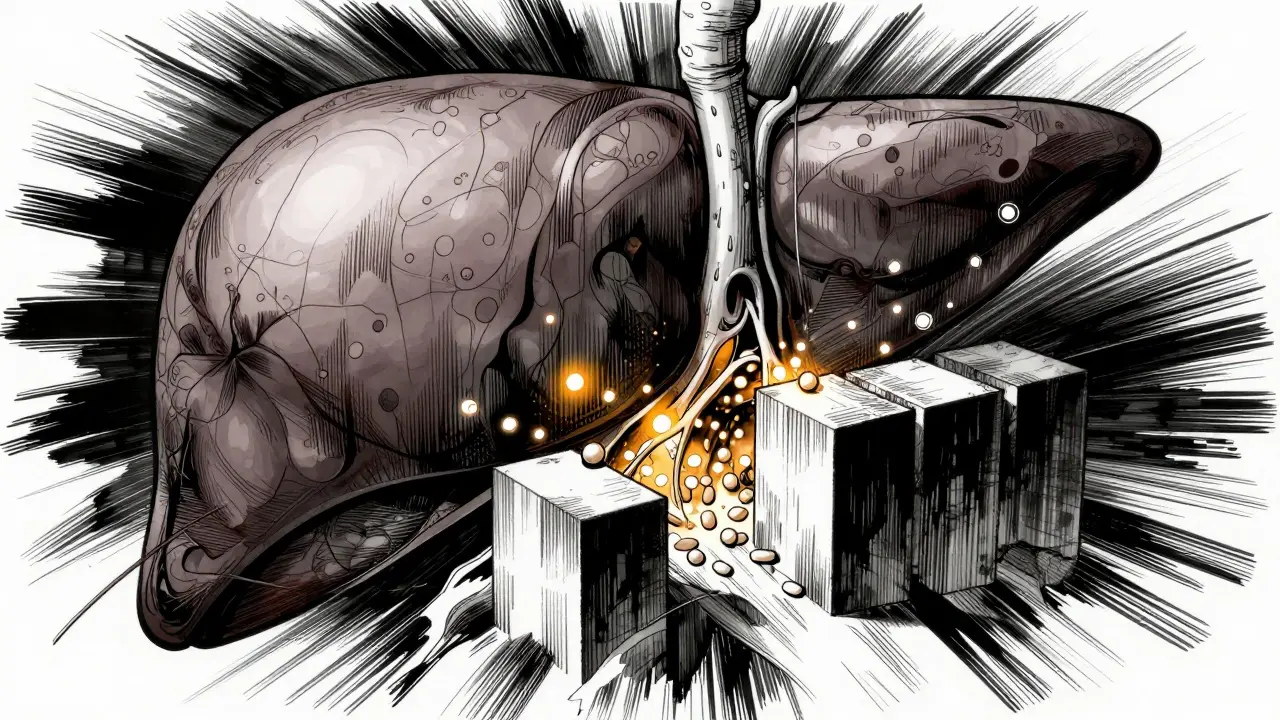
To understand why these interactions happen, you have to look at the liver. Most drugs are broken down by a group of enzymes called CYP450 a family of enzymes responsible for metabolizing the majority of medications in the liver. Many statins rely on a specific enzyme called CYP3A4 to leave the body.
Certain HIV medications, specifically pharmacokinetic boosters drugs like ritonavir and cobicistat that increase the levels of other HIV medications in the blood, are essentially "blockers." They shut down the CYP3A4 enzyme. When that enzyme is blocked, the statin has nowhere to go. It builds up in your system, and according to FDA data, some combinations can increase statin levels by over 300%.
When statin levels get too high, they can cause rhabdomyolysis a severe condition where muscle tissue breaks down and releases a protein called myoglobin into the blood, potentially causing kidney failure. This is why your doctor won't just give you any generic cholesterol pill; they have to match the statin to your specific ART (antiretroviral therapy) regimen.
The "Never" List: Statins to Avoid
Some combinations are simply too risky. If you are taking a protease inhibitor or a booster like cobicistat, there are two statins you should absolutely avoid: simvastatin (Zocor) and lovastatin (Mevacor).
Clinical evidence shows that these two medications can see their plasma concentrations jump up to 20-fold when mixed with certain HIV drugs. That is a massive increase that makes the risk of severe muscle toxicity unacceptably high. If you are currently taking these and start a new HIV regimen-or vice versa-you need to tell your healthcare provider immediately to switch to a safer alternative.
Safe Statin Choices and Dosing Limits
Not all statins are created equal. Some are processed by the liver in ways that bypass the "blockers" used in HIV therapy. If you need a statin, your doctor will likely look at this hierarchy of safety.
For those seeking the lowest risk of interaction, pitavastatin and pravastatin are often the top choices. These drugs don't rely heavily on the CYP3A4 pathway, meaning they don't clash as much with HIV boosters.
Then there are the "use with caution" statins. Atorvastatin and rosuvastatin are very effective, but they require strict dose caps when paired with boosters. For example, if you are taking Symtuza (darunavir/cobicistat/emtricitabine/tenofovir alafenamide), the US product label suggests limiting atorvastatin to 20 mg per day. Similarly, rosuvastatin is often capped at 10 mg daily when used with ritonavir-boosted regimens.
| Statin Name | Safety Level | Typical Dose Limit/Guidance | Risk Factor |
|---|---|---|---|
| Pitavastatin | High | Standard Dosing | Minimal CYP3A4 interaction |
| Pravastatin | High | Standard Dosing | Minimal CYP3A4 interaction |
| Atorvastatin | Moderate | 20 mg - 40 mg Max | Significant increase in blood levels |
| Rosuvastatin | Moderate | 10 mg Max | Increased exposure up to 3-fold |
| Simvastatin | Dangerous | Contraindicated | High risk of rhabdomyolysis |
| Lovastatin | Dangerous | Contraindicated | High risk of rhabdomyolysis |
Which HIV Drugs are the Friendliest?
The type of HIV medication you use changes the statin game entirely. In the past, protease inhibitors and boosters were the main culprits for drug interactions. However, the shift toward integrase strand transfer inhibitors a class of antiretroviral drugs that block the integration of HIV DNA into the host cell (INSTIs) has made things much easier.
Modern "anchor" drugs like bictegravir and dolutegravir have very few drug-drug interactions. If you are on a regimen centered around these, you generally don't have to worry about the strict dose caps associated with cobicistat or ritonavir. This makes INSTI-based regimens a preferred choice for patients who also need aggressive cardiovascular management.
Spotting the Red Flags: Side Effects to Monitor
Even with a "safe" choice, you need to be your own best advocate. Statin toxicity doesn't always happen overnight; it can build up. You should be on the lookout for a specific set of symptoms that suggest the statin levels are too high.
The most common sign is unexplained muscle aches or weakness. This isn't the typical soreness you feel after a workout; it's a persistent ache, often in the large muscle groups like the thighs or shoulders. A more critical warning sign is dark, tea-colored, or cola-colored urine. This is a sign that myoglobin from damaged muscles is hitting your kidneys, which is a medical emergency.
Doctors usually monitor this through blood tests. They look for creatine kinase (CK) an enzyme found in the heart and skeletal muscles; high levels in the blood indicate muscle damage. If your CK levels spike, it's a clear signal to adjust the dose or switch the medication.

Avoiding the "Compound Effect"
It is rarely just two drugs involved. Often, a third or fourth medication enters the mix and makes a stable situation unstable. For instance, some blood pressure medications, specifically certain calcium channel blockers like felodipine, also use the CYP3A4 pathway. If you are taking an HIV booster, a statin, AND a calcium channel blocker, you are effectively putting a triple lock on your liver's ability to clear those drugs.
The same goes for triglyceride medications. If you have high triglycerides, some doctors might suggest gemfibrozil. However, gemfibrozil significantly increases the toxicity risk of statins. A safer bet for people with HIV is usually fenofibrate or omega-3 fatty acids, which don't create that same dangerous synergy.
Practical Tips for Your Next Appointment
Because there are thousands of possible drug combinations, it is virtually impossible for any one doctor to memorize every interaction. This is where the system can fail. You can help prevent mistakes by being proactive.
- Keep a Master List: Don't just list your prescriptions. Include vitamins, herbal supplements (like St. John's Wort), and over-the-counter meds. Some supplements can actually lower your HIV med levels, while others can raise your statin levels.
- Ask About the "Liverpool Tool": The University of Liverpool maintains a gold-standard HIV Drug Interactions database. Ask your doctor if they've checked your current regimen against this tool.
- Question the Dose: If you are on a booster and are prescribed 80 mg of atorvastatin, ask why. In many cases, that dose is considered too high for those on cobicistat or ritonavir.
- Track Your Baseline: If you start a statin, ask for a baseline CK test. This gives your doctor a starting point to compare future tests against.
Can I take any statin with my HIV meds?
No. Specifically, simvastatin and lovastatin are contraindicated with most protease inhibitors and boosters due to a high risk of severe muscle damage (rhabdomyolysis). You should always verify the specific statin with your provider based on your exact ART regimen.
What are the safest statins for people with HIV?
Pitavastatin and pravastatin are generally considered the safest because they do not rely heavily on the CYP3A4 enzyme pathway, which is often blocked by HIV medication boosters.
What should I do if I experience muscle pain while on a statin?
Contact your healthcare provider immediately. Report any unexplained muscle aches, weakness, or tenderness. If you notice dark-colored urine, seek urgent medical care as this can indicate kidney stress from muscle breakdown.
Do newer HIV drugs like Biktarvy affect statin choice?
Newer regimens using integrase inhibitors like bictegravir (found in Biktarvy) and dolutegravir generally have far fewer interactions with statins compared to older protease inhibitor/booster regimens, allowing for more flexibility in dosing.
Why are my statin doses lower than someone else's?
If you take a pharmacokinetic booster (like cobicistat or ritonavir), your body processes statins more slowly. A lower dose in your system can act like a much higher dose in someone without those medications. Lowering the dose prevents the drug from reaching toxic levels in your blood.