
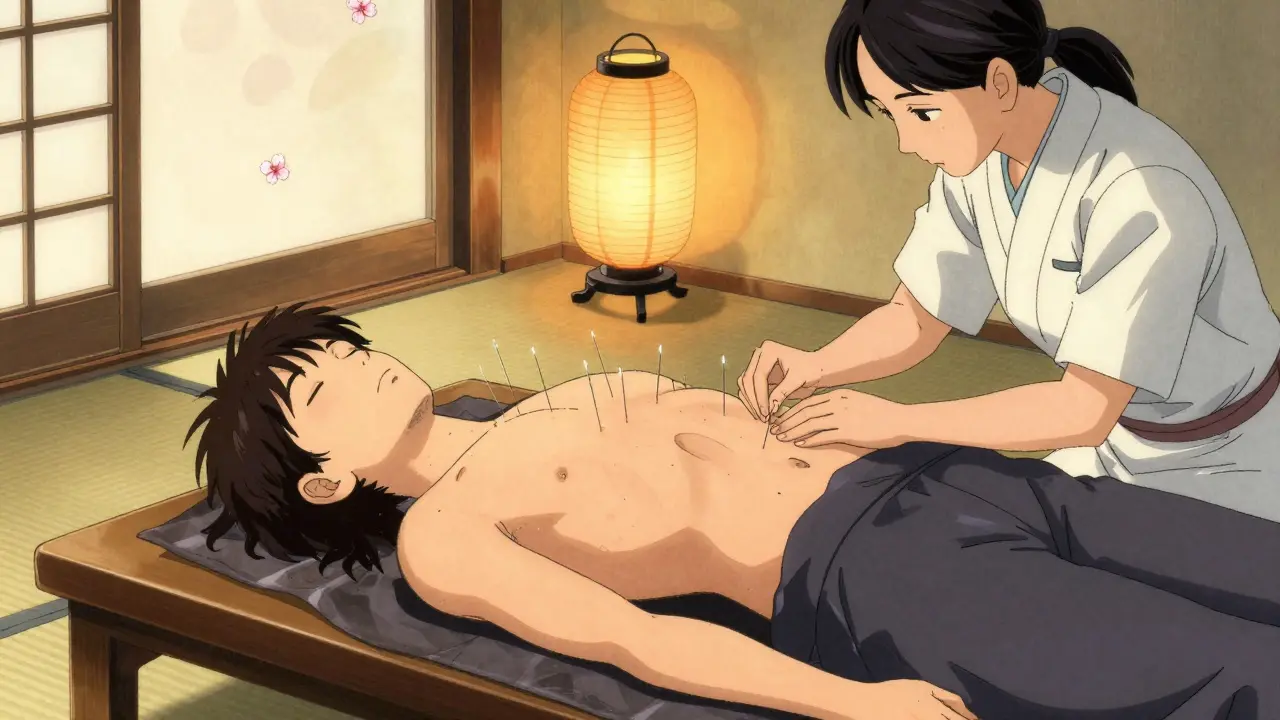
For millions of Americans struggling with chronic pain, the search for relief often leads to a dead end: too many side effects from pills, too much risk with opioids, and not enough lasting answers. That’s where acupuncture comes in-not as a mystical cure, but as a real, research-backed option that’s quietly becoming part of mainstream pain care. If you’ve ever wondered whether sticking needles into your skin can actually help with back pain, knee arthritis, or headaches, the answer isn’t just yes-it’s backed by data from over 20,000 patients in clinical trials.
How Acupuncture Actually Works (And Why It’s Not Just Placebo)
Acupuncture isn’t magic. It’s not even really about "energy channels" or "qi" in the way it’s often portrayed. At its core, it’s a physical intervention: thin, sterile needles are inserted into specific spots on the body, usually along nerves, muscles, or connective tissue. These points aren’t random. They’ve been mapped for thousands of years, and modern science is now catching up.
Studies show acupuncture triggers measurable changes in the body. It can stimulate the release of natural painkillers like endorphins and serotonin. It reduces inflammation at the site of injury. It even changes how the brain processes pain signals. One 2021 study from Harvard found that acupuncture activates areas of the brain linked to pain modulation-areas that are often underactive in people with chronic pain. This isn’t about belief. It’s about biology.
And yes, it works better than sham acupuncture. In dozens of high-quality trials, real acupuncture-where needles are placed at traditional points and inserted deeply enough-produced noticeably better pain relief than fake acupuncture, where needles don’t penetrate the skin or are placed in random spots. The difference isn’t huge, but it’s consistent. And in conditions like chronic low back pain and osteoarthritis, that small edge adds up over time.
What Conditions Does Acupuncture Actually Help?
Not all pain is the same. And acupuncture doesn’t work equally well for every type. Here’s what the science says:
- Chronic low back pain: This is where acupuncture shines. Multiple large reviews, including one from JAMA Internal Medicine with nearly 18,000 patients, found acupuncture significantly reduces pain and improves function-better than no treatment, and just as effective as standard care like NSAIDs or physical therapy.
- Knee osteoarthritis: Over 85% of osteoarthritis studies in major trials focused on knee pain. Results? Acupuncture reduces pain and stiffness, improves mobility, and the effects last at least 12 months after treatment ends.
- Tension headaches and migraines: A 2016 Cochrane review concluded acupuncture is as effective as preventive medication for migraines, without the side effects like drowsiness or weight gain.
- Neck pain: Similar to back pain, acupuncture reduces intensity and frequency, with benefits holding up over time.
But here’s the catch: it doesn’t work well for sudden, acute pain. If you just had surgery or twisted your ankle, acupuncture won’t replace your pain meds. It’s not a quick fix. It’s a tool for long-term management.
How Many Sessions Do You Really Need?
One session won’t change your life. Acupuncture is cumulative. Most studies use a protocol of 6 to 12 sessions over 6 to 8 weeks. That’s usually 1 to 2 times per week. Each session lasts about 20 to 30 minutes. The needles stay in for 15 to 30 minutes while you relax.
Some practitioners use a fixed set of points for everyone. Others tailor the points to your specific symptoms and body type. Both approaches work, but personalized treatment tends to have slightly better outcomes, especially for complex cases.
And you don’t need to keep going forever. After the initial course, many people switch to maintenance sessions every 4 to 8 weeks. That’s often enough to keep pain under control without burning out your budget.
One patient survey found 68% of people noticed real improvement by their sixth session. If you’ve done 8 sessions and feel nothing, it might not be the right fit for you. But if you’re still skeptical after 4 or 5, you’re probably not giving it enough time.
Is It Safe? What Are the Risks?
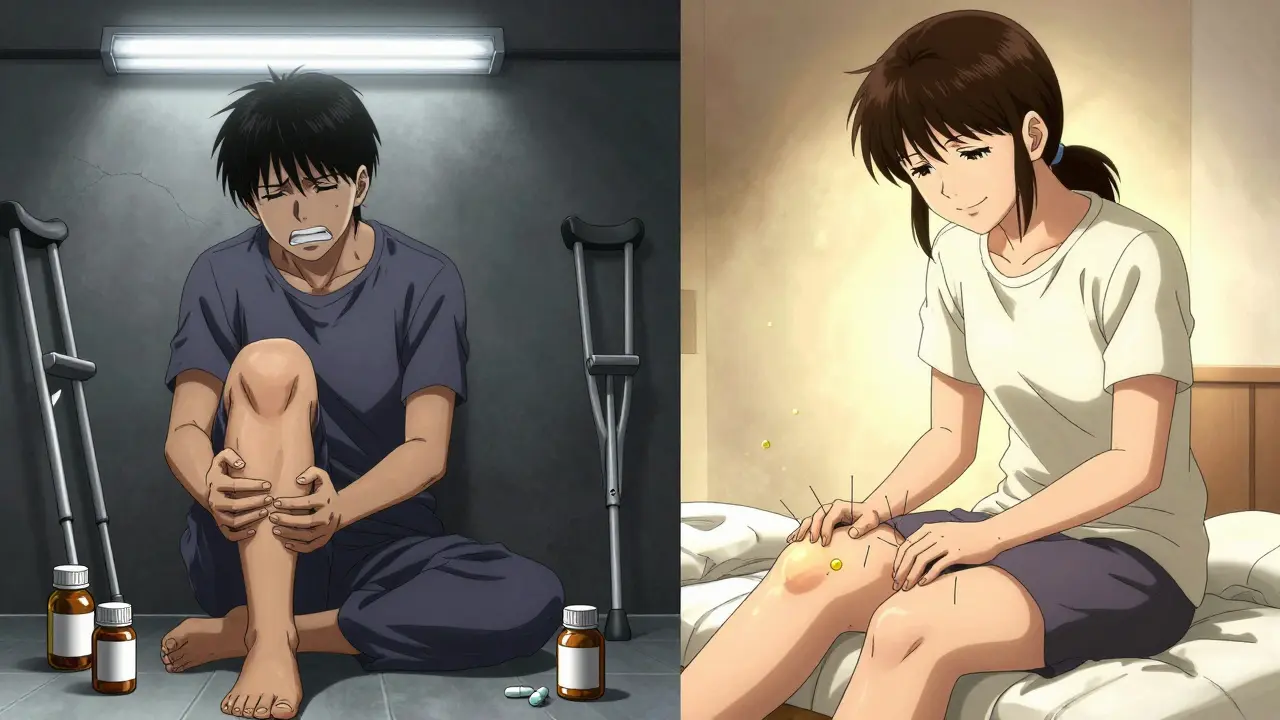
Acupuncture is one of the safest pain treatments available. Serious side effects are extremely rare-less than 0.05% of treatments, according to a review of nearly 23,000 patients. That’s safer than taking ibuprofen every day, which sends over 100,000 Americans to the hospital each year for stomach bleeding.
Minor side effects? Sure. A little bruising. Occasional soreness. Rarely, a needle might hit a small nerve and cause a quick zap. But these are temporary and mild. The needles are single-use, sterile, and approved by the FDA as medical devices. Any licensed practitioner in the U.S. is required to follow these rules.
There’s no risk of addiction. No liver damage. No dizziness or constipation. No opioid withdrawal. That’s why organizations like the CDC and the American College of Physicians now recommend acupuncture as a first-line option for chronic pain before turning to drugs.
How Does It Compare to Other Treatments?
Let’s be clear: acupuncture doesn’t replace everything. But it holds its own.
| Treatment | Pain Relief Effectiveness | Risk Profile | Duration of Benefit |
|---|---|---|---|
| Acupuncture | Modest to moderate (0.4-0.6 SD improvement) | Very low (0.05% serious risk) | Up to 12+ months |
| NSAIDs (ibuprofen, naproxen) | Modest to moderate | High (stomach ulcers, kidney damage) | Hours to days |
| Opioids | Strong (short-term) | Very high (addiction, overdose) | Days (tolerance builds fast) |
| Physical Therapy | Modest to moderate | Very low | 6-12 months |
| Sham Acupuncture (placebo) | Mild (0.1-0.2 SD improvement) | Very low | Weeks to months |
For chronic low back pain, acupuncture matches NSAIDs in pain reduction-but without the gut damage. For knee arthritis, it’s as effective as cortisone shots but lasts longer. And unlike opioids, it doesn’t make you dependent.
One major advantage? It can reduce how much medication you need. A 2022 review found that patients who got acupuncture after surgery used fewer opioids. That’s huge, especially with 47,000 opioid overdose deaths in the U.S. in 2022 alone.
Cost, Insurance, and Finding a Good Practitioner
Cost is the biggest barrier. A single session runs $60 to $120. That adds up fast if you need 10 sessions. But here’s the twist: over time, acupuncture can actually save you money. One 2021 study found patients with chronic back pain saved $1,873 in healthcare costs over a year-because they needed fewer doctor visits, imaging tests, and pain meds.
Insurance coverage? Still spotty. Only 56% of private plans in the U.S. cover acupuncture for pain in 2022. But Medicare now covers it for chronic low back pain, which affects over 12 million beneficiaries. Veterans Health Administration offers it at 64% of its facilities. Some large employers and HMOs are starting to include it too.
How do you find a good acupuncturist? Look for NCCAOM certification-that’s the national standard. Forty-seven states require it. Ask about their training (1,800 to 3,600 hours is typical). Check reviews on Healthgrades or Google. The average rating is 4.2 out of 5.0, but complaints often point to inconsistent results or poor communication.
Don’t be afraid to ask: "What’s your approach?" A good practitioner will explain their plan, set realistic expectations, and not promise miracles.
What Patients Really Say
Real stories matter. On Reddit’s r/acupuncture, 78% of 1,243 threads were positive. Common themes: "I stopped taking ibuprofen every day," "My headaches went from daily to once a month," "I can finally sleep through the night." One Healthgrades review from a woman in Texas said: "After 10 sessions for my chronic back pain, I cut my pain meds by 75%. It’s been eight months and I haven’t gone back up. That’s life-changing." But there’s honesty too. Some people say: "I didn’t feel anything," or "It was expensive and I didn’t see results." That’s normal. Not every treatment works for every person. But the data shows it works for enough people to be worth trying.
Why This Matters Now
The opioid crisis didn’t disappear. Pain is still the number one reason people visit doctors. And we’re running out of safe, long-term solutions. Acupuncture isn’t a silver bullet. But it’s one of the few tools we have that’s effective, safe, and doesn’t come with a pharmacy bill or a risk of addiction.
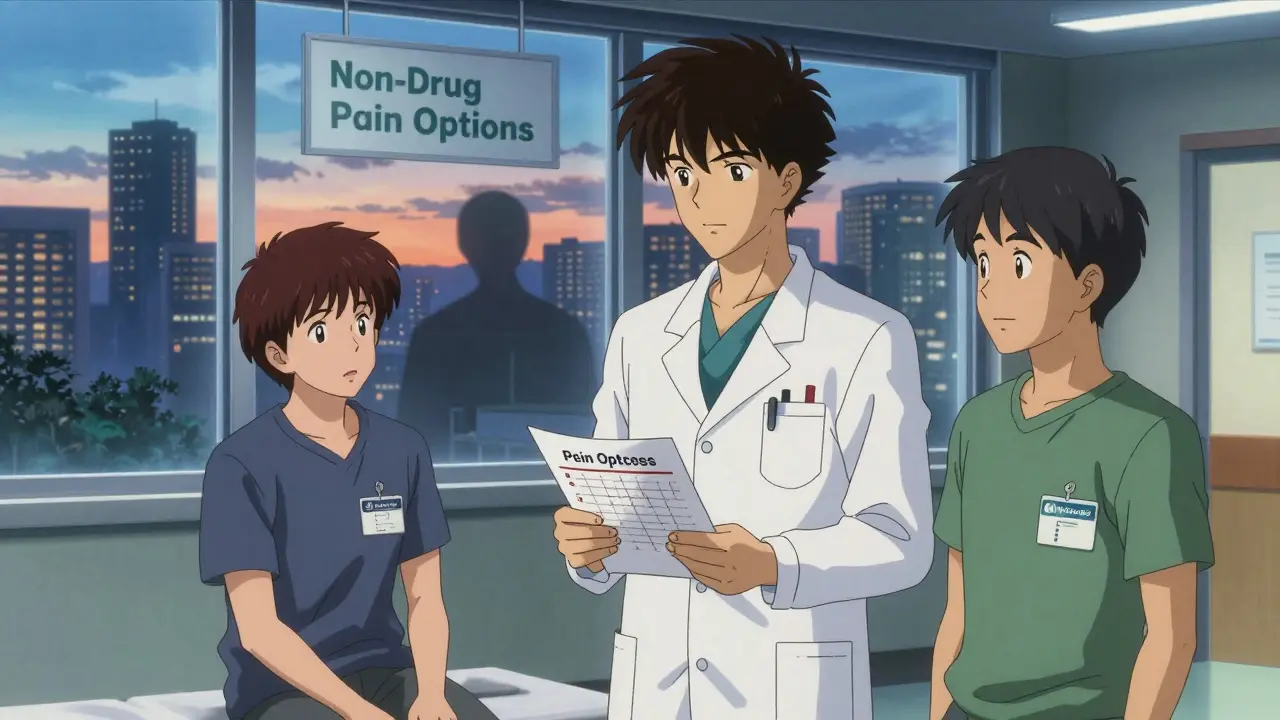
More hospitals are offering it. More insurers are covering it. More doctors are referring patients to it. The Joint Commission now requires hospitals to offer non-drug pain options-including acupuncture. That’s not a trend. That’s a shift.
If you’re tired of pills that make you feel worse than the pain, or if you’re scared of opioids, acupuncture offers a real alternative. It’s not magic. But it’s science. And for millions of people, it’s working.
Does acupuncture hurt?
Most people feel little to no pain. The needles are extremely thin-thinner than a human hair. You might feel a slight pinch or a dull ache when the needle goes in, but it’s usually mild and brief. Many patients even fall asleep during treatment.
How long do the effects last?
For chronic conditions like back pain or osteoarthritis, benefits often last 6 to 12 months after a full course of treatment. Some people need occasional maintenance sessions every few months to keep pain under control. Unlike painkillers that wear off in hours, acupuncture’s effects build over time and can be long-lasting.
Can acupuncture replace my pain medication?
It can help reduce your reliance on medication, especially NSAIDs and opioids. Many patients cut their pill use by half or more after several sessions. But it’s not an instant swap. Work with your doctor to taper safely. Acupuncture works best as part of a broader pain management plan, not as a standalone replacement.
Is there scientific proof it works?
Yes. Over 39 high-quality clinical trials involving more than 20,000 patients show acupuncture provides clinically meaningful pain relief for chronic low back pain, knee osteoarthritis, and headaches. The National Center for Complementary and Integrative Health (NCCIH) and the American College of Physicians both recognize it as an evidence-based treatment.
Why do some people say it doesn’t work?
Results vary. Some people respond quickly. Others need more sessions. A few don’t respond at all. It’s not guaranteed. But the data shows it works for a significant portion of people-especially those with chronic, non-acute pain. If you’ve tried it once and saw nothing, give it 6-8 sessions before deciding. Also, practitioner skill matters. A well-trained acupuncturist makes a big difference.
Is acupuncture covered by insurance?
It depends. Medicare covers acupuncture for chronic low back pain. Many private insurers still don’t cover it-or only cover a limited number of sessions. Check your plan. Some employers offer it as a wellness benefit. Even without insurance, the long-term cost savings from reduced medication and doctor visits can make it worthwhile.
Acupuncture isn’t the answer for everyone. But for those stuck in a cycle of pain and pills, it’s one of the few options that offers real relief without real risk. If you’re ready to try something that’s been used for millennia-and now backed by modern science-it’s worth a conversation with a licensed practitioner.

Pawan Chaudhary
December 17, 2025 AT 11:53This is actually really encouraging to see - I’ve been going to acupuncture for my knee pain for months now and honestly, it’s the only thing that’s let me walk without wincing. No more ibuprofen every day, and I sleep better too. Totally worth the cost.
CAROL MUTISO
December 18, 2025 AT 02:50So let me get this straight - we’ve got a 2,000-year-old Chinese practice that somehow outperforms Big Pharma’s latest $200-a-pill ‘miracle’? And the FDA approves the needles? I’m not mad, I’m just… weirdly impressed. Also, my cat now sits by the acupuncture table like it’s a spa day. She’s seen it work. She’s not fooled.
Philippa Skiadopoulou
December 18, 2025 AT 11:26The data presented here is methodologically sound. Multiple RCTs with adequate sample sizes confirm clinically significant outcomes for chronic low back pain and osteoarthritis. The effect size is modest but consistent, and the safety profile is exceptional. It is reasonable to consider acupuncture as a first-line non-pharmacological intervention in appropriate cases.
Sam Clark
December 20, 2025 AT 00:28It’s important to remember that acupuncture isn’t a cure - it’s a tool. Used wisely, it can restore function and reduce dependence on medications with higher risks. I’ve seen patients go from relying on opioids to managing pain with weekly sessions and movement therapy. That’s not magic. That’s integration.
Peter Ronai
December 20, 2025 AT 09:06Oh here we go again - another ‘science-backed’ miracle cure that’s just placebo with extra steps. If you believe in energy channels, you’re gonna believe anything. And don’t even get me started on ‘NCCAOM certification’ - that’s just a fancy way of saying ‘paid membership to a cult.’
Erik J
December 20, 2025 AT 10:18I’m curious - how many of the studies controlled for practitioner experience? I’ve had two sessions where one felt like a gentle energy reset and the other felt like a confused hedgehog was poking me with knitting needles. Skill matters. Is that accounted for?
Patrick A. Ck. Trip
December 21, 2025 AT 09:05Thank you for sharing this. I was skeptical at first, but after 8 sessions for my neck pain, I can turn my head again without fear. I didn't expect it to work, but it did. I'm grateful. I think more people should give it a real try before giving up. It's not a quick fix, but it's worth the patience.
amanda s
December 23, 2025 AT 07:57ACUPUNCTURE ISN’T ENOUGH. YOU NEED CRYOTHERAPY, MAGNETS, AND A SPIRITUAL RETREAT. THIS IS JUST THE TIP OF THE ICEBERG. WHY ISN’T THE GOVERNMENT FUNDING THIS? WE’RE ALL DYING FROM PAIN AND NO ONE CARES. #ACUPUNCTUREISLIFE