
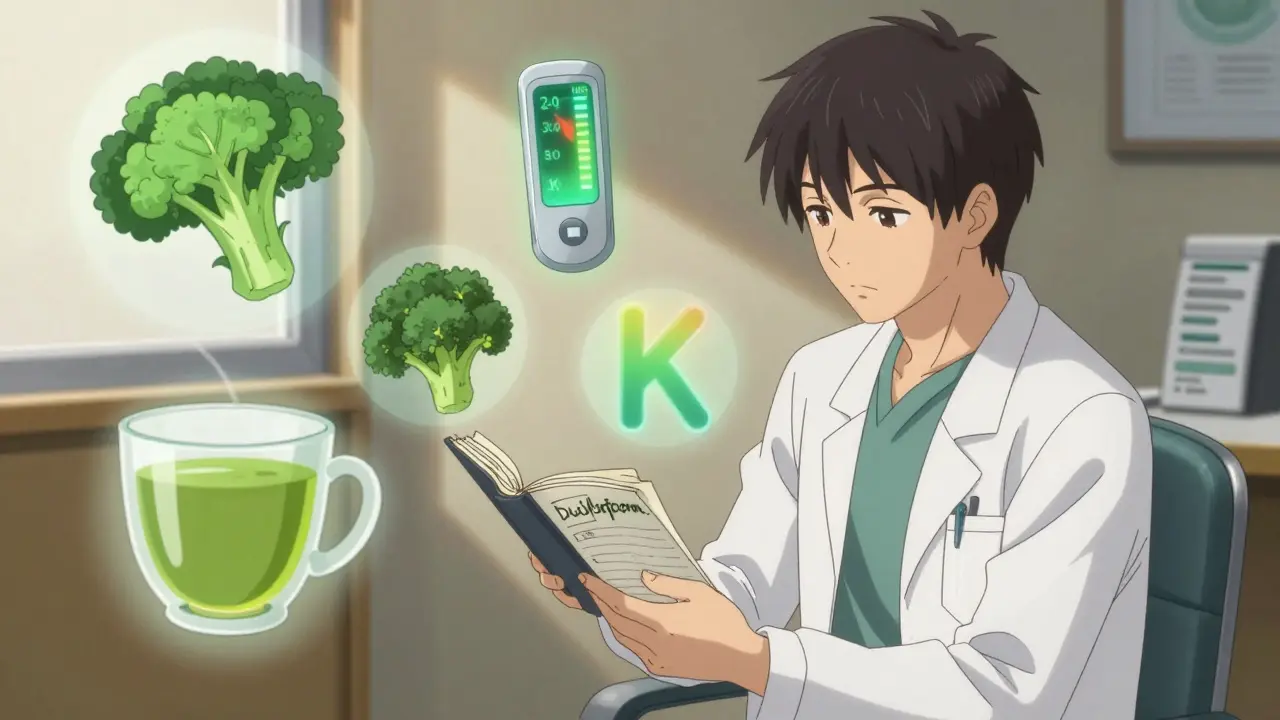
Warfarin saves lives. It prevents strokes, clots, and deadly pulmonary embolisms in millions of people worldwide. But for every person who finds stability on warfarin, there’s another who ends up in the ER because of a simple mistake - a new antibiotic, a big bowl of kale, or an over-the-counter supplement they didn’t think mattered. This isn’t scare tactics. This is real. Warfarin has one of the most dangerous interaction profiles of any medication still in widespread use.
How Warfarin Works - and Why It’s So Sensitive
Warfarin doesn’t thin your blood like water. It blocks vitamin K, a nutrient your body needs to make clotting factors. Without enough active vitamin K, your blood takes longer to clot. That’s the goal. But here’s the catch: your body doesn’t store vitamin K like it does vitamin D. You get it from food - mostly leafy greens. So if you eat spinach one day and lettuce the next, your INR (the measure of how long your blood takes to clot) can swing wildly.
Warfarin’s half-life is 20 to 60 hours. That means it sticks around. And it’s broken down by liver enzymes - CYP2C9 and CYP3A4 - that also handle dozens of other drugs. If something else competes for those enzymes, warfarin builds up. Too much? Risk of bleeding. Too little? Risk of clotting. The target INR for most people is 2.0 to 3.0. Go above 4.0? You’re in danger zone. Below 1.5? You’re unprotected.
Foods That Can Make Warfarin Too Strong - or Too Weak
It’s not about avoiding vitamin K. It’s about keeping it consistent.
One cup of cooked kale has over 1,000 micrograms of vitamin K. One cup of cooked broccoli? About 220. A cup of raw spinach? Around 145. If you normally eat a salad with spinach every day and suddenly switch to iceberg lettuce for a week, your INR can drop by 0.5 to 1.5 points in just a few days. That’s enough to make your doctor increase your dose - and then you end up with a dangerous spike if you go back to spinach.
Same goes for green tea. It’s not the caffeine. It’s the vitamin K and possibly flavonoids that interfere with warfarin metabolism. One patient reported her INR fell from 2.8 to 1.9 after drinking two cups daily for three days. Her doctor had to bump her dose by 20%.
On the flip side, cranberry juice has been linked to increased bleeding risk. Studies are mixed, but the FDA recommends avoiding large amounts - especially if you’re already on the higher end of your INR range. Same with grapefruit juice. It blocks the same liver enzymes that break down warfarin, leading to higher blood levels.
The rule? Don’t change your diet suddenly. If you love kale, eat it every day. If you hate it, skip it. But don’t go from zero to two cups of spinach a week without telling your doctor. Consistency is your best friend.
Supplements That Can Turn Warfarin Into a Time Bomb
Just because it’s natural doesn’t mean it’s safe.
St. John’s wort? It speeds up how fast your liver clears warfarin. One study showed it can reduce warfarin levels by up to 30% - putting you at risk for a clot. Garlic supplements? They can increase bleeding risk, especially when combined with warfarin. Ginseng? It can either increase or decrease warfarin’s effect, depending on the type and dose.
Coenzyme Q10? It’s structurally similar to vitamin K. Some patients report lower INR after starting it - enough to require a dose adjustment. Fish oil? High doses (over 3 grams daily) can increase bleeding risk. Not because it interacts with warfarin directly, but because it thins blood on its own. Add that to warfarin? You’re stacking the deck.
And don’t forget vitamin K supplements. People take them for bone health. But if you’re on warfarin, taking even 100 mcg daily can make your INR drop like a rock. The same goes for multivitamins that contain vitamin K. Always check the label. If it says “vitamin K” or “phylloquinone,” ask your pharmacist before taking it.
Bottom line: Tell your doctor about every supplement you take - even if you think it’s harmless. There are over 300 documented interactions between warfarin and supplements. Most are not well-known.

Prescription Drugs That Can Kill You (Without You Knowing)
This is where things get serious.
Antibiotics are the #1 culprit. Trimethoprim-sulfamethoxazole (Bactrim) can increase warfarin levels by 50% or more. One patient reported her INR jumped from 2.4 to 5.1 after a single dose. She ended up in the ER three times in two weeks. Fluconazole (an antifungal) does the same. Even amoxicillin can cause a spike in some people.
NSAIDs like ibuprofen and naproxen? They don’t interact with warfarin’s metabolism, but they irritate your stomach lining. Combine that with warfarin’s blood-thinning effect? You’re looking at a high risk of gastrointestinal bleeding. Acetaminophen (Tylenol) is safer - but only up to 2,000 mg per day. Higher doses can increase bleeding risk too.
Amiodarone? Used for heart rhythm problems. It can increase warfarin levels by up to 100%. You might need to cut your warfarin dose in half within days of starting it. SSRIs like fluoxetine and sertraline? They can also increase bleeding risk. Even some heartburn meds like omeprazole can interfere with warfarin metabolism.
And here’s the thing: many of these interactions happen fast. Fluconazole can boost warfarin levels within 48 hours. That’s why your doctor needs to know about every new prescription - even if it’s for a short course.
What About Alcohol?
One or two drinks a day? Probably fine. But three or more? That triples your bleeding risk. Alcohol affects liver function, which changes how warfarin is processed. It also irritates your stomach. Combine that with warfarin, and you’re playing Russian roulette with internal bleeding.
People who drink heavily are more likely to have erratic INR levels. They’re also more likely to miss appointments or forget doses. If you drink, keep it consistent. Don’t binge on weekends. Don’t switch from wine to whiskey. Stick to one or two drinks, max, and tell your doctor if your drinking habits change.

How to Stay Safe - Real Strategies That Work
Here’s what actually helps people stay out of the hospital:
- Get your INR checked regularly. Even when you feel fine. Stability takes time - often 4 to 6 weeks.
- Use the same pharmacy every time. They can flag potential interactions before you even get the prescription.
- Keep a food and medication journal. Note what you ate, what you took, and your INR results. Patterns emerge.
- Ask your doctor or pharmacist: “Could this interact with my warfarin?” Don’t assume they’ll know unless you ask.
- Never start a new supplement without checking. Even “natural” ones.
- Wear a medical alert bracelet. In an emergency, it could save your life.
One Reddit user with over 12,000 followers in the r/Warfarin community swears by eating exactly one cup of cooked spinach every evening at 6 p.m. - same time, same amount. His INR has been stable for two years. That’s not luck. That’s discipline.
Warfarin vs. Newer Blood Thinners - Is There a Better Option?
DOACs - drugs like Eliquis, Xarelto, and Pradaxa - don’t need regular blood tests. They have fewer food interactions. And they’re easier to use. But they’re not for everyone.
If you have a mechanical heart valve? DOACs are dangerous. You must stay on warfarin. Same if you have severe kidney disease or antiphospholipid syndrome. And if you’re on Medicare? Warfarin costs $80 a year. DOACs? Around $6,500. Many patients can’t afford the switch.
But here’s the truth: if you’re struggling with diet changes, frequent blood tests, or medication confusion, talk to your doctor about switching. For many, the freedom of a DOAC is worth the cost.
When to Call Your Doctor Immediately
You don’t need to panic over every bump or bruise. But these signs mean stop what you’re doing and call:
- Bleeding that won’t stop - nosebleeds, gums, cuts
- Bloody or black, tarry stools
- Red or pink urine
- Severe headaches, dizziness, weakness
- Unexplained swelling or pain in joints or muscles
- Any fall or head injury - even if you feel fine
These aren’t just warnings. They’re red flags. And they happen more often than people admit.
Can I eat spinach while taking warfarin?
Yes - but only if you eat it consistently. Warfarin doesn’t block vitamin K completely; it just reduces its effect. If you eat 1 cup of spinach every day, your body adjusts. If you suddenly eat 3 cups one week and none the next, your INR will swing. Consistency matters more than avoidance.
What supplements should I avoid with warfarin?
Avoid St. John’s wort, ginseng, garlic supplements, high-dose fish oil (over 3g/day), and CoQ10 unless approved by your doctor. Even vitamin K supplements can interfere. Always check labels on multivitamins - if they contain vitamin K or phylloquinone, don’t take them without talking to your provider.
Can antibiotics make warfarin more dangerous?
Yes. Antibiotics like Bactrim (trimethoprim-sulfamethoxazole) and fluconazole can increase warfarin levels by 50% or more, sometimes within 48 hours. Even common ones like amoxicillin can cause spikes. Always tell your doctor you’re on warfarin before taking any antibiotic. You may need an INR check within 3 days of starting it.
Is warfarin safer than newer blood thinners?
It depends. Warfarin is safer for people with mechanical heart valves, severe kidney disease, or antiphospholipid syndrome. It’s also much cheaper. But for most others, newer drugs (DOACs) are easier to manage with fewer interactions and no need for regular blood tests. If you’re struggling with diet, meds, or monitoring, ask your doctor if switching is right for you.
How long does it take to stabilize on warfarin?
Most people need 4 to 6 weeks to find their stable dose. During that time, INR checks are often weekly. After that, if your levels stay steady, you may only need checks every 4 to 6 weeks. But any change in meds, diet, or health can reset the clock. Stability isn’t permanent - it’s maintained.
If you’re on warfarin, you’re not alone. Millions manage it successfully. But it demands attention. Not fear - attention. Know your foods. Know your meds. Know your INR. And never, ever assume something is too small to matter. In warfarin’s world, small things have big consequences.



Jenci Spradlin
January 9, 2026 AT 16:18just started warfarin last month and i thought i could keep eating my daily kale smoothie like before. big mistake. my INR spiked to 5.2 and i ended up in the er. now i eat exactly one cup of cooked spinach every night at 6pm like that reddit guy. no more guessing. consistency is everything.
Gregory Clayton
January 10, 2026 AT 09:21why do we even still use this ancient drug? it’s like driving a 1987 corolla with no gps and a broken fuel gauge. the new blood thinners are safer, easier, and don’t make you keep a food diary like you’re training for a diet competition. if your doctor won’t switch you, find a new doctor.
Jeffrey Hu
January 10, 2026 AT 21:13you guys are missing the real issue. warfarin’s half-life is 20-60 hours, but its active metabolites linger longer. CYP2C9 polymorphisms affect 30% of the population-especially those of East Asian descent. if you’re not genotyped before starting, you’re flying blind. and yes, grapefruit juice inhibits CYP3A4, but so do a dozen other common meds like clarithromycin and diltiazem. it’s not just diet-it’s polypharmacy.
also, st. john’s wort induces CYP3A4 and CYP2C9. it doesn’t just reduce warfarin levels-it can make you clot within 72 hours. i’ve seen three patients with DVT after starting it ‘for depression.’
Matthew Maxwell
January 11, 2026 AT 08:18It is utterly irresponsible to suggest that people can casually adjust their vitamin K intake. This is not a diet plan-it’s a life-or-death balancing act. Those who treat warfarin like a suggestion rather than a medical mandate are putting themselves and others at risk. Your careless spinach salad isn’t just a meal-it’s a potential hemorrhage waiting to happen.
And to those who say ‘just switch to a DOAC’-have you considered the cost? Or the fact that DOACs have no antidote for major bleeding? Warfarin has vitamin K and fresh frozen plasma. You don’t get that luxury with rivaroxaban.
Jacob Paterson
January 12, 2026 AT 05:07lol so you’re telling me I can’t have my morning cranberry juice and garlic pills anymore? what, am i supposed to live like a monk now? my grandma took warfarin for 20 years and never once checked her INR. she lived to 94. maybe the real problem is overmedicating and overthinking.
also, why is everyone so scared of bleeding? i’ve had nosebleeds since i was 12. it’s not the end of the world.
Johanna Baxter
January 12, 2026 AT 05:36i cried when i had to stop my green tea. i loved that ritual. now i drink chamomile and feel like i’ve lost a part of myself. my husband says i’m being dramatic but he doesn’t get it. this isn’t just about blood-it’s about identity. i used to be the person who drank green tea and ate salads. now i’m the warfarin lady. and i hate it.
Jerian Lewis
January 12, 2026 AT 16:52the fact that we have to track every leaf of spinach we eat is absurd. this isn’t medicine. it’s surveillance. and yet no one talks about how the system fails people who can’t afford regular INR tests. if you’re poor, you’re just supposed to guess and hope.
Patty Walters
January 12, 2026 AT 20:44my mom’s INR was all over the place until she started using the same pharmacy and kept a little notebook. wrote down every med, every meal, every drink. after 3 months, her doctor saw a pattern: her INR dropped every time she ate a big bowl of broccoli soup on tuesdays. now she eats it on thursdays instead. simple. no magic. just tracking.
also, don’t trust ‘natural’ supplements. i bought a ‘heart health’ gummy with vitamin k2. turned out it had 120mcg. my INR dropped to 1.1. i was so mad. always check the label. even the cute ones.
Phil Kemling
January 13, 2026 AT 17:36warfarin forces you to confront the fragility of your own body. you’re not in control. your liver, your diet, your stress, your sleep-all of it affects your INR. and yet you’re told to be consistent. it’s a paradox. we want autonomy, but the drug demands surrender. maybe that’s why so many of us feel so alone with it. no one else understands what it’s like to be so deeply regulated by a chemical you didn’t choose.
Diana Stoyanova
January 15, 2026 AT 03:07you know what changed my life? i started eating the same exact amount of spinach every day at the same time. not because i wanted to, but because i had to. and guess what? i stopped being terrified. i stopped checking my INR like it was a lottery ticket. i stopped feeling like a medical experiment. consistency doesn’t just stabilize your blood-it stabilizes your soul. i used to hate warfarin. now i respect it. it’s not the enemy. it’s the teacher. and i’m finally learning the lesson.
also, i wear my medical alert bracelet every single day. even to the gym. even to bed. because if i collapse, i want someone to know i’m not just some random lady with a headache. i’m someone who needs vitamin K, not a CT scan.
and yes, i still drink one glass of wine at dinner. but only if i’ve eaten my spinach. and only if my INR is in range. it’s not deprivation. it’s discipline. and discipline is freedom.
Elisha Muwanga
January 15, 2026 AT 13:09Why does America still rely on this archaic drug? In the UK, DOACs are first-line for 90% of patients. We have universal healthcare, so cost isn’t an issue. Here, it’s all about profit margins and Medicare loopholes. Patients are being sacrificed for corporate savings. This isn’t medical care-it’s economic coercion.
Darren McGuff
January 15, 2026 AT 20:37just had my INR checked this morning-2.7. stable for 11 weeks. i’ve been eating the same portion of kale every evening since i started. no surprises. no panic. and i don’t take any supplements except a plain multivitamin with zero vitamin K. it’s not hard. it’s just attention. and attention is the most underused medicine we have.
Ashley Kronenwetter
January 17, 2026 AT 17:08Thank you for this comprehensive and clinically accurate overview. I have been a nurse for 22 years, specializing in anticoagulation clinics, and I can confirm every point made here. The most common cause of warfarin-related hospitalizations is not patient noncompliance-it’s unrecognized drug interactions. Always consult your pharmacist before taking anything new. Even OTC cough syrup can contain dextromethorphan, which may inhibit CYP2D6 and indirectly affect warfarin metabolism.