

If someone overdoses, you have seconds to decide: call 911 or Poison Control? Getting this wrong can cost a life. Too many people delay because they’re unsure. Some call Poison Control for a life-threatening situation, thinking it’s "less scary." Others call 911 for a minor mistake, clogging up ambulances that could be saving someone else. This isn’t about being careful-it’s about knowing exactly when each service should be used.
Call 911 Immediately If There Are Any of These Symptoms
Don’t wait. Don’t text a friend. Don’t Google it. If the person is not responding, struggling to breathe, or having seizures, call 911 right now. These aren’t "maybe" signs-they’re red flags that mean the body is shutting down.- Not breathing or barely breathing - If their chest isn’t moving, or they’re gasping like a fish out of water, their brain is already running out of oxygen. This is the #1 killer in overdoses.
- Unconscious or unresponsive - Shake them hard. Yell their name. Pinch their shoulder. If they don’t react at all, even to pain, they’re in cardiac arrest territory. This is not a "wait and see" situation.
- Seizures lasting more than 5 minutes - A quick twitch might be a side effect. A full-body convulsion that doesn’t stop? That’s brain damage waiting to happen.
- Low blood pressure - If their skin is cold, clammy, and pale, and their pulse is weak or hard to find, their heart is failing. Systolic pressure below 90 mmHg means they need IV fluids and drugs STAT.
These symptoms don’t wait. They escalate fast. A person who seemed fine 10 minutes ago can stop breathing in the next 30 seconds. That’s why 911 is the only choice here.
Call Poison Control When the Person Is Stable
Poison Control isn’t a backup plan-it’s a lifesaving tool for situations that aren’t emergencies yet. Think of it like a medical triage line: they help you avoid an ER visit when you don’t need one.You should call Poison Control (1-800-222-1222) if:
- The person is fully awake, alert, and talking normally.
- They took one extra pill, or accidentally swallowed a child’s medicine.
- The overdose happened less than two hours ago, and no symptoms have started.
- You know exactly what was taken (name, dose, time).
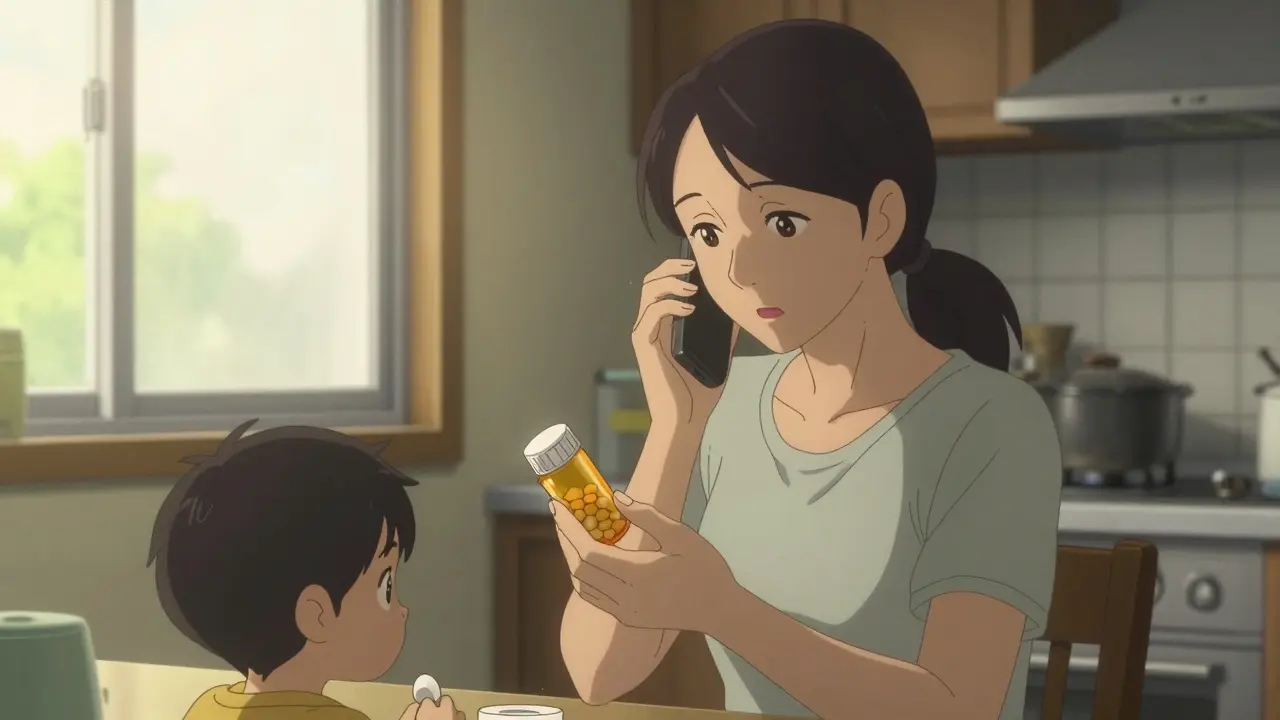
For example: a 12-year-old grabs a single aspirin tablet thinking it’s candy. Or an adult with high blood pressure accidentally takes two doses of their morning pill. These aren’t emergencies-but they still need expert guidance. Poison Control can tell you whether to watch, when to go to the ER, or if you can just keep monitoring at home.
What Information to Have Ready
Whether you’re calling 911 or Poison Control, your answers need to be fast and accurate. The more precise you are, the better the help you get.Before you dial, grab:
- The product container - Look for the active ingredient, dosage, and whether it’s extended-release. A pill labeled "Lortab 10/325" means something very different than "Lortab 5/500."
- Exact amount taken - "A handful" or "a few pills" won’t cut it. Say: "3 tablets of 500 mg acetaminophen." Or "15 mL of liquid cough syrup."
- Time of exposure - Was it 10 minutes ago? 2 hours? 6 hours? Timing changes everything.
- The person’s weight - Most poison doses are calculated per kilogram. Guessing leads to mistakes. If you don’t know it, say so. They’ll work with you.
- Current symptoms - Nausea? Drowsiness? Sweating? Even small signs matter.
Pro tip: If it’s a pill, take a picture of the label. If it’s a liquid, pour the rest into a clear cup so they can see the concentration. This saves time and prevents confusion.
Special Cases That Change the Rules
Not all overdoses are the same. Some situations demand extra caution.Infants under 1 year - Their bodies process drugs differently. Even a small amount of medicine meant for adults can be deadly. If a baby swallowed anything beyond a single drop of children’s medicine, call 911 immediately.
Adults over 79 years - Older adults often take 5+ medications daily. A single extra pill can cause dangerous interactions. Any overdose in this group? Call 911. No exceptions.
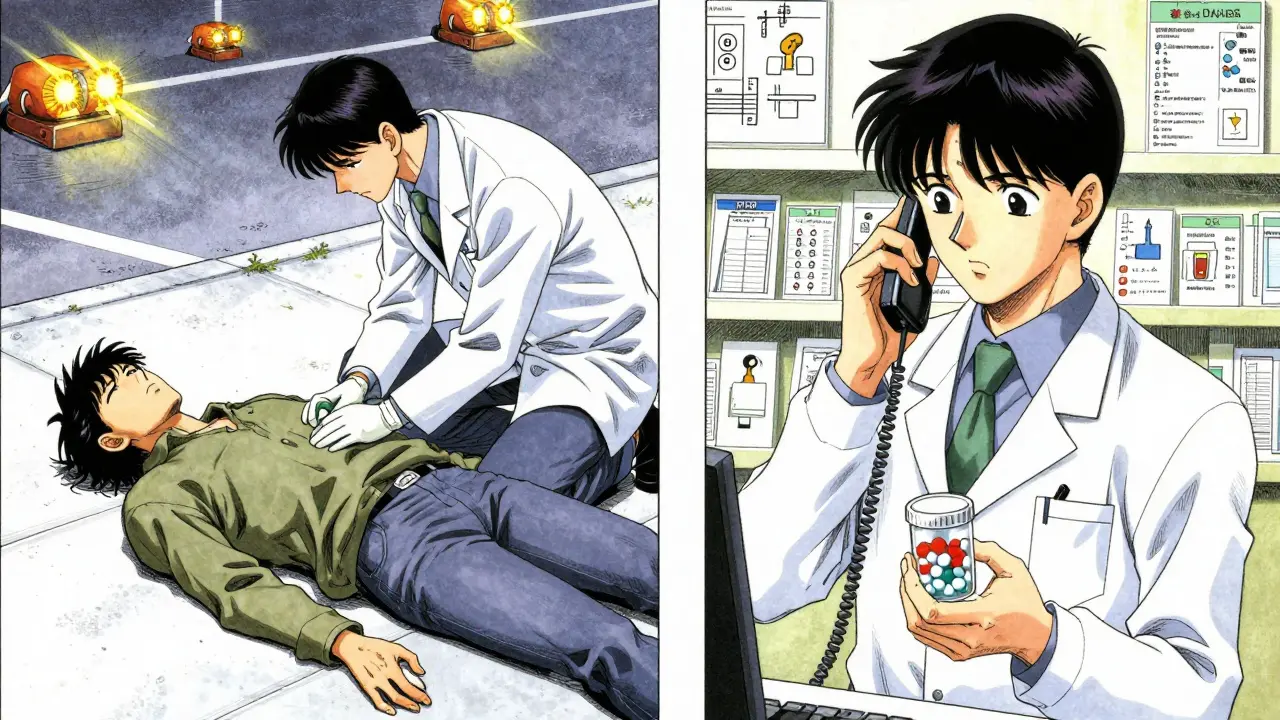
Opioid overdoses - If you suspect heroin, fentanyl, or prescription painkillers, give naloxone (Narcan) if you have it. Then call 911. Naloxone can bring someone back-but fentanyl and its analogs are so strong, the reversal can wear off before the drug does. That means they can stop breathing again minutes later. You need EMS on scene.
Carbon monoxide - Even if someone just has a headache or dizziness, call 911. Carbon monoxide poisoning doesn’t always show clear symptoms at first. By the time they’re unconscious, brain damage may already be done.
Multiple substances - Mixing alcohol, pills, and street drugs? That’s a recipe for unpredictable collapse. Call 911. No hesitation.
What Poison Control Can’t Do
Poison Control is amazing-but they’re not a substitute for emergency care. They can’t:- Give you naloxone on the phone.
- Send an ambulance.
- Provide IV fluids or oxygen.
- Manage seizures or cardiac arrest.
They can tell you what to do next. But if the person is in trouble, they’ll tell you to call 911 anyway. Their job is to prevent unnecessary ER visits-not to delay care when it’s needed.
Why This System Exists
The Poison Help hotline (1-800-222-1222) has been around since 2007. It’s staffed by toxicology experts-pharmacists, nurses, and doctors-who handle over 2 million calls a year. Their goal? Keep people out of the ER when they don’t need to go.Why does that matter? Because ERs are overwhelmed. Ambulances are stretched thin. Every time someone calls 911 for a minor case, someone else with a real emergency waits longer. Poison Control helps reduce unnecessary transports by nearly 40%. That saves lives-not just the one you’re worried about, but everyone else too.
And it works. In 2022, over 80% of single-substance child ingestions were safely managed at home after calling Poison Control. That’s 197,000 unnecessary ER visits avoided. That’s also 197,000 families who didn’t have to face hospital bills, missed work, or panic.
What to Do After the Call
Once you’ve made the call:- Stay on the line. Don’t hang up until they say it’s okay.
- Don’t give the person anything to eat, drink, or vomit-unless they tell you to.
- Keep the person awake and in a safe position (on their side if they’re drowsy).
- Have the pill bottle or container ready for EMS or ER staff.
If you called Poison Control and the person starts showing symptoms-call 911 immediately. They change their advice if things get worse. Don’t wait for permission.
What Not to Do
- Don’t wait to see what happens. Time is critical.
- Don’t try to make them vomit. It can cause choking or lung damage.
- Don’t give them coffee, milk, or sugar. These don’t help-and some can make things worse.
- Don’t rely on apps or websites. webPOISONCONTROL is useful for planning-but not for emergencies. If someone is symptomatic, it’s not designed for real-time use.
There’s a myth that "calling 911 means they’ll get arrested." That’s not true. Emergency responders are trained to help, not punish. If someone overdosed because they were struggling, they need care-not judgment.
Can I call Poison Control for my pet?
No. Poison Control handles human exposures only. For pets, call the ASPCA Animal Poison Control Center at 1-888-426-4435. They charge a consultation fee, but it’s worth it-vets rely on their guidance.
Is Poison Control free?
Yes. The Poison Help hotline (1-800-222-1222) is completely free, confidential, and available 24/7. It’s funded by federal grants and state programs. No insurance is needed.
What if I’m not sure if it’s an overdose?
Call Poison Control anyway. They’ve handled over 2 million cases since 2022. If you’re unsure, they’ll ask you questions to help you decide. It’s better to call and find out it was nothing than to wait and regret it.
Can I use the Poison Control app instead of calling?
The app is useful for storing poison prevention info and getting first-aid steps, but it doesn’t connect you to a live expert. If someone is showing symptoms, or you’re unsure, call 1-800-222-1222. The app can’t replace human judgment.
What if I’m not fluent in English?
Poison Control offers real-time translation in over 150 languages. Just say the language you need, and they’ll connect you to an interpreter. Spanish is available at most centers. Mandarin, Vietnamese, and Arabic are offered at select centers. Don’t hesitate-help is there.


Amina Aminkhuslen
March 7, 2026 AT 02:03Okay but let’s be real-Poison Control is the unsung hero of American healthcare. I’ve called them twice. Once when my toddler ate half a bottle of children’s ibuprofen. They told me to watch her for 20 minutes, then call back. No ambulance. No ER. Just a calm voice saying, ‘She’s fine. Give her water. Don’t panic.’ I cried after hanging up. That’s the kind of care we need more of.
Meanwhile, my cousin called 911 because her cat licked a drop of essential oil. Three squad cars. One paramedic. A $4,000 bill. And the cat? Fine. Poison Control would’ve saved everyone. Stop treating every sniffle like a nuclear meltdown.
Also-why is it still a myth that calling 911 means arrest? Because some clown on TikTok said it. Newsflash: EMS isn’t cops. They’re nurses in uniforms. They want to help. Stop being scared of the system that’s literally built to save you.
amber carrillo
March 7, 2026 AT 23:27This is such an important guide. I appreciate how clearly the distinctions are laid out. The emphasis on stability versus crisis is critical. Many people don’t realize that Poison Control exists not to replace emergency services, but to prevent unnecessary strain on them. That’s public health wisdom at its best.
Thank you for writing this. It’s the kind of information that should be taught in schools, included in medicine cabinets, and shared in every community center.
Tim Hnatko
March 8, 2026 AT 00:53I work in a rural ER. We get 3-5 calls a week from people who called 911 for something Poison Control could’ve handled. One time, a mom called because her kid licked a lick of hand sanitizer. We showed up. She was sobbing. The kid was fine. We gave her pamphlets. We didn’t charge her. But we lost 45 minutes that could’ve gone to someone with a heart attack.
Just… know the difference. It saves time. It saves money. It saves lives. Not just theirs. Everyone’s.
Aaron Pace
March 9, 2026 AT 06:42THIS. IS. LIFE. OR. DEATH. 🚨
My cousin took 4 Adderall thinking they were ‘study pills.’ Didn’t throw up. Didn’t panic. Called Poison Control. They said: ‘Watch for tremors. If she starts shaking or can’t speak, call 911 NOW.’ She didn’t. They told her to sleep it off. 12 hours later, she woke up fine. No hospital. No trauma. Just a smart call.
Don’t wait. Don’t Google. Don’t text your cousin. Call 1-800-222-1222. It’s free. It’s fast. It’s literally a lifeline. 💙
Joey Pearson
March 9, 2026 AT 22:54Yes. Exactly. When in doubt? Call 911. No shame. No guilt. No ‘but what if it’s nothing?’
You don’t have to be a hero. You just have to be brave enough to act.
And if you’re scared? Call Poison Control first. They’ll tell you if you need to escalate. Either way-you did the right thing.
Roland Silber
March 10, 2026 AT 09:15There’s a huge gap in public education here. Most people think Poison Control is for ‘weird’ cases-like exotic plants or snake bites. But the real power is in the mundane: a kid swallowing a vitamin, an elderly person doubling up on blood pressure meds, someone accidentally taking expired antibiotics.
It’s not about severity-it’s about predictability. Poison Control has algorithms that can calculate toxic dose per kilogram in seconds. ERs don’t. They triage. They react. Poison Control prevents.
And yes-use the app for reference, but if symptoms are present? Call. Always. The human on the other end has seen 200 cases like yours this week. Trust them.
Patrick Jackson
March 11, 2026 AT 15:54I used to think calling 911 was the responsible thing. I thought being cautious meant overreacting. But then I read about how Poison Control helped save 197,000 kids last year from unnecessary ER visits.
That’s not just efficiency. That’s justice. It means 197,000 families didn’t have to choose between medical bills and rent. 197,000 parents didn’t spend the night in a fluorescent-lit waiting room, terrified.
We don’t need more heroes. We need more systems that make heroes unnecessary.
Call Poison Control. Let them be the calm in the storm. And if the storm gets worse? Then call 911. But don’t rush the storm. Let the experts guide you.
That’s not fear. That’s wisdom. ❤️
Adebayo Muhammad
March 11, 2026 AT 19:35Let’s be brutally honest: this entire system is a corporate smokescreen. Poison Control is funded by pharmaceutical lobbyists. They want you to ‘manage at home’ so hospitals don’t report adverse drug reactions. The real danger? Polypharmacy. The real villain? Big Pharma. They profit when you ‘accidentally’ overdose. They profit when you go to the ER. They profit when you don’t.
And don’t get me started on the ‘free hotline’-it’s a PR stunt. The real cost is buried in your insurance premiums. They’re not saving you-they’re optimizing your exposure to liability.
Call 911. Always. Because the system is rigged. Trust no one. Not even the ‘experts.’
Pranay Roy
March 12, 2026 AT 18:59Wait-so you’re telling me that if my 80-year-old grandma takes two extra blood pressure pills, I should call 911? But if my 10-year-old eats a single aspirin, I should call Poison Control? That’s ageism. That’s discrimination. Why is an 80-year-old more valuable than a 10-year-old? This is eugenics wrapped in medical jargon.
And why is Poison Control free? Because they’re collecting data. They’re tracking every pill you take. They’re feeding it to insurers. Next thing you know, your premiums go up because you ‘called for an overdose.’
I’m not calling anyone. I’m watching. I’m waiting. I’m letting nature take its course. That’s the only real truth here.