
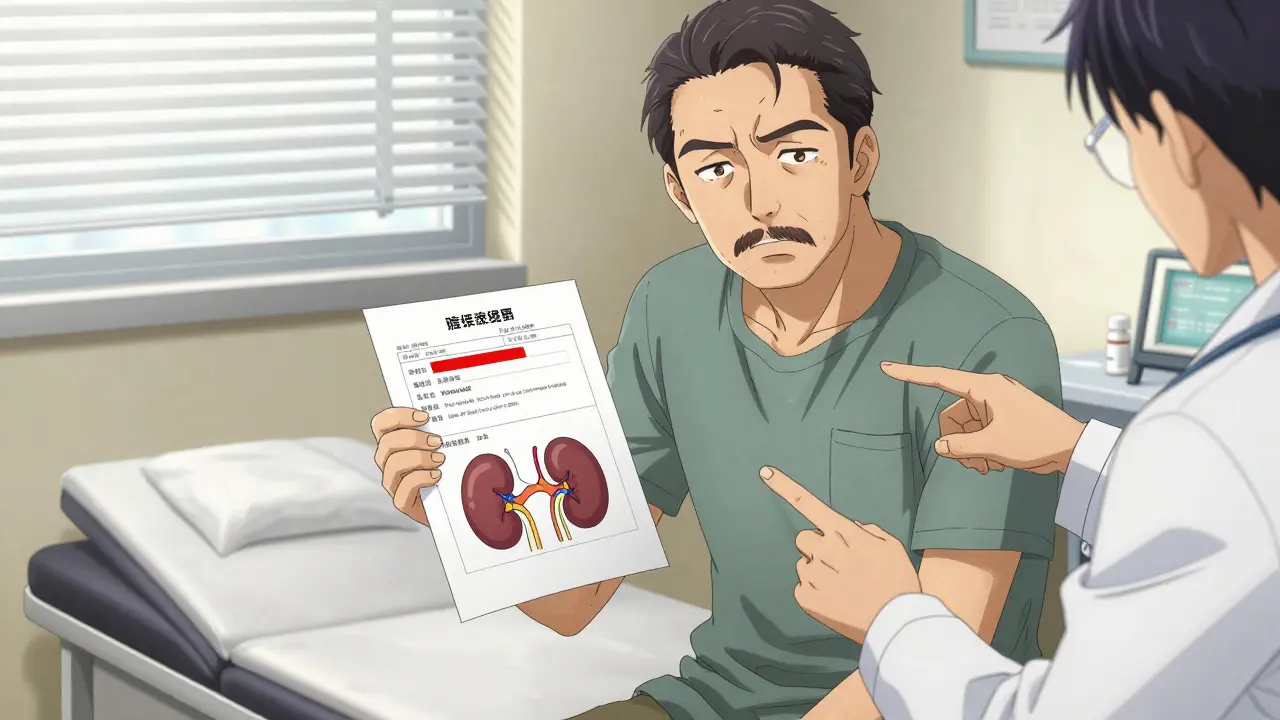
If you're taking a thiazide diuretic like hydrochlorothiazide for high blood pressure, you might not realize it could be raising your risk of gout. It’s not a common side effect for everyone, but for some people, especially those with a history of high uric acid or past gout attacks, this medication can trigger painful flare-ups. The connection isn’t obvious - you’re taking it to lower blood pressure, not to affect your joints. But the science behind it is clear, and ignoring it can lead to unnecessary pain and more prescriptions down the line.
How Thiazide Diuretics Raise Uric Acid Levels
Thiazide diuretics, including hydrochlorothiazide and chlorthalidone, work by helping your kidneys get rid of extra salt and water. That’s why they’re so effective for lowering blood pressure. But here’s the catch: while they’re removing sodium, they’re also messing with how your body handles uric acid. Uric acid is a waste product that comes from breaking down purines in food. Normally, your kidneys filter it out and flush it through urine. But thiazides interfere with that process.
Research shows these drugs block a transporter in the kidney called OAT1, which normally helps move uric acid out of the blood and into the urine. Instead, uric acid gets reabsorbed back into the bloodstream. Another transporter, OAT4, swaps thiazides for uric acid in the kidney tubules, pushing even more uric acid into the blood. The result? Within just a few days of starting the medication, your serum uric acid levels can rise by 6% to 21%. This doesn’t mean you’ll get gout - but it does mean you’re closer to the tipping point.
The Link Between Thiazides and Gout Flare-Ups
High uric acid doesn’t always mean gout. But when levels climb above 6.8 mg/dL - the saturation point where crystals start forming - your risk shoots up. Studies tracking thousands of patients show that people on thiazide diuretics have a 25% to 30% higher chance of developing gout compared to those on other blood pressure meds. The risk doesn’t jump right away. It builds over time. One 2024 study found that after 180 days of continuous use, the chance of needing gout medication nearly doubled compared to the first month.
And it’s not just about the drug. People who already have high uric acid, are overweight, drink alcohol regularly, or eat a lot of red meat and seafood are at higher risk. But even if you’re otherwise healthy, long-term use of thiazides can push you over the edge. The good news? Once you stop the medication, uric acid levels usually return to normal within two to three months. That’s why it’s so important to catch the problem early.
Who Should Be Careful?
If you’ve ever had a gout attack - even one years ago - you should talk to your doctor before starting a thiazide diuretic. Same goes if your blood tests show uric acid levels above 7.0 mg/dL for men or 6.0 mg/dL for women. These aren’t just numbers on a lab report. They’re warning signs. According to the American College of Cardiology and American Heart Association, you should have your uric acid checked before starting thiazide therapy if you have a history of gout or hyperuricemia. Yet, a 2022 study found that only 85% of doctors actually do this.
Also, don’t assume chlorthalidone is safer than hydrochlorothiazide. A 2019 study found both drugs carry nearly the same risk for triggering new gout. The old belief that chlorthalidone is worse isn’t backed by current data. What matters more is the dose and how long you’ve been taking it. Higher doses (like 50 mg of HCTZ) carry more risk than lower ones (12.5 mg or 25 mg), but even low doses can cause problems over time.

What Happens After You Get Gout?
Once gout hits, it doesn’t just go away on its own. A flare usually starts with sudden, intense pain in one joint - most often the big toe. The joint swells, turns red, and feels hot to the touch. It can be so painful you can’t even bear a sheet over it. About 90% of acute gout cases happen when uric acid levels are above 6.8 mg/dL. If you’re on a thiazide and get gout, your doctor may prescribe colchicine or NSAIDs to stop the flare. But that’s just treating the symptom, not the cause.
Many patients end up on long-term gout meds like allopurinol to lower uric acid. A 2024 study found that nearly 19% of people on thiazides needed an antigout medication within two years. That’s a lot of extra pills, side effects, and costs. And it’s often avoidable.
Alternatives That Don’t Raise Uric Acid
You don’t have to give up on blood pressure control just because you’re at risk for gout. There are other options that won’t spike your uric acid - and some might even help lower it.
- Losartan: This blood pressure med is an ARB that actually helps your kidneys get rid of uric acid by blocking the URAT1 transporter. It’s a double win: lowers blood pressure and reduces gout risk.
- Calcium channel blockers: Drugs like amlodipine have no effect on uric acid levels. They’re just as effective as thiazides for controlling blood pressure.
- Spironolactone: This potassium-sparing diuretic doesn’t interfere with uric acid transport. It’s a good option if you need a diuretic but have a history of gout.
Yes, some of these alternatives cost more. Generic hydrochlorothiazide runs about $4 for 90 tablets. Losartan and amlodipine can be $10-$15 for the same amount. But when you factor in the cost of gout meds, ER visits, and lost work days from flare-ups, the cheaper option isn’t always the cheapest in the long run.
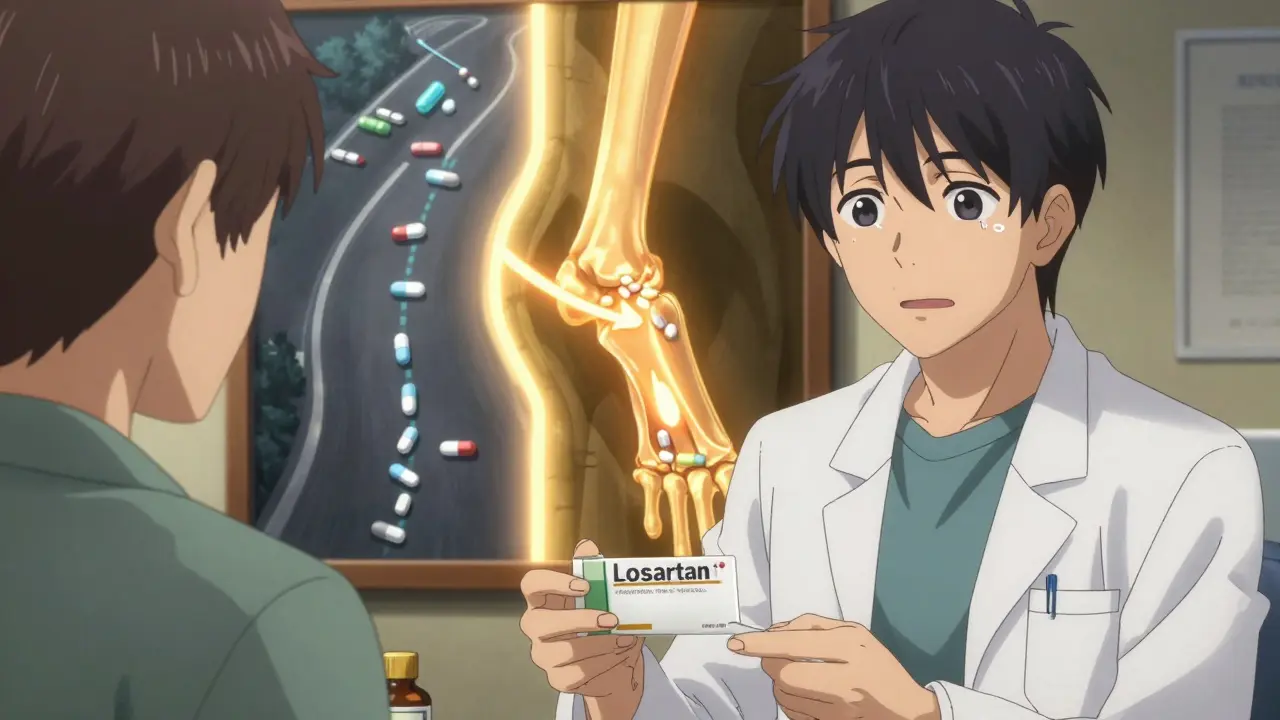
What You Can Do Right Now
If you’re on a thiazide diuretic and haven’t been checked for uric acid, ask your doctor for a simple blood test. If your level is above 7.0 mg/dL (or 6.0 for women), don’t panic - but do take action. Lifestyle changes can make a big difference:
- Reduce alcohol, especially beer and hard liquor
- Avoid organ meats, shellfish, and sugary drinks
- Drink plenty of water - at least 2 liters a day
- Maintain a healthy weight
If your uric acid stays high and you’re still on the thiazide, your doctor might recommend starting a low dose of allopurinol (100 mg daily) to prevent crystals from forming. The European League Against Rheumatism recommends keeping uric acid below 6.0 mg/dL for people with gout. That’s lower than most labs consider “normal,” but it’s the target that prevents flares.
The Bigger Picture
Thiazide diuretics are still first-line for high blood pressure. They’re cheap, effective, and proven to reduce heart attacks and strokes. But medicine isn’t one-size-fits-all. For someone with no history of gout and normal uric acid, the benefits still outweigh the risks. For someone with a past flare or high uric acid, the risk is real - and avoidable.
Doctors are getting better at this. A 2021 survey showed 78% of cardiologists now check uric acid before prescribing thiazides - up from just 52% in 2015. That’s progress. But it’s not universal. You have to be your own advocate. If you’re on hydrochlorothiazide and you’ve ever had joint pain that came on suddenly, ask: Could this be related?
There’s hope on the horizon. A new type of diuretic is in phase II trials (NCT04892105) designed to lower blood pressure without touching uric acid transporters. Results aren’t expected until late 2025. Until then, the best strategy is awareness, testing, and choosing the right alternative when needed.
Frequently Asked Questions
Can thiazide diuretics cause gout even if I’ve never had it before?
Yes. While not everyone develops gout, thiazide diuretics increase uric acid levels in nearly everyone who takes them. For some people, especially those with genetic risk factors, obesity, or a diet high in purines, this can push uric acid past the crystal-forming threshold (6.8 mg/dL), leading to a first-time gout attack. About 1-2% of people on long-term thiazide therapy develop clinical gout, even without prior history.
Is chlorthalidone worse than hydrochlorothiazide for gout risk?
No, not significantly. Earlier assumptions suggested chlorthalidone was more likely to cause gout, but a 2019 study comparing the two found nearly identical risks for new-onset gout when used at similar doses. Both drugs block the same kidney transporters and raise uric acid by the same mechanism. The key factor is duration and dose, not which specific drug you’re on.
How long does it take for uric acid to drop after stopping thiazides?
Uric acid levels typically begin to fall within days of stopping the medication, and most people return to their baseline within 2 to 3 months. The Mayo Clinic reports that in patients who discontinue thiazide diuretics, serum uric acid normalizes without additional treatment in the majority of cases. This is why doctors often recommend pausing the drug before starting urate-lowering therapy - to see if the gout was truly caused by the medication.
Should I avoid thiazides entirely if I have high uric acid?
Not necessarily. If your uric acid is high but you haven’t had gout, your doctor may still prescribe a low-dose thiazide while monitoring your levels closely. The American College of Cardiology recommends checking uric acid before starting and then every 3-6 months if you’re on the drug. If levels stay above 7.0 mg/dL, switching to an alternative like losartan or a calcium channel blocker is often the next step. The goal is balancing blood pressure control with gout prevention.
Can lifestyle changes prevent gout if I’m on thiazides?
Yes, and they’re essential. Reducing alcohol, avoiding red meat and shellfish, cutting out sugary drinks, drinking plenty of water, and maintaining a healthy weight can lower uric acid by 10-20%. For someone on thiazides, these changes may be enough to keep uric acid below the danger zone without needing medication. The European League Against Rheumatism specifically recommends lifestyle changes as the first step in managing gout risk for patients on diuretics.



Jose Mecanico
January 13, 2026 AT 08:39Had no idea thiazides could do this. I’ve been on HCTZ for 5 years and never got tested for uric acid. Just got my labs back last week - 7.2 mg/dL. Gonna talk to my doc about switching to losartan. Thanks for the heads-up.
Alex Fortwengler
January 15, 2026 AT 02:40Of course the pharma giants want you on these drugs. They make billions off gout meds, ER visits, and lifelong allopurinol prescriptions. Thiazides are a trap. They don’t even fix your blood pressure that well - just mask it while wrecking your joints. You think your doctor cares? Nah. They get paid per script. Wake up.
jordan shiyangeni
January 16, 2026 AT 19:51It’s not just about the drug - it’s about the systemic failure of preventive medicine in this country. We treat symptoms, not causes. We prescribe a diuretic because it’s cheap, then we compound the problem with NSAIDs, then colchicine, then allopurinol, then renal consults, then hospitalizations. All because we refused to check a simple serum uric acid level before initiating therapy. The ACC/AHA guidelines are clear. The fact that only 85% of physicians comply is not negligence - it’s malpractice by omission. And yes, I’ve reviewed the 2022 JAMA Internal Medicine paper on this exact issue. You’re welcome.
Abner San Diego
January 17, 2026 AT 09:18Why are we even talking about this? In America, we don’t care if you get gout. We just want your blood pressure down so you don’t die on the job. Meanwhile, your big toe’s swelling up and you’re stuck with a $400 co-pay for allopurinol. Meanwhile, China’s got a new diuretic in trials that doesn’t mess with uric acid. We’re still using 1950s drugs because Big Pharma doesn’t want to innovate. Get real.
Eileen Reilly
January 18, 2026 AT 14:11OMG I JUST REALIZED MY TOE HURTS BECAUSE OF MY BP MED 😭 I’VE BEEN TAKING HCTZ FOR 3 YEARS AND THOUGHT IT WAS JUST ‘OLD AGE’ 🤦♀️ GONNA ASK MY DR FOR A URIC ACID TEST TOMORROW. THANKS FOR THIS POST!!
Monica Puglia
January 20, 2026 AT 11:52This is such an important post 💙 I’ve seen so many patients with gout who had no idea their BP med was the culprit. A simple blood test could’ve saved them so much pain. If you’re on thiazides, please, please ask your doctor for a uric acid check. It takes 5 minutes and could change your life. 🌱💧
steve ker
January 22, 2026 AT 05:35Thiazides cause gout. Losartan helps. End of story. Stop over explaining
George Bridges
January 23, 2026 AT 05:29Just wanted to say this is one of the clearest, most helpful explanations I’ve read on this topic. I’m a nurse and I’ve seen too many patients suffer needlessly because no one checked their uric acid. Thank you for writing this. It’s the kind of info that should be in every primary care office.
Faith Wright
January 23, 2026 AT 09:39So let me get this straight - we’re supposed to trust a system that prescribes a drug that causes a painful condition, then charges us more to fix it? And you’re telling me this isn’t intentional? 😏
TiM Vince
January 24, 2026 AT 01:18I’ve been on chlorthalidone for 7 years. No gout. But I also drink 3 liters of water a day, avoid alcohol, and eat mostly plants. Maybe lifestyle matters more than we think? Just saying.
gary ysturiz
January 24, 2026 AT 10:57You’re not alone. I was on HCTZ for years and didn’t know the risk. Now I’m on amlodipine and my uric acid dropped to 5.8. No more toe pain. Life’s better. Small change, huge difference. You got this.