
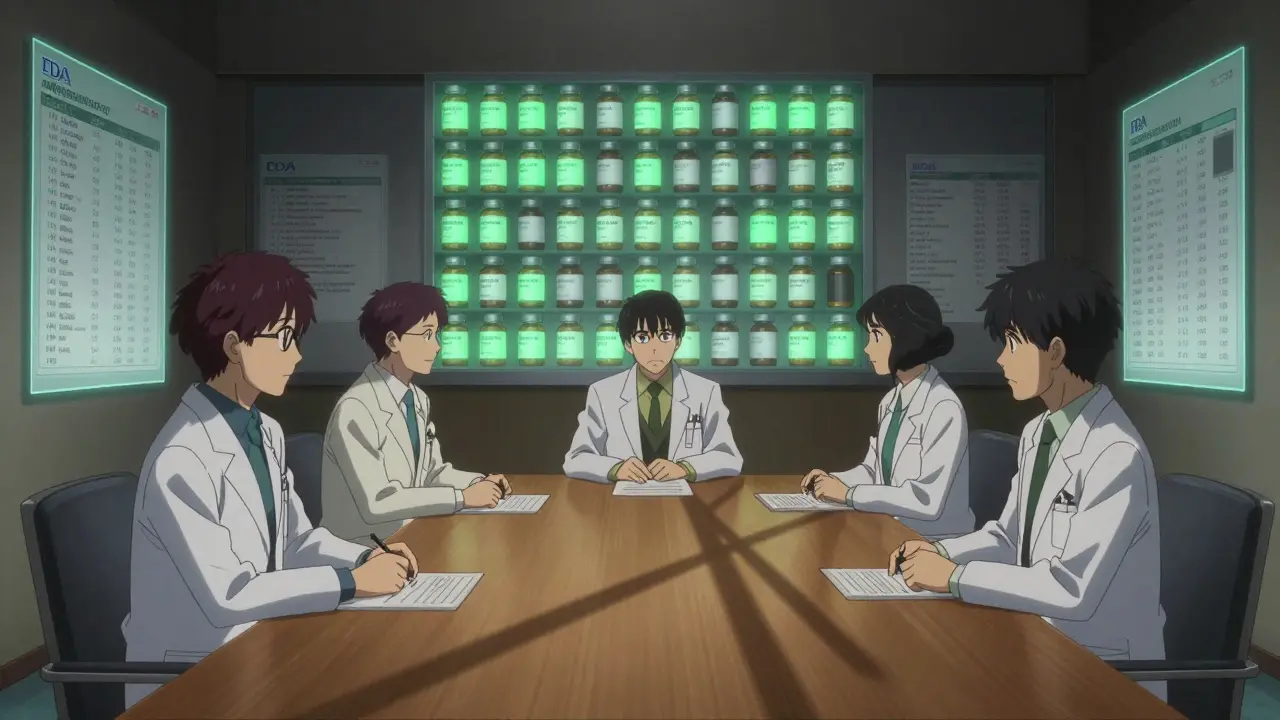
Ever wonder why your prescription for a generic drug is covered-while another one isn’t, even if they’re both the same medicine? It’s not random. It’s not arbitrary. It’s a cold, calculated system built around one goal: cost-but not at the expense of safety or effectiveness. Insurers don’t just pick generics because they’re cheap. They pick them because they’ve been vetted, ranked, and locked into a system designed to keep your out-of-pocket costs low-while keeping their own expenses in check.
It All Starts With the P&T Committee
Every major insurer-whether it’s Medicare Part D, UnitedHealthcare, or your employer’s plan-has a Pharmacy & Therapeutics (P&T) committee. Think of them as the silent gatekeepers of your medicine cabinet. These aren’t marketers or accountants. They’re usually pharmacists, doctors, and clinical specialists who meet regularly to review every new generic drug that hits the market. Their job? To answer three questions:- Does it work as well as the brand-name drug?
- Is it safe for real people, not just clinical trial subjects?
- Is it the cheapest option that does the job?
How Tiers Work: Why Your Copay Is $5 and Not $50
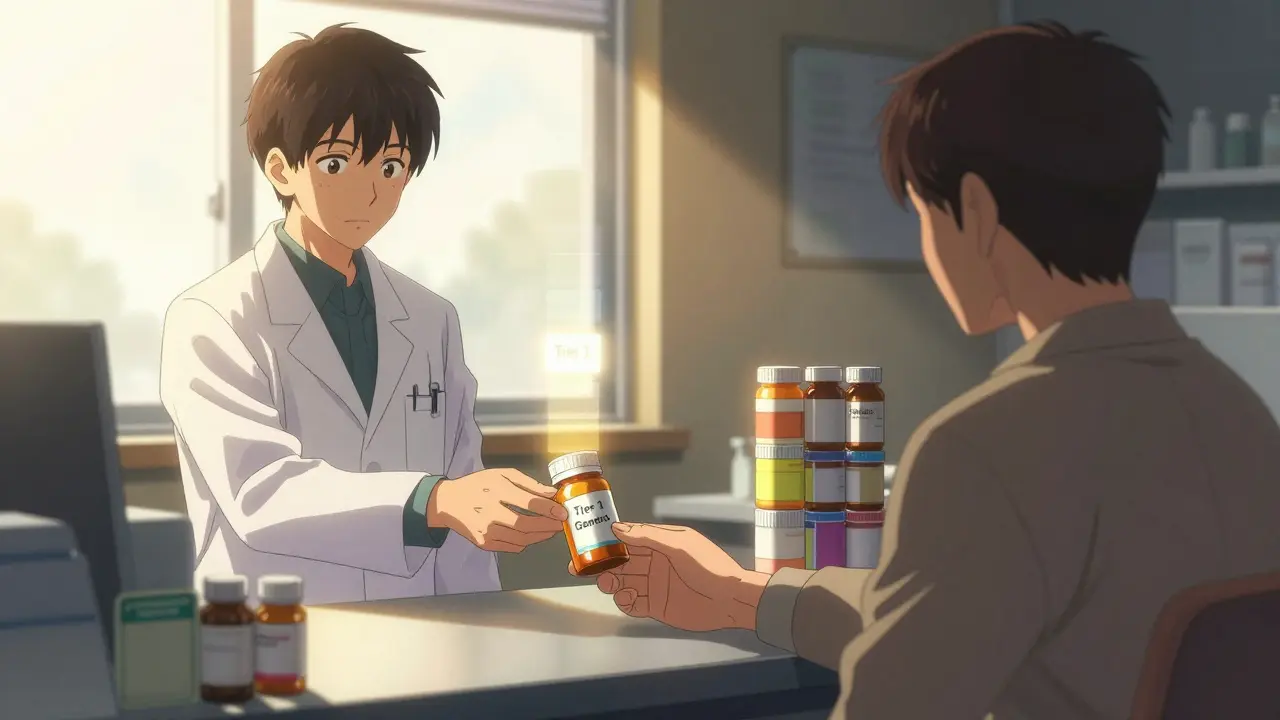
Insurers don’t just cover generics-they organize them into tiers. Most plans use 3 to 5 tiers. And here’s the key: generics almost always land in Tier 1. In Tier 1, your copay is typically $0 to $15 for a 30-day supply. Compare that to Tier 3 or 4, where brand-name drugs cost $40 to $100+. Even some newer, more expensive generics might still be in Tier 2 if they’re not the cheapest option. But the lowest tier? Reserved for the most common, most cost-effective generics. Medicare Part D plans, which cover over 50 million people, have standardized this. As of 2023, 92% of them put all generic drugs in Tier 1. Private insurers follow the same pattern. Blue Shield of California, Humana, Cigna-they all structure their formularies the same way. Tier 1 = generics. Tier 2 = preferred brands. Tier 3 = non-preferred brands. Tier 4 = specialty drugs. This isn’t just about money. It’s about behavior. When your copay is $5, you’re far more likely to fill the prescription. When it’s $80, you skip it. That’s why insurers push generics: they get better adherence, fewer complications, and lower overall costs.The FDA Approval Isn’t Enough-Here’s What Else Matters
You might think: “If the FDA approved it, why wouldn’t my insurer cover it?” The answer: FDA approval is the starting line, not the finish line. Insurers require more:- Same active ingredient-no exceptions.
- Therapeutic equivalence-the FDA assigns this as “AB-rated.” If it’s not AB-rated, it won’t make the cut.
- Manufacturing quality-insurers track recalls, inspections, and supply chain reliability. A generic made in a plant with past quality issues? It gets flagged.
- Volume and usage-if a generic is widely prescribed and has decades of real-world use, it’s a lock. New generics? They need proof.
Why Some Generics Get Rejected (Even If They’re FDA Approved)
Not every generic makes it onto a formulary. Here’s why:- Too many similar options-If there are five generics for a drug like lisinopril, and four cost $8, the fifth at $9 gets cut. Insurers don’t need five versions of the same thing.
- Supply chain instability-If a generic manufacturer has had two shortages in the past year, insurers will drop it. You don’t want your blood pressure med to disappear next month.
- Lack of clinical data-A new generic might be approved, but if there’s no data on long-term outcomes in older adults or patients with kidney disease, it won’t get covered.
What Happens When Your Drug Isn’t Covered?
If your doctor prescribes a generic that’s not on your plan’s list, you’re not stuck. You can file an exception request. Here’s how it works:- Your doctor submits a form explaining why the non-formulary drug is necessary-maybe you had side effects with the covered version, or it didn’t work.
- The insurer has three business days to respond (one day if it’s urgent).
- If they don’t respond? Automatic approval.
Therapeutic Substitution: The Hidden Rule You Might Not Know
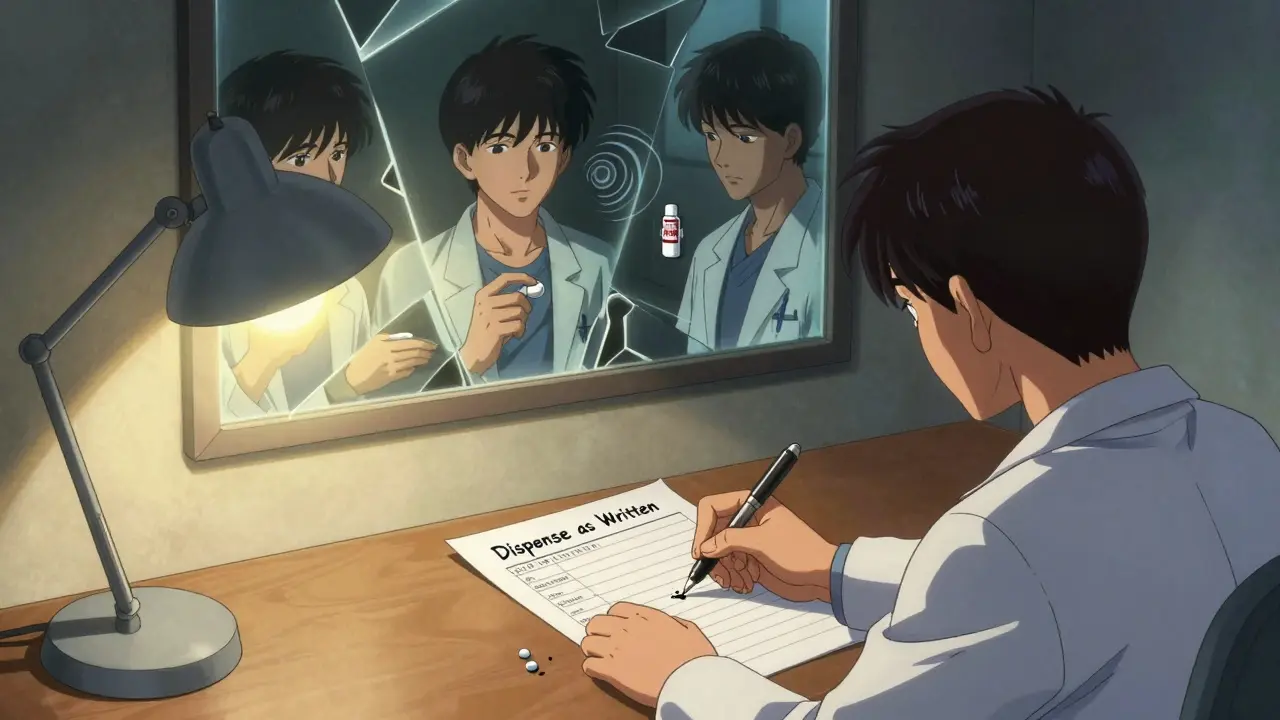
Here’s where things get tricky. Even if your doctor prescribes a brand-name drug, your pharmacist can legally swap it for a generic-without telling you-unless you say no. That’s called therapeutic substitution. And 78% of commercial plans allow it. In fact, many pharmacies are contractually required to do it. But here’s the catch: sometimes, the substitute isn’t perfect. A 2023 survey in Drug Topics found that 31% of patients reported side effects after being switched to a different generic. Maybe the inactive ingredients (like dyes or fillers) triggered a reaction. Or maybe the absorption rate was slightly different. If that happens, you can ask your doctor to write “Dispense as Written” or “Do Not Substitute” on the prescription. That legally blocks the switch.What’s Changing in 2025 and Beyond
The rules are shifting fast:- $2,000 cap on out-of-pocket drug costs (starting 2025) means insurers will push even harder for generics to keep total spending down.
- Faster FDA approvals-the Generic Drug User Fee Amendments aim to cut approval time from 42 months to 10 months. More generics = more choices.
- Preferred pharmacy networks-Medicare plans now require pharmacies to offer deeper discounts on generics. That’s why your $5 copay might drop to $0 next year.
- AI and personalized generics-some companies are developing generics tailored to your genetics. But insurers don’t know how to cover them yet. P&T committees are still figuring out how to evaluate them.
Bottom Line: You’re Not Just a Patient. You’re a Cost Center.
Insurers aren’t trying to deny you care. They’re trying to make sure the system doesn’t collapse under the weight of rising drug prices. Generics save the U.S. healthcare system over $140 billion a year. Without them, premiums would skyrocket, and many people couldn’t afford their meds at all. Your best move? Know your formulary. Check your plan’s drug list every year. Ask your pharmacist: “Is this the cheapest generic available?” And if you’re switched to a new version that doesn’t feel right-speak up. You have rights. You have options. And you’re not powerless in this system.Why do some generic drugs cost more than others even if they’re the same medicine?
Even though two generics have the same active ingredient, they’re made by different manufacturers. One might have lower production costs, better bulk pricing, or a longer track record of reliability. Insurers pick the cheapest one that meets safety standards. The more expensive version might still be covered-but only in a higher tier, meaning you pay more.
Can my insurer change which generics they cover mid-year?
Yes, but only under specific conditions. If a generic gets recalled, has a safety issue, or if a cheaper alternative becomes available, insurers can remove it from the formulary. However, they must give you at least 60 days’ notice and allow you to finish your current prescription. You can also request an exception if the change affects your health.
Do all insurers use the same formulary rules?
No. While most follow the same general structure-Tier 1 for generics-each insurer has its own P&T committee and decision criteria. Medicare plans have stricter federal rules. Commercial plans vary by state and employer. Some are more flexible with newer generics; others stick to the oldest, cheapest options. Always check your specific plan’s drug list.
What’s the difference between a generic and a biosimilar?
Generics are exact copies of small-molecule drugs (like blood pressure or diabetes pills). Biosimilars are similar-but not identical-to complex biologic drugs (like insulin or rheumatoid arthritis treatments). Biosimilars are newer, more expensive, and harder to approve. Insurers are still learning how to cover them, but they’re becoming more common as patents expire.
Why do some doctors resist prescribing generics?
Some doctors worry that not all generics work the same way-especially for conditions like epilepsy, thyroid disease, or mental health. While most are interchangeable, a small percentage of patients react differently to inactive ingredients. Doctors who’ve seen these cases may prefer to stick with a brand they know works. But they’re also pressured by insurers to choose generics to keep costs down.
Justin Rodriguez
March 6, 2026 AT 01:53Insurers aren’t evil-they’re just math with a conscience. If a $3 generic does the same job as a $9 one, and 200k people take it, that’s $1.2M saved annually. That money doesn’t vanish-it keeps premiums down for people who need insulin, statins, antidepressants. We talk about drug pricing like it’s a conspiracy, but it’s just supply chain + volume + risk management. The system’s flawed? Yes. But it’s not broken. It’s optimized.
Milad Jawabra
March 6, 2026 AT 10:07Yessss this is the real talk 🙌 I’ve been on 3 different generics for my blood pressure and one made me dizzy as hell. Didn’t change the active ingredient-just the damn filler. Insurers don’t care about your weird sensitivity to cornstarch or dye #5. They just want the cheapest AB-rated thing on the shelf. Meanwhile, I’m sitting here wondering why my pharmacist swapped my med without asking. #PharmacistBetrayal
Megan Nayak
March 7, 2026 AT 13:19Oh please. This is just corporate propaganda dressed as public health. You think P&T committees are made of saints? They’re HR departments with white coats. The ‘cost-effective’ generic? It’s the one the insurer’s parent company has a stake in. The ‘unsafe’ one? Maybe it’s made in India. Coincidence? Or just capitalism with a side of xenophobia? The FDA doesn’t regulate manufacturing quality-third-party audits do. And those audits? Bought and paid for. This whole system is a pyramid scheme where the patient pays the interest.
Divya Mallick
March 9, 2026 AT 04:24India makes 60% of the world’s generics and still you Americans act like we’re some kind of pharmaceutical black market? Your insulin costs $400 because your system is broken-not because we don’t make good medicine. We produce 10 billion pills a year with 99.8% compliance. You cry about ‘supply chain issues’? We’ve been shipping to 150 countries since 1980. Your ‘formulary decisions’ are just fear-mongering wrapped in a white lab coat. Shame on you for blaming the global south while your own insurers pocket billions.
Pankaj Gupta
March 9, 2026 AT 09:04While the systemic incentives described here are largely accurate, it's worth noting that therapeutic equivalence (AB rating) is not always a perfect proxy for clinical equivalence. Some studies show variability in bioavailability between batches of the same generic, particularly for narrow-therapeutic-index drugs like warfarin or levothyroxine. This is why some clinicians still prefer branded versions for these specific classes-not out of profit motive, but out of documented patient outcomes. The system needs nuance, not just cost-based binaries.
Alex Brad
March 10, 2026 AT 19:21Generics save lives. Period.
Jane Ryan Ryder
March 11, 2026 AT 00:22So let me get this straight-you’re saying the reason I can’t get my $50/month pill is because some guy in a conference room picked the $5 one? Wow. What a surprise. Next you’ll tell me the moon landing was real and my cat’s name is Barry. Keep your formularies. I’ll take my $80 copay and my dignity.
Callum Duffy
March 12, 2026 AT 16:00The structural logic underpinning formulary decisions is, in principle, defensible. However, the implementation is often depersonalized to the point of indifference. A patient who experiences an adverse reaction to a substituted generic does not receive a meaningful avenue for recourse beyond the exception process-which, as noted, consumes physician time that could otherwise be directed toward clinical care. The system prioritizes fiscal efficiency over therapeutic continuity. This is not merely a policy flaw; it is a moral one.
Chris Beckman
March 13, 2026 AT 13:04bro uhh so like i read this whole thing and like... wait so they just pick the cheapest one?? like even if it gives u hives?? that's wild. i thought the doc chose it. my pharmacist just handed me a new pill last week and i was like 'this ain't the same' and he was like 'same chem, same dose' but the pill looks like a neon green rock?? what even is this??
Levi Viloria
March 14, 2026 AT 19:19As someone who’s lived in five countries, I’ve seen how this plays out differently. In Canada, generics are automatic unless flagged. In Germany, P&T committees include patient reps. In India, generics are so cheap they’re sold in bazaars. The U.S. system isn’t uniquely cruel-it’s uniquely inefficient. We pay more for less because we’ve outsourced trust to middlemen. Maybe instead of optimizing for cost, we should optimize for trust. Let patients choose. Let doctors choose. Let the market, not the spreadsheet, decide.
Zacharia Reda
March 16, 2026 AT 09:33Let’s be real-the reason insurers push generics isn’t to save you money. It’s to avoid paying for the brand-name version that’s covered under a different contract. That $5 generic? The insurer’s pharmacy benefit manager owns the company that makes it. The $50 one? That’s from a competitor. It’s not about cost. It’s about vertical integration. And yes, that’s legal. And yes, that’s why you’re still paying $15 for your blood pressure med. You’re not being saved. You’re being exploited. But hey, at least it’s ‘AB-rated.’