

More people than ever are popping herbal supplements like candy-turmeric for inflammation, green tea extract for weight loss, ashwagandha for stress. But what if these "natural" fixes are quietly harming your liver? The truth is, herbal and supplement liver toxicity is no longer a rare side effect. It’s a growing crisis backed by hard data from the NIH, FDA, and top medical journals.
What’s Really in Your Supplement Bottle?
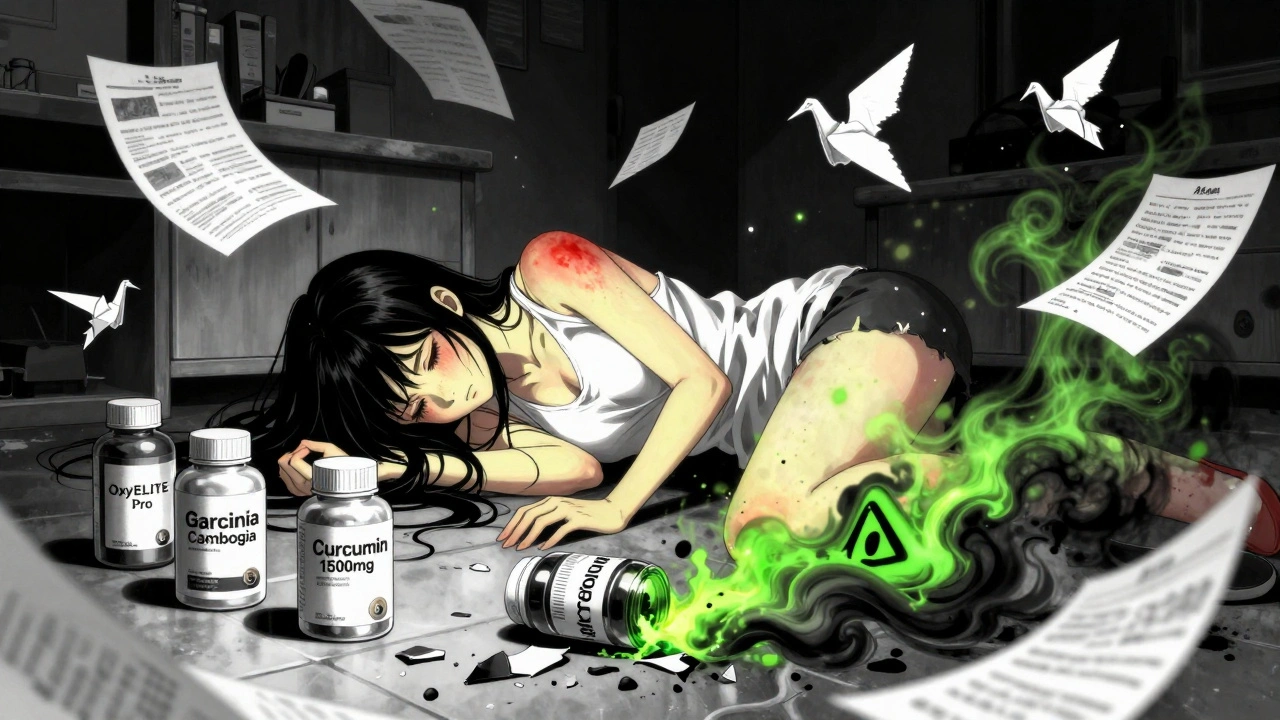
You assume that if it’s sold in a health food store or marketed as "all-natural," it’s safe. That’s a dangerous myth. The FDA doesn’t require herbal supplements to prove safety before they hit shelves. Unlike prescription drugs, they don’t need clinical trials, toxicity studies, or dosing guidelines. That means what’s on the label? Often not what’s inside. A 2017 study found that up to 60% of herbal products are mislabeled or adulterated. Some contain heavy metals like lead, mercury, or arsenic. Others are spiked with hidden pharmaceuticals-sildenafil (the active ingredient in Viagra) in sexual enhancement pills, NSAIDs in pain relievers, even steroids in "natural" anti-inflammatories. One popular weight loss product, OxyELITE Pro®, was pulled from shelves after causing dozens of liver failure cases. The culprit? Aegeline, a compound from the bael fruit, never tested for safety in humans. Even clean supplements can be dangerous. Turmeric, for example, is often praised for its anti-inflammatory properties. But high-dose turmeric supplements-especially those with concentrated curcumin-have been linked to hospitalizations. A 2024 study in JAMA Network Open found turmeric was one of the top six supplements causing liver injury. In one case, a woman taking 1,500 mg of curcumin daily for six months developed severe hepatitis. Her liver enzymes spiked to 10 times the normal level. She didn’t have a history of alcohol use or viral hepatitis. The only new thing in her routine? The turmeric capsules.The Six Supplements Most Likely to Damage Your Liver
Based on data from the NIH’s LiverTox database and multiple peer-reviewed studies, these six supplements have the strongest link to liver injury:- Turmeric / Curcumin - High doses (over 1,000 mg daily) can cause cholestatic hepatitis. The risk increases with long-term use and in people with pre-existing liver conditions.
- Green Tea Extract - The antioxidant EGCG, which is supposed to be healthy, can become toxic in concentrated form. Over 100 cases of liver injury have been tied to green tea extract supplements, especially when taken on an empty stomach or in doses over 800 mg daily.
- Garcinia Cambogia - Marketed for weight loss, this supplement has been linked to acute liver failure. The FDA issued warnings after multiple hospitalizations.
- Black Cohosh - Used for menopause symptoms, this herb has caused hepatitis in dozens of cases. The exact compound responsible is still unknown.
- Red Yeast Rice - Often sold as a "natural statin," it contains monacolin K, the same compound as the prescription drug lovastatin. But without dosage control, it can cause muscle damage and liver stress.
- Ashwagandha - Popular for stress and sleep, it’s been tied to cases of autoimmune hepatitis. The mechanism isn’t clear, but the liver damage is real.
These aren’t outliers. In a U.S. study of 1,198 patients with acute liver failure, 12% were caused by herbal products. That’s more than acetaminophen overdose in some years.
How Do These Supplements Hurt Your Liver?
Your liver is your body’s main detox center. It breaks down everything you take-food, alcohol, medications, supplements. Herbal compounds are complex, and your liver has to process them just like a drug. But unlike pharmaceuticals, these compounds haven’t been tested for safety in humans. The damage isn’t always obvious. In many cases, the liver starts to swell or develop inflammation long before symptoms show. By the time you feel tired, nauseous, or notice dark urine, the damage may already be advanced. Symptoms of herbal liver injury include:- Fatigue (87% of cases)
- Abdominal pain (76%)
- Nausea and vomiting (68%)
- Dark urine (52%)
- Yellowing skin or eyes (jaundice)
- Itchy skin
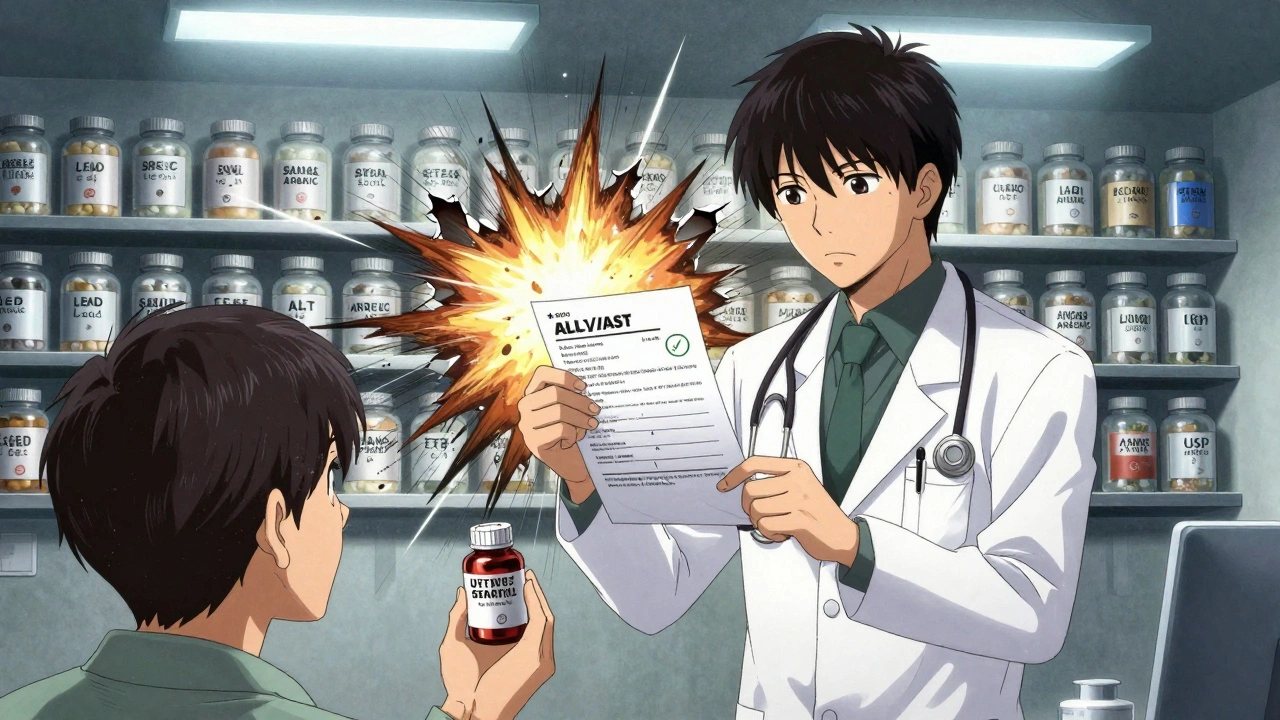
One big problem? Doctors don’t always ask about supplements. A 2022 guideline from the American College of Gastroenterology says clinicians should always ask patients with unexplained elevated liver enzymes (ALT or AST) if they’re taking herbal products. Yet, most don’t. Patients assume supplements are harmless. Doctors assume patients won’t take them.
Why Some People Are More at Risk
Not everyone who takes turmeric gets liver damage. But some do-and it’s not random. Research suggests genetics play a role. A 2022 study in Hepatology found that people with a specific gene variant, HLA-B*35:01, are more likely to develop liver injury from certain herbal compounds. Think of it like a food allergy: most people eat peanuts without issue, but for a small group, even a tiny amount triggers a severe reaction. Age, existing liver disease, alcohol use, and other medications also increase risk. Taking multiple supplements at once multiplies the danger. A 2023 Consumer Reports study found that 40% of people using herbal products take three or more at the same time. That’s like throwing a dozen unknown chemicals into your liver at once and hoping it can handle the load. Even the quality of the herb matters. Turmeric grown in polluted soil can absorb lead. Green tea leaves harvested in spring may have higher EGCG levels than those picked in fall. One study found that 35% of herbal products vary in potency depending on harvest season. And 23% contained pesticides not listed on the label.What You Can Do to Protect Your Liver
You don’t have to give up supplements entirely-but you need to be smarter about them. Here’s what works:- Stop taking high-dose extracts. Whole turmeric root in food is fine. A 500 mg turmeric capsule? Not necessarily. The same goes for green tea extract-drink tea, don’t swallow pills.
- Check for third-party testing. Look for seals from USP, NSF, or ConsumerLab. These organizations test for contaminants and label accuracy. Not perfect, but better than nothing.
- Don’t mix supplements. The more you take, the higher the risk. If you’re taking five different herbs, cut it down to one or two-and only if you really need them.
- Get your liver checked. If you’ve been taking supplements for more than three months, ask your doctor for a simple blood test: ALT, AST, bilirubin. It takes five minutes and could catch damage before it’s serious.
- Be skeptical of TikTok trends. Influencers promoting "miracle" weight loss or detox blends are not doctors. Many of these products are unregulated and dangerous.
There’s a reason the NIH calls herbal supplement toxicity a "public health concern." It’s not hype. It’s data. And it’s getting worse.
The Bigger Problem: No Regulation, No Warnings
Unlike prescription drugs, herbal supplements don’t need FDA approval before sale. The FDA can only act after harm is done-and even then, it’s slow. Many products stay on shelves for years before being recalled. Dr. Robert S. Brown of Weill Cornell Medicine says: "The liver damage caused by supplements is identical to the damage caused by pharmaceuticals." The difference? With a drug, you know the dose, the side effects, the risks. With supplements? You’re guessing. And the marketing is designed to trick you. "All-natural" doesn’t mean safe. "No side effects" isn’t backed by science. "Clinically proven" often means a study done on 10 people for two weeks.What to Do If You Think Your Liver Is Affected
If you’ve been taking supplements and suddenly feel unusually tired, have abdominal pain, or notice your skin or eyes turning yellow:- Stop taking all supplements immediately.
- Call your doctor and ask for liver function tests.
- Bring the supplement bottles with you-label info helps doctors identify the culprit.
- Report the reaction to the FDA’s MedWatch program. Your report helps others.
Many people recover fully once they stop the supplement. But some develop permanent liver damage. A few need transplants.
Can turmeric really hurt your liver?
Yes. While turmeric in food is safe, high-dose turmeric supplements-especially those with concentrated curcumin-have been linked to cases of hepatitis and liver failure. A 2024 study found turmeric was one of the top six supplements causing liver injury. Doses above 1,000 mg daily, especially over long periods, pose the greatest risk.
Is green tea extract dangerous?
Yes, in supplement form. Drinking green tea is fine. But green tea extract pills contain concentrated EGCG, which can overwhelm the liver. Over 100 cases of liver injury have been reported. The risk goes up when taken on an empty stomach or in doses over 800 mg per day.
Are herbal supplements regulated like drugs?
No. Unlike prescription or even over-the-counter drugs, herbal supplements don’t need FDA approval before being sold. They don’t have to prove safety, effectiveness, or accurate labeling. The FDA can only act after harm is reported-which often takes years.
Can I trust supplements with USP or NSF labels?
They’re better than nothing. USP and NSF test for contaminants and label accuracy, but they don’t test for liver toxicity or long-term safety. A supplement can be pure and still be harmful. These labels reduce risk, but don’t eliminate it.
What should I do if I’m taking multiple supplements?
Cut back. Taking more than two or three supplements at once increases your risk of liver damage. Ask yourself: Do I really need each one? Talk to your doctor. Blood tests can check your liver health and help you decide what to stop.
Is there a safe dose for herbal supplements?
There are no official safe doses for most herbal supplements. Unlike vitamins, which have established upper limits, herbs have no regulated dosing. The doses on labels are often based on tradition or marketing-not science. When in doubt, use the lowest possible dose and avoid long-term use.


Neelam Kumari
December 11, 2025 AT 02:28Oh wow, another ‘natural’ supplement is going to kill you? Next they’ll tell us oxygen is toxic if you breathe too much. 😏
Ben Greening
December 12, 2025 AT 04:11Interesting data, but the real issue isn’t the supplements-it’s the lack of oversight. The FDA’s hands are tied by outdated laws. We need a new regulatory framework for botanicals, not fear-mongering.
Queenie Chan
December 12, 2025 AT 09:12I’ve been taking ashwagandha for two years-no issues. But then again, I don’t swallow 2,000 mg pills like they’re Skittles. I brew the root like tea, organic, from a small farm in Kashmir. Maybe the problem isn’t the herb… it’s the industrialized, profit-driven junk they sell as ‘supplements’ now?
It’s like comparing a homegrown tomato to a genetically modified, wax-coated, pesticide-smeared supermarket tomato and saying ‘tomatoes are toxic.’
And don’t even get me started on TikTok influencers shilling ‘detox blends’ with ingredients you can’t even pronounce. My grandma used turmeric in curry. She lived to 98. No liver transplant required.
It’s not the plant. It’s the poison they extract, concentrate, and sell for $40 a bottle. The same way Big Pharma turns aspirin into a billion-dollar drug. Capitalism doesn’t care if you live or die-it just wants your credit card info.
Stop blaming the herb. Start blaming the system.
Also, ‘all-natural’ is a marketing term. So is ‘clinically proven.’ I’ve seen studies with n=8. That’s not science. That’s a PowerPoint slide.
Do your homework. Source your herbs. Talk to a herbalist, not a YouTube ad.
And for god’s sake-stop taking five supplements at once. You’re not a biochemist. You’re a human. Your liver knows what to do if you let it.
David Palmer
December 14, 2025 AT 03:57So you’re telling me my green tea pills are gonna turn my liver into a raisin? Bro, I’ve been taking those since 2020. I’m fine. Probably just a coincidence.
Jack Appleby
December 15, 2025 AT 22:16The data is compelling, but the article commits a classic fallacy: conflating correlation with causation. Many of the reported liver injuries occurred in patients with pre-existing metabolic syndrome, alcohol use, or polypharmacy. The studies cited rarely control for confounding variables. Moreover, the incidence rate of supplement-induced hepatotoxicity remains statistically negligible compared to pharmaceuticals-yet the narrative is weaponized to stoke fear. The real public health crisis? Misinformation masquerading as science.
Also, ‘natural’ doesn’t mean safe? Tell that to arsenic. Or botulinum toxin. Or hemlock. The term ‘natural’ is semantically meaningless in toxicology. What matters is dose, bioavailability, and metabolic pathway. A 1,500 mg curcumin capsule is not ‘turmeric.’ It’s a concentrated pharmacological agent. And yes-like any pharmacological agent-it requires scrutiny. But let’s not pretend that pharmaceuticals are somehow less dangerous because they’re FDA-approved. The Vioxx scandal killed 60,000. How many deaths from turmeric? A few dozen, mostly in people who also drank 12 beers a day and took statins.
Regulation is necessary-but let’s regulate based on evidence, not emotional rhetoric.
Nikki Smellie
December 17, 2025 AT 07:32They’re watching you. Every pill you take. Every bottle you buy. The FDA, Big Pharma, the supplement companies-they’re all connected. They want you sick. Why? Because when you’re sick, you need their drugs. That’s why they let dangerous herbs slip through the cracks-so you’ll end up in a hospital, on a $10,000/month prescription. They’re poisoning you slowly… and then selling you the cure. Check your supplements for RFID chips. I did. Mine had a tiny antenna. They’re tracking your liver enzymes. Don’t trust the labels. Don’t trust the ‘USP’ seal. They’re all lies. I’ve seen it. I’ve seen the documents. You think this is about health? It’s about control.
Stephanie Maillet
December 18, 2025 AT 21:31What if… we stopped treating our bodies like machines that need constant tuning with chemicals-whether they’re synthetic or ‘natural’? What if the real solution wasn’t more pills, but less stress, better sleep, real food, and time in nature? What if our liver doesn’t need detoxing… it needs rest? I’ve been off supplements for a year. My energy is better. My skin glows. I don’t need to ‘boost’ anything. I just need to stop interfering.
Maybe the answer isn’t ‘which supplement is safe?’… but ‘why do we feel so broken that we need to swallow something every day just to feel normal?’
Just a thought.
Raj Rsvpraj
December 19, 2025 AT 09:30India has been using turmeric and ashwagandha for 5,000 years. Your Western ‘science’ is too lazy to understand traditional medicine. You take one extract, isolate one compound, and call it toxic? That’s not science-that’s ignorance wrapped in a lab coat. In India, we use whole herbs, in balanced formulas, with food, under guidance. You Americans swallow pills like candy and then cry when your liver breaks. Pathetic.
Also, your FDA is a joke. We don’t need your approval. Our ancestors knew more about healing than your entire medical-industrial complex.
Stop colonizing our herbs with your fear.