
Most people think they know how well they sleep. You lie down at 11 p.m., wake up at 7 a.m., and assume you got eight solid hours. But what if you were awake for two of those hours-completely still, eyes closed, no movement-and your brain never registered it? That’s the hidden flaw in self-reported sleep. This is where actigraphy changes everything.
What Actigraphy Actually Measures
Actigraphy isn’t magic. It’s a small device, usually worn on the wrist like a watch or ring, that tracks movement using a tiny accelerometer. Every time you shift, roll over, or sit up, it records it. Then, software turns that motion data into an estimate of when you’re asleep and when you’re awake. It doesn’t measure brain waves, eye movements, or breathing like a sleep lab does. It just watches your body. The science behind it is simple: when you’re asleep, you move less. When you’re awake, you move more. Modern devices like the Oura Ring or Philips Actiwatch use tri-axial sensors that catch movement in all directions, sampling data up to 100 times per second. That’s more than enough to spot the difference between tossing and turning and lying perfectly still. But here’s the catch: lying still while awake is the biggest blind spot. If you’re lying in bed staring at the ceiling, your device sees zero movement-and assumes you’re asleep. That’s why actigraphy can overestimate sleep time by 30 to 60 minutes in some people, especially those with insomnia. It’s not wrong. It’s just incomplete.How It Compares to a Sleep Lab
Polysomnography (PSG) is the gold standard. You spend a night in a lab with wires glued to your scalp, chest, and legs. Sensors track brain activity, eye movement, muscle tone, heart rate, and oxygen levels. It’s accurate-95% or better at telling sleep from wake. But it’s also expensive, invasive, and only gives you one night of data. Actigraphy doesn’t replace PSG. It complements it. While a sleep lab tells you what happened one night, actigraphy shows you what happened over 14 days. That’s huge. Sleep isn’t a one-night event. It’s shaped by stress, travel, caffeine, work schedules, and light exposure. A single night in a lab can’t capture that. For example, someone with circadian rhythm disorder might sleep fine on the lab night because they’re in a quiet, controlled environment. But at home, they’re sleeping at 4 a.m. because their body clock is out of sync. Actigraphy catches that. So does a parent who thinks they’re sleeping through the night but is actually waking up every 45 minutes to check on their baby. The device doesn’t lie.Consumer Wearables vs. Medical-Grade Devices
Not all sleep trackers are created equal. You can buy a Fitbit Charge 5 for $99 or an Oura Ring for $299. Both use actigraphy. But here’s the difference: Medical-grade actigraphs like the Philips Actiwatch Spectrum Plus are FDA-cleared. They’re used in sleep clinics, research studies, and hospitals. They record raw, unfiltered movement data at high resolution. They’re designed for clinical decisions. Consumer wearables? They’re designed for marketing. They take the same basic movement data but add layers of guesswork. They estimate REM sleep, deep sleep, and sleep stages using heart rate and skin temperature. But here’s the truth: no consumer device can measure REM sleep accurately without EEG sensors. That’s why 35% of Fitbit Charge 5 users complain about inaccurate sleep stage tracking on Amazon. The numbers don’t lie. A 2022 Stanford study found Oura Ring data matched lab PSG for total sleep time within 8%-good enough for trends. But for REM detection? It was off by 40%. Consumer devices are great for spotting patterns. They’re terrible for diagnosing sleep disorders.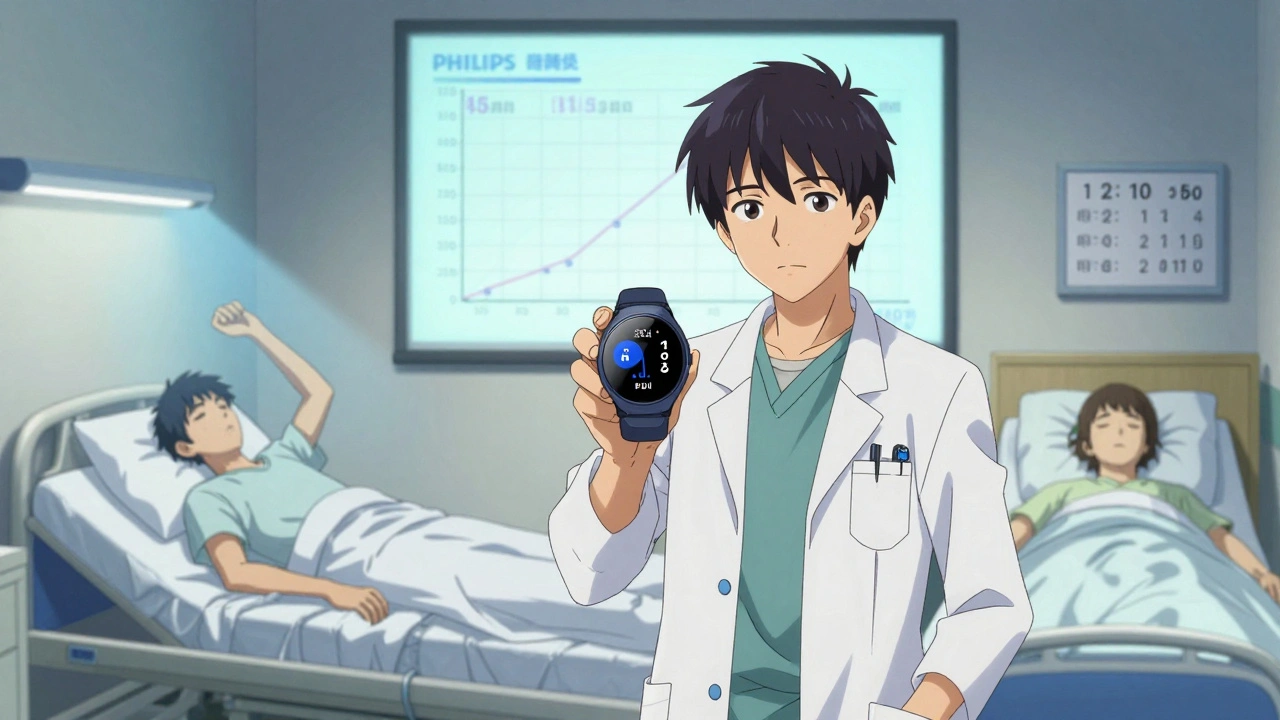
What You Can Actually Learn From Your Data
If you’re wearing a wearable to track sleep, focus on these four metrics:- Total Sleep Time: How many hours you actually slept. Not how long you were in bed.
- Sleep Efficiency: The percentage of time in bed that you actually slept. Below 85% for more than a week? That’s a red flag.
- Sleep Onset Latency: How long it takes you to fall asleep. Consistently over 30 minutes? You might have sleep onset insomnia.
- Wake After Sleep Onset (WASO): How many minutes you’re awake after falling asleep. Frequent 10- to 20-minute wake-ups? That’s fragmented sleep.
How to Use It Right
Wearing a tracker doesn’t make you an expert. Here’s how to get real value:- Wear it on your non-dominant wrist. Studies show misplacement cuts accuracy by up to 22%.
- Wear it for at least 7 days. One night means nothing. Two weeks gives you a real baseline.
- Don’t remove it for more than 2 hours a day. ActivInsights found that breaks longer than that reduce data validity by 18%.
- Track your habits too. Write down when you drank caffeine, exercised, or used your phone before bed. Correlate it with your sleep data.
- Ignore single-night outliers. Your sleep varies. A 45-minute difference from night to night is normal.
Who Should Use It-and Who Shouldn’t
Actigraphy is most helpful for:- People with insomnia who think they’re not sleeping at all (but actually are)
- Shift workers trying to adjust their sleep schedule
- Travelers dealing with jet lag
- People with delayed sleep phase disorder (falling asleep at 3 a.m. and waking at noon)
- Anyone monitoring treatment progress (like CBT-I or melatonin therapy)
- People with suspected sleep apnea (it can’t detect breathing pauses)
- Those with restless legs syndrome (movement is the symptom, not the signal)
- Anyone using it to self-diagnose
- People who get anxious over sleep numbers (yes, orthosomnia is real)
Privacy, Cost, and the Future
Most consumer sleep apps send your raw movement data to the cloud-without end-to-end encryption. That’s a problem. Your sleep patterns are deeply personal health data. If a company gets hacked, or sells your data to insurers, it could affect your premiums or coverage. In 2024, the Senate held hearings on this exact issue. Cost-wise, medical-grade devices run $1,200-$1,800. Most clinics rent them out for $50-$100 per week. Consumer devices? $99-$299. If you’re serious about tracking, start with a Fitbit or Oura. If your doctor recommends it for a sleep disorder, they’ll likely provide a medical-grade device. The future? AI is improving wake detection. New algorithms are combining movement with skin temperature and light exposure to guess when you’re awake-even if you’re still. Apple’s rumored Sleep Study feature, expected in late 2024, could integrate heart rate variability and audio cues to better detect sleep stages. But the core truth won’t change: movement tells you when you’re asleep. It doesn’t tell you why.Final Takeaway
Actigraphy won’t cure your insomnia. It won’t tell you if you have sleep apnea. But it will show you the truth about your sleep habits-without the guesswork. It’s the most reliable tool you can use at home to understand your sleep patterns over time. Use it to spot trends, not to panic over numbers. Use it to talk to your doctor, not to replace them. And if you’re using it to chase perfect sleep scores? You might be making your sleep worse.Can actigraphy diagnose sleep apnea?
No. Actigraphy detects movement, not breathing. Sleep apnea involves pauses in breathing, which require oxygen sensors and airflow monitoring. A home sleep apnea test (HSAT) or lab polysomnography is needed for diagnosis. Actigraphy may show fragmented sleep or low sleep efficiency, which could suggest apnea, but it can’t confirm it.
Is Oura Ring more accurate than Fitbit for sleep tracking?
For total sleep time and sleep efficiency, yes-Oura Ring has shown slightly higher agreement with clinical actigraphy in peer-reviewed studies. Fitbit’s algorithms are more focused on consumer engagement, which sometimes sacrifices accuracy for features like sleep staging. But both are similar for tracking trends over time. Neither is diagnostic-grade.
How long should I wear a sleep tracker to get useful data?
At least 7 days, but 14 days is ideal. One night doesn’t reflect your real sleep pattern. Two weeks gives you enough data to see trends-like whether you sleep better on weekends, after exercise, or when you avoid screens. The Sleep Foundation recommends 7-14 consecutive days for reliable results.
Why does my wearable say I slept 8 hours but I feel exhausted?
Because actigraphy can’t detect motionless wakefulness. If you’re lying still but awake-thinking, worrying, or just staring at the ceiling-the device thinks you’re asleep. That’s why your sleep efficiency might look good, but you still feel tired. It’s a known limitation. Focus on how you feel, not just the number.
Should I use a sleep tracker if I have anxiety about sleep?
Probably not. Tracking sleep can lead to orthosomnia-a condition where people become obsessed with perfect sleep scores. This anxiety makes sleep harder. If you notice you’re checking your app more than sleeping, or feeling guilty over a 7% drop in sleep efficiency, stop using it. Sleep quality isn’t measured in percentages.
Can I trust the sleep stage data (REM, deep sleep) on my Fitbit or Apple Watch?
No. These devices estimate sleep stages using heart rate and movement patterns, not brain waves. Studies show they’re only about 50-60% accurate for REM and deep sleep compared to lab polysomnography. They’re useful for spotting general trends-like if you’re getting less deep sleep after alcohol-but shouldn’t be used for medical decisions.
Do I need a prescription to use actigraphy?
No. You can buy consumer wearables anytime. But if you’re using actigraphy for a medical diagnosis or treatment plan, your sleep specialist will provide a medical-grade device and interpret the data. Insurance may cover it if prescribed. Consumer devices are for personal insight, not clinical use.



Eric Vlach
December 1, 2025 AT 09:13Man I used to think I was sleeping fine till I started wearing my Oura. Turns out I was awake for like an hour every night just staring at the ceiling thinking about work. No movement so the device said I was asleep. My body knew better. I felt like garbage every morning. This post nailed it.
Nnaemeka Kingsley
December 2, 2025 AT 22:34My friend in Lagos he use fitbit and he cry because he see he sleep only 5 hour but he think he sleep 8 hour. Now he stop check phone before bed and he sleep better. Device no lie but we lie to ourself.
Kshitij Shah
December 4, 2025 AT 13:23So let me get this straight - you pay $300 for a ring that tells you you had 4% REM sleep, then you spend 45 minutes scrolling through Reddit trying to fix it, while your actual sleep is still trash? Classic. We turned health tracking into a competitive sport and now we’re all sleep-deprived because we’re afraid of a number.
Sean McCarthy
December 5, 2025 AT 16:02Incorrect. Actigraphy does not 'estimate' sleep stages. It does not estimate anything. It records movement. The algorithms applied by consumer devices estimate sleep stages. Actigraphy is raw data. Fitbit, Apple, Oura - they all use actigraphy as input, then layer on proprietary, unvalidated, and often misleading models. The device itself is not the problem. The marketing is.
Jaswinder Singh
December 7, 2025 AT 11:31You people are so obsessed with numbers you forget you’re human. I wore a tracker for two weeks. My sleep efficiency was 89%. I still woke up exhausted. So I stopped looking at the damn app. Started reading before bed. Cut caffeine after noon. Now I sleep like a baby. The device didn’t fix me. I did. Stop outsourcing your intuition to a gadget.
Bee Floyd
December 7, 2025 AT 19:40There’s something quietly revolutionary about knowing you’re not broken - just misinformed. I thought I had insomnia because I’d lie there for hours. Turns out I was just lying still while awake. The tracker didn’t judge me. It just showed me the truth. Now I don’t panic when I wake up at 2 a.m. I just breathe. Sometimes the body just needs quiet, not sleep. That’s not failure. That’s biology.
Jeremy Butler
December 9, 2025 AT 02:11It is an epistemological imperative to distinguish between phenomenological experience and quantified data. The ontological status of sleep, as a state of diminished consciousness, cannot be fully captured by accelerometer-derived motion profiles. The reductionist paradigm of consumer wearables, while statistically pragmatic, risks reifying subjective experience into algorithmic constructs devoid of qualitative nuance. One must remain vigilant against the seductive fallacy of numerical certainty.
Courtney Co
December 9, 2025 AT 14:00Wait so if I’m lying there awake but still, the device thinks I’m sleeping… but what if I’m actually having a panic attack and just can’t move? Do I just trust the machine? What if I’m depressed and my body won’t move but my mind is screaming? How do you know if the device is right or if you’re just… broken? I need someone to tell me if I’m imagining this or if my body is just… done.