
Sulfonamide Allergy Safety Checker
More than 1 in 10 people say they’re allergic to sulfa drugs. But here’s the truth: sulfonamide allergy is often misdiagnosed. Most people who think they have a sulfa allergy don’t actually have one - or at least, they’re not allergic to everything labeled with "sulfa." This misunderstanding leads to worse health outcomes, more expensive drugs, and even dangerous antibiotic choices. If you’ve been told you’re allergic to sulfa, you need to know exactly what you’re avoiding - and what you can safely take.
What Is a Sulfonamide Allergy, Really?
When someone says they have a "sulfa allergy," they usually mean they had a reaction to an antibiotic like sulfamethoxazole (in Bactrim) or sulfadiazine. These are antimicrobial sulfonamides - the kind that fight bacteria. But "sulfa" doesn’t mean all drugs with sulfur in them. It’s not about sulfur, sulfates, or sulfites. Those are completely different chemicals. A lot of doctors and patients mix them up. The real problem? Only about 0.3% to 0.5% of people actually have a true IgE-mediated allergy to these antibiotics. The rest? They had a rash, nausea, or a fever - common side effects that aren’t allergies. A 2022 study in the Journal of Allergy and Clinical Immunology found that 90% of people labeled with "sulfa allergy" didn’t have a real immune reaction when tested. Yet they’re still denied medications they could safely use.The Big Myth: All "Sulfa" Drugs Are the Same
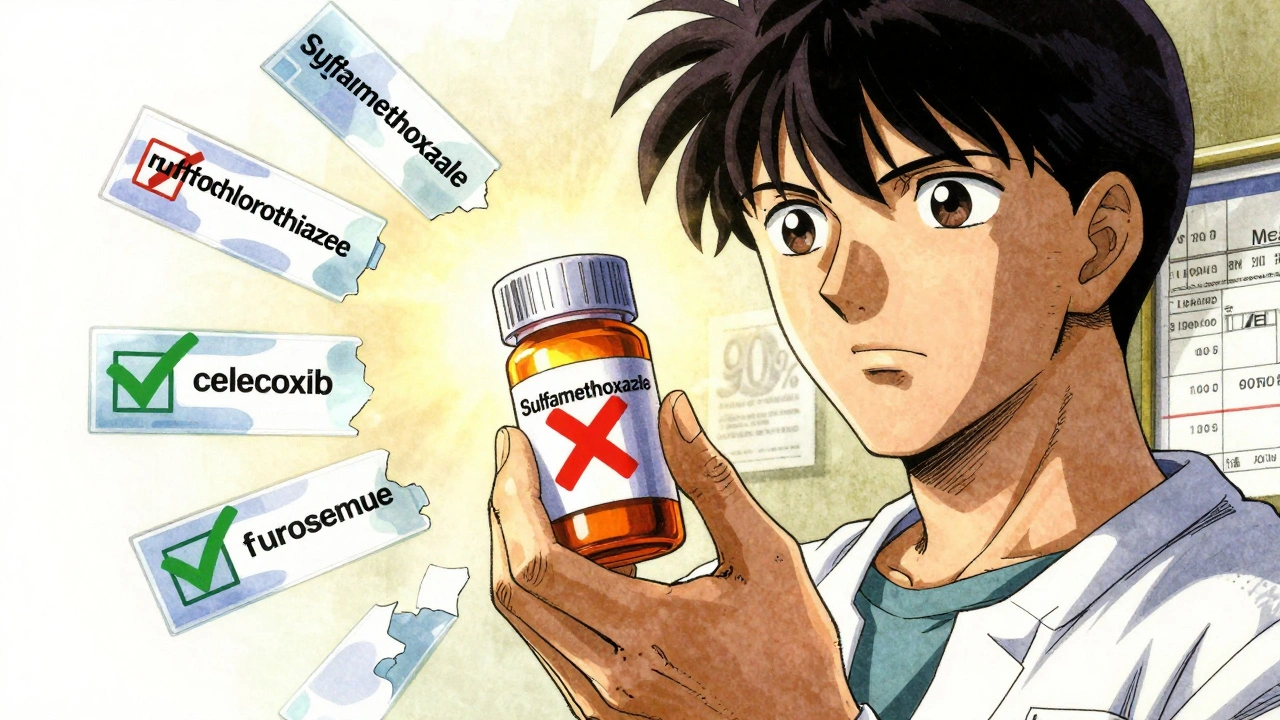
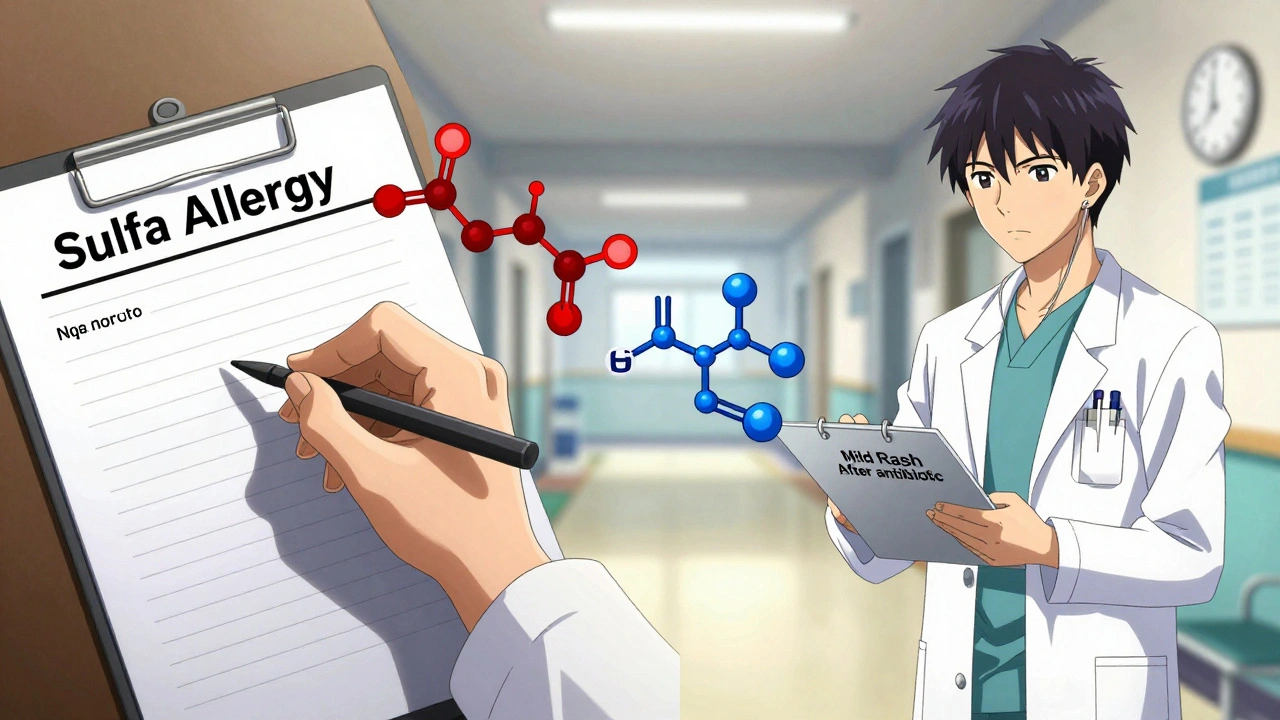
Here’s where things get confusing. There are two types of sulfonamides: antimicrobial and nonantimicrobial. They look similar on paper because they both have a sulfonamide group (SO₂NH₂). But that’s like saying all cars have wheels, so a truck is the same as a sports car. Antimicrobial sulfonamides - like sulfamethoxazole, sulfadiazine, and sulfisoxazole - have two key parts: an arylamine group at the N4 position and a nitrogen ring at the N1 position. These are what make them work as antibiotics… and what make them likely to trigger immune reactions. Nonantimicrobial sulfonamides - like hydrochlorothiazide (for blood pressure), furosemide (Lasix, for fluid retention), celecoxib (Celebrex, for pain), and acetazolamide (for glaucoma) - don’t have those exact structures. Their chemistry is different. Their metabolites don’t form the same reactive proteins that trigger allergies. That’s why the risk of reacting to them is almost the same as someone who’s never had a sulfa reaction. A 2021 study in JAMA Internal Medicine looked at over 10,000 people with "sulfa allergy" labels. Only 1.3% reacted to nonantimicrobial sulfonamides. That’s nearly identical to the 1.1% reaction rate in people without any sulfa history. The difference? Statistically meaningless.What You Can Probably Take (Even With a "Sulfa Allergy")
If you’ve been told to avoid "all sulfa drugs," you’ve been given bad advice. Here’s what’s safe for most people with a history of antimicrobial sulfonamide allergy:- Hydrochlorothiazide - a common blood pressure pill. Risk of reaction: 1.1%.
- Furosemide (Lasix) - used for heart failure and swelling. No increased risk.
- Celecoxib (Celebrex) - an arthritis painkiller. Safe for 99 out of 100 people with sulfa allergy.
- Acetazolamide - for glaucoma and altitude sickness. No cross-reactivity.
- Chlorthalidone - another blood pressure med. Not a sulfonamide antibiotic. Safe.
What You Should Still Avoid
There are exceptions. Don’t assume safety without checking. These drugs share enough structural similarity with antimicrobial sulfonamides to carry a higher risk:- Dapsone - used for leprosy, dermatitis herpetiformis, and Pneumocystis pneumonia prevention. Studies show a 13% reaction rate in people with prior sulfonamide antibiotic allergies.
- Sulfasalazine - used for ulcerative colitis and rheumatoid arthritis. It’s an antimicrobial sulfonamide, even though it’s not used as an antibiotic anymore. Avoid if you’ve had a true reaction.
- Sulfacetamide eye drops - topical, but still contains the arylamine group. Can cause reactions in sensitive people.
Why This Matters: The Cost of Mislabeling
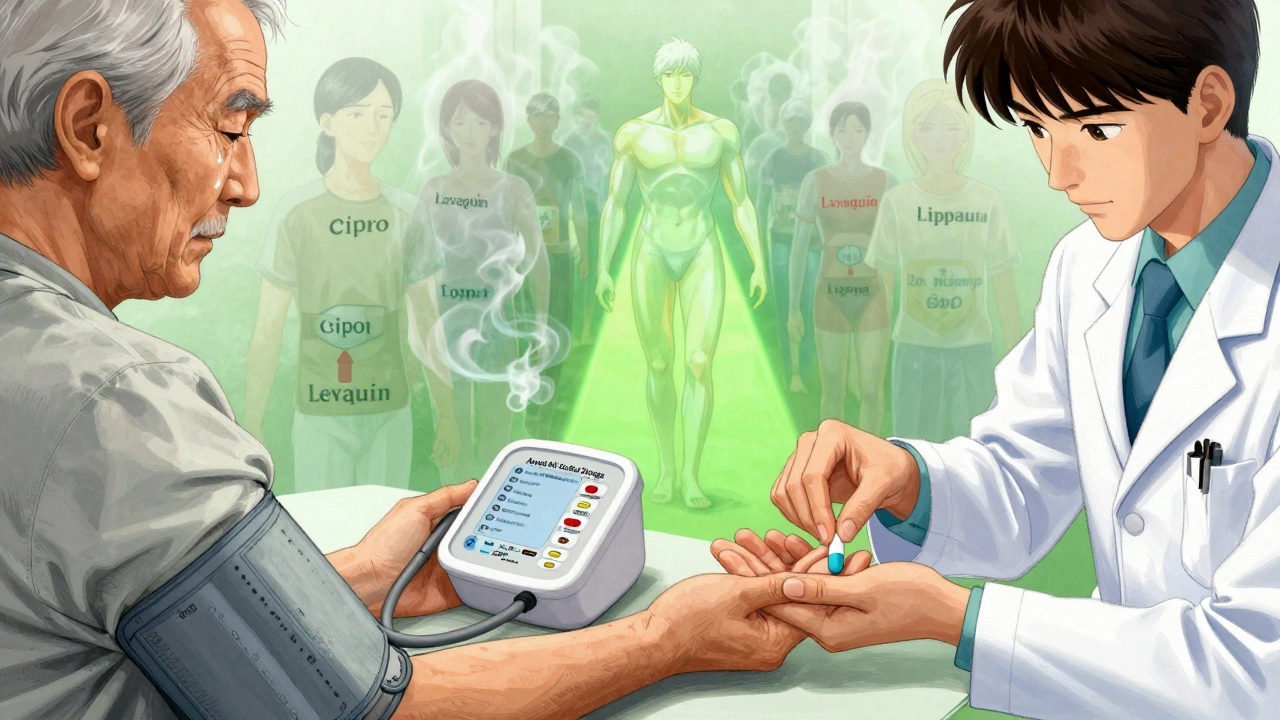
When doctors avoid sulfonamide antibiotics because of a mislabeled allergy, they reach for other drugs. Often, those are broader-spectrum antibiotics like fluoroquinolones (Cipro, Levaquin). These carry black box warnings from the FDA for tendon rupture, nerve damage, and aortic aneurysms. They’re also more likely to cause C. diff infections and drive antibiotic resistance. A 2021 study in Clinical Infectious Diseases found that patients labeled with "sulfa allergy" received alternative antibiotics 78% of the time - and over a third of those alternatives were unnecessarily broad. That’s not just risky. It’s expensive. The U.S. spends an estimated $1.2 billion extra each year because of this. The CDC reports that this mislabeling increases resistance in common bacteria like E. coli and Staphylococcus aureus by up to 13%. That means more people get infections that won’t respond to first-line drugs. More hospital stays. More deaths.What to Do If You Think You Have a Sulfa Allergy
If you’ve been told you have a sulfa allergy, here’s your action plan:- Check your records. What exactly happened? Was it a rash? Fever? Difficulty breathing? When did it happen? A rash that appeared five days after starting Bactrim is likely not an allergy. Anaphylaxis within an hour is.
- Ask your doctor to document the exact reaction. Don’t let them write "sulfa allergy." Write: "Maculopapular rash 72 hours after sulfamethoxazole-trimethoprim." This changes everything.
- Consider a challenge test. For low-risk reactions, an allergist can give you a small dose of a nonantimicrobial sulfonamide - like hydrochlorothiazide - under observation. Studies show 94-99% of people pass without issue.
- Don’t assume you’re allergic to sulfur. Sulfates (in magnesium sulfate), sulfites (in wine), and elemental sulfur (in topical creams) are chemically unrelated. You can take them safely.
What’s Changing in 2025
The medical world is catching up. The AAAAI and Infectious Diseases Society of America launched the Sulfonamide Allergy De-labeling Initiative in 2023. It gives clinics step-by-step protocols to re-evaluate patients with old "sulfa allergy" labels. Electronic health records now have built-in alerts. Systems like Epic can flag when a doctor tries to avoid hydrochlorothiazide because of a "sulfa allergy" - and remind them that cross-reactivity is extremely rare. By 2025, 75% of major U.S. health systems will have automated tools that help doctors decide whether a patient truly needs to avoid a sulfonamide drug. That’s going to save lives - and billions of dollars.Real Stories, Real Consequences
One patient, a 68-year-old man in Texas, avoided hydrochlorothiazide for 15 years because of a childhood rash. He ended up on three different blood pressure meds - all with worse side effects. His blood pressure stayed high. He had two falls. Only after an allergist did a challenge test did he finally get the right drug. His BP dropped. His energy returned. On Reddit, a user named HypertensivePatient87 wrote: "My doctor refused hydrochlorothiazide for 10 years because of my 'sulfa allergy' from childhood. I only had a mild rash. I ended up on less effective meds that caused more side effects. I wish I’d known sooner." These aren’t rare stories. They’re the norm.Final Takeaway
You don’t need to avoid every drug with "sulfa" in the name. You only need to avoid antimicrobial sulfonamides - and even then, only if you had a true allergic reaction. Most people labeled with "sulfa allergy" can safely take blood pressure pills, pain relievers, and glaucoma meds. The risk isn’t zero - but it’s lower than the risk of taking the wrong antibiotic. Talk to your doctor. Ask for your reaction history to be clarified. Ask if you can be tested. Don’t let an old label keep you from the best treatment.Can I take hydrochlorothiazide if I have a sulfa allergy?
Yes, you almost certainly can. Hydrochlorothiazide is a nonantimicrobial sulfonamide and does not share the chemical structure that causes allergic reactions to antibiotics like sulfamethoxazole. Studies show the reaction risk is only about 1.1% - the same as people without any sulfa allergy history. Many patients who avoid it unnecessarily end up on less effective or riskier blood pressure medications.
Is celecoxib (Celebrex) safe with a sulfa allergy?
Yes. Celecoxib is a nonantimicrobial sulfonamide and lacks the arylamine group linked to allergic reactions in antibiotics. A 2021 study of over 10,000 patients found only 1.3% of those with a sulfa allergy had a reaction to celecoxib - not significantly different from the control group. Most allergists consider it safe for routine use.
Does sulfa allergy mean I can’t take sulfur, sulfates, or sulfites?
No. Sulfonamide drugs are not the same as sulfur, sulfates (like magnesium sulfate), or sulfites (used as preservatives in wine and dried fruit). These are chemically unrelated compounds. A sulfa allergy does not mean you’re allergic to any of these. Confusing them is common - and dangerous. Many people avoid safe foods or treatments unnecessarily because of this myth.
What’s the difference between antimicrobial and nonantimicrobial sulfonamides?
Antimicrobial sulfonamides (like sulfamethoxazole) have two key chemical features: an arylamine group at the N4 position and a nitrogen-containing ring at the N1 position. These are what make them antibiotics - and what make them allergenic. Nonantimicrobial sulfonamides (like hydrochlorothiazide or celecoxib) lack these groups. Their structure is different, their metabolism is different, and they don’t form the same reactive proteins that trigger immune reactions.
Should I get tested for a sulfa allergy?
If you had a mild rash that appeared days after taking a sulfa antibiotic, testing isn’t usually needed - you’re likely not allergic. But if you had a severe reaction like anaphylaxis, blistering skin, or fever with organ involvement, see an allergist. They can perform a graded oral challenge with a nonantimicrobial sulfonamide, which is safe and accurate. Over 90% of people labeled with sulfa allergy pass these tests. Getting tested can open up better treatment options and prevent unnecessary risks.
Can I take dapsone if I have a sulfa allergy?
Dapsone carries a higher risk than other nonantimicrobial sulfonamides. It shares structural similarities with antimicrobial sulfonamides and has been linked to reactions in about 13% of people with prior sulfonamide antibiotic allergies. If you need dapsone - for example, for Pneumocystis pneumonia prevention - talk to your doctor. An allergist may recommend a supervised challenge, but it’s not routinely considered safe without evaluation.



Laura Saye
December 5, 2025 AT 00:30It’s wild how often we let labels stick like glue-'sulfa allergy' becomes a tattoo on your medical record, even when it’s just a rash from 1998. I’ve seen patients refuse diuretics because of a childhood reaction to Bactrim, then end up on drugs that wreck their kidneys. We’re not just avoiding a drug-we’re avoiding a better life.
It’s not about fear of chemicals. It’s about fear of being wrong. And yet, science keeps whispering: you’re probably fine. The body doesn’t care about the word 'sulfa' on a label. It cares about molecular shape. And that’s where the truth lives.
Maybe the real allergy is to uncertainty.
Krishan Patel
December 5, 2025 AT 23:28You people are delusional. This isn’t science-it’s pharmaceutical propaganda disguised as medicine. If you think celecoxib and hydrochlorothiazide are 'safe' just because they lack an arylamine group, you’re ignoring the fact that the immune system doesn’t read textbooks. It reacts to patterns. And if you’ve reacted once, your body remembers.
Stop pushing dangerous assumptions on people who’ve had real reactions. Your '90% pass rate' is meaningless when 10% end up in the ER. That’s not science-it’s negligence dressed in peer-reviewed jackets.
Carole Nkosi
December 6, 2025 AT 03:42So let me get this straight-you’re telling me I can take a blood pressure pill with 'sulfa' in the name but not the antibiotic? That’s like saying you can drink from a poisoned well if you use a different cup. The body doesn’t care about your chemical taxonomy. It cares about what enters it.
This isn’t precision medicine. It’s wishful thinking with citations. And now doctors are being told to ignore patient history? That’s not progress. That’s arrogance.
Jimmy Jude
December 6, 2025 AT 16:42MY BROTHER GOT STVENS-JOHNSON FROM SULFAMETHOXAZOLE WHEN HE WAS 12. HE LOST 70% OF HIS SKIN. HE SPENT 4 MONTHS IN THE ICU. NOW YOU WANT ME TO JUST 'CHALLENGE' MY DAUGHTER WITH HYDROCHLOROTHIAZIDE BECAUSE SOME STUDY SAYS 98% ARE FINE?
YOU DON’T KNOW MY FAMILY. YOU DON’T KNOW THE TERROR. YOU JUST WANT TO SAVE MONEY AND LOOK SMART.
THIS ISN’T A MATH PROBLEM. IT’S A HUMAN TRAGEDY.
STOP REDUCING LIVES TO PERCENTAGES.
Mark Ziegenbein
December 7, 2025 AT 18:55The entire paradigm of allergic response is being dismantled by lazy clinicians who mistake correlation for causation and convenience for science. The notion that nonantimicrobial sulfonamides are immunologically inert because they lack the N4 arylamine moiety is a reductionist fantasy that ignores the complexity of haptenization, T-cell epitope mimicry, and metabolic activation pathways that may still produce reactive intermediates regardless of structural proximity.
And yet we’re told to prescribe hydrochlorothiazide like it’s water because some epidemiological study found a 1.1% reaction rate? That’s not evidence. That’s a statistical mirage masking a potential cascade of catastrophic immune responses in genetically predisposed individuals. The FDA doesn’t mandate allergy testing because it’s expensive and inconvenient-not because it’s unnecessary.
Stop conflating population-level statistics with individual risk. You’re not saving money. You’re gambling with lives.
Juliet Morgan
December 7, 2025 AT 22:27I was told I had a sulfa allergy after a rash from Bactrim in college. I avoided every 'sulfa' drug for 12 years. Then I saw an allergist. They gave me a tiny dose of hydrochlorothiazide. I sat there for two hours. Nothing happened. I cried.
My blood pressure is finally under control. I’m not on five meds anymore. I sleep better. I don’t feel like a walking medical warning label.
If you’ve been told you're allergic-please, get tested. You might be free.
Norene Fulwiler
December 9, 2025 AT 19:00In my village in South Africa, people avoid all meds with 'sulfa' because one aunt had a bad reaction. We don’t have allergists. We don’t have labs. We have tradition. And fear.
This article doesn’t just help Americans. It helps people like me who translate science into stories for families who’ve never heard of 'nonantimicrobial sulfonamides.'
Thank you for writing this. Not just for clarity-but for courage.
Katie Allan
December 9, 2025 AT 19:03There’s a quiet tragedy in medicine: we treat labels like facts. A rash from 20 years ago becomes a lifetime restriction. We don’t re-evaluate. We don’t question. We just say 'no' and move on.
This isn’t just about drugs. It’s about how we treat patients who don’t fit the neat boxes we’ve created. The science is clear. The system isn’t.
Let’s stop letting outdated notes dictate future care. Let’s give people the chance to be un-labeled.
Kylee Gregory
December 11, 2025 AT 04:26I used to think 'sulfa allergy' meant I couldn’t take any drug with sulfur. Then I learned about sulfates in Epsom salts, sulfites in wine, even the sulfur in my garlic. None of those hurt me. So why did I believe the label?
Maybe the real issue isn’t the drug. It’s the story we tell ourselves about it.
Science doesn’t care about fear. It only cares about evidence. And the evidence says: most of us are safe.
It’s not about being brave. It’s about being curious.
Lucy Kavanagh
December 12, 2025 AT 23:57Did you know the FDA and Big Pharma pushed this 'de-labeling' initiative because sulfa antibiotics are cheap and they want you to buy the expensive ones instead?
Hydrochlorothiazide costs $3. Celecoxib is $120. Who profits when you avoid the cheap one?
They call it 'science.' I call it corporate manipulation. They want you to think you’re safe so you’ll take the branded drugs with side effects no one talks about.
Don’t be fooled. This isn’t about your health. It’s about their bottom line.