
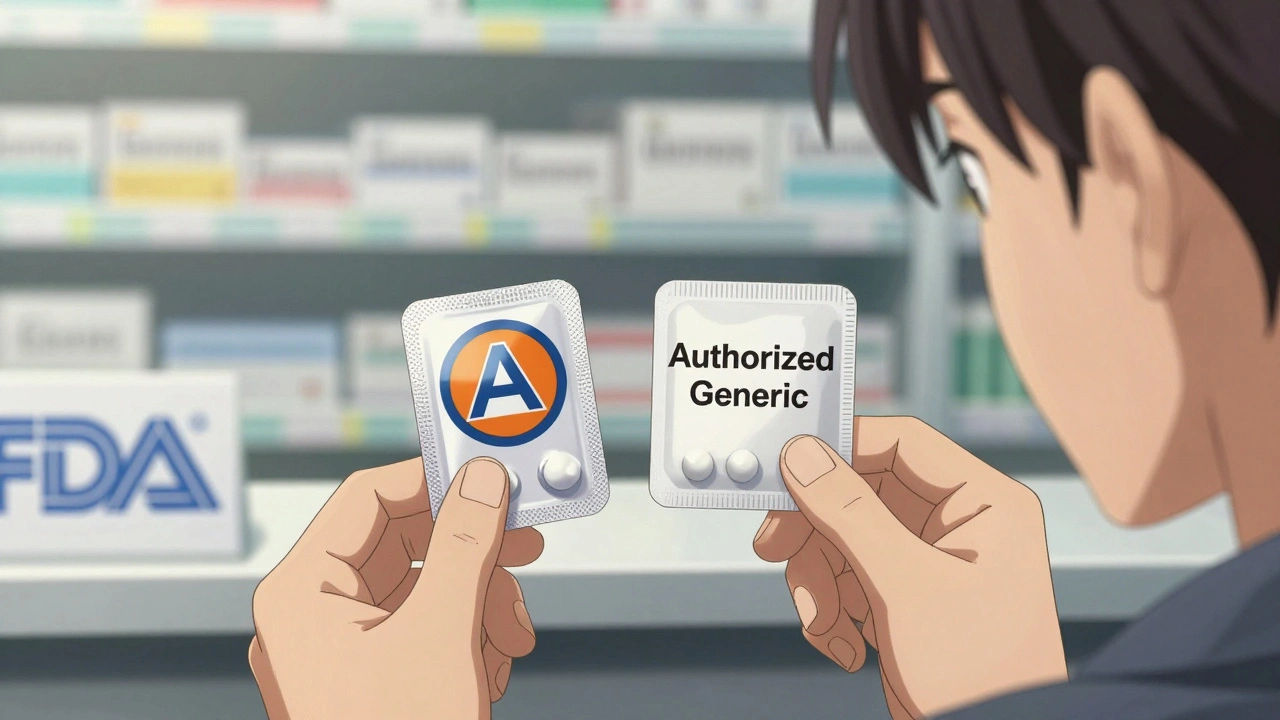
When your prescription costs too much, you might hear your pharmacist say, "There’s an authorized generic available." But what does that actually mean? And more importantly - which drugs have one?
An authorized generic isn’t just another generic. It’s the exact same pill, capsule, or inhaler you get from the brand-name company - just without the fancy packaging or brand name on it. The FDA defines it clearly: "Other than the fact that it does not have the brand name on its label, it is the exact same drug product as the branded product." That means the same active ingredients. The same inactive ingredients. The same manufacturing process. Even the same factory.
This isn’t a trick. It’s not a cheaper knockoff. It’s the real thing, sold under a different label. And for some medications, especially those with narrow therapeutic windows like levothyroxine or warfarin, that makes a huge difference. Patients who switched from a traditional generic to an authorized generic have reported fewer side effects, more stable lab results, and better symptom control.
How Authorized Generics Are Different From Regular Generics
Traditional generics must match the brand drug’s active ingredient and prove they’re bioequivalent - meaning they work the same way in your body. But they’re allowed to use different fillers, dyes, or binders. For most people, that’s fine. But for others, those tiny differences matter. A patient on levothyroxine might feel tired or gain weight after switching to a generic with a different inactive ingredient. The same thing can happen with seizure meds, blood thinners, or thyroid drugs.
Authorized generics skip that problem entirely. Because they’re made under the brand’s original approval (NDA), not a new generic application (ANDA), they have to match the brand’s formula down to the last grain of cornstarch. No guesswork. No variability. Just the same medicine you’ve been taking, at a lower price.
Here’s another key difference: traditional generics show up in the FDA’s Orange Book. Authorized generics don’t. That’s because they’re not new drugs - they’re the same drug, just repackaged. So if you’re looking for them, you won’t find them in the usual generic drug lists. You need to check the FDA’s official Authorized Generic List, which gets updated regularly.
Why Do Brand Companies Sell Authorized Generics?
You might wonder: if a brand company just lost its patent, why would they sell their own drug as a generic? It sounds like they’re cutting their own profits.
Actually, it’s a smart business move. When a patent expires, generic manufacturers rush in. Prices drop fast. But if the brand company launches its own authorized generic, it can still capture a big chunk of the market. In fact, about 70% of authorized generics launch during the 180-day exclusivity window that the first generic company gets. That means they’re not just competing - they’re controlling the race.
Studies show that when an authorized generic enters the market, price drops are slower. One analysis found that drugs with authorized generics saw 15% less price reduction in the first year after patent expiration than those without. That’s not because they’re overpriced - it’s because they’re the only option that guarantees consistency. And many patients and doctors prefer that.
Drugs With Authorized Generics (2025 List)
As of October 2025, the FDA lists over 200 authorized generics. Here are some of the most common - and most important - ones you’re likely to encounter:
- Colcrys (colchicine) - Used for gout. The authorized generic is made by Prasco Laboratories. Many patients report fewer stomach issues with the authorized version compared to other generics.
- Concerta (methylphenidate ER) - For ADHD. The authorized generic is sold by Watson/Actavis. Parents and teachers often notice more consistent focus with the authorized version.
- Celebrex (celecoxib) - A COX-2 inhibitor for pain and inflammation. Greenstone Pharmaceuticals makes the authorized generic. Patients with sensitive stomachs often tolerate it better than other generics.
- Unithroid (levothyroxine) - Thyroid replacement. Jerome Stevens Pharmaceuticals produces the authorized version. This is one of the most critical examples - even small changes in inactive ingredients can throw thyroid levels off. Many endocrinologists recommend the authorized generic specifically.
- ProAir HFA (albuterol sulfate) - Asthma inhaler. Teva makes the authorized generic. Patients who had trouble with the taste or throat irritation from other generics often switch back to this one.
- Jardiance (empagliflozin) - For type 2 diabetes. Boehringer Ingelheim launched its authorized generic in 2025, making it one of the newest additions.
- Viagra (sildenafil) - The authorized generic is sold by Pfizer’s partner. It’s identical to the blue pill - just without the logo.
These aren’t random picks. They’re drugs where patients and doctors have seen real benefits from sticking with the exact same formula. The FDA’s list also includes authorized versions of medications for high blood pressure, depression, and epilepsy.
How to Find Out If Your Drug Has an Authorized Generic
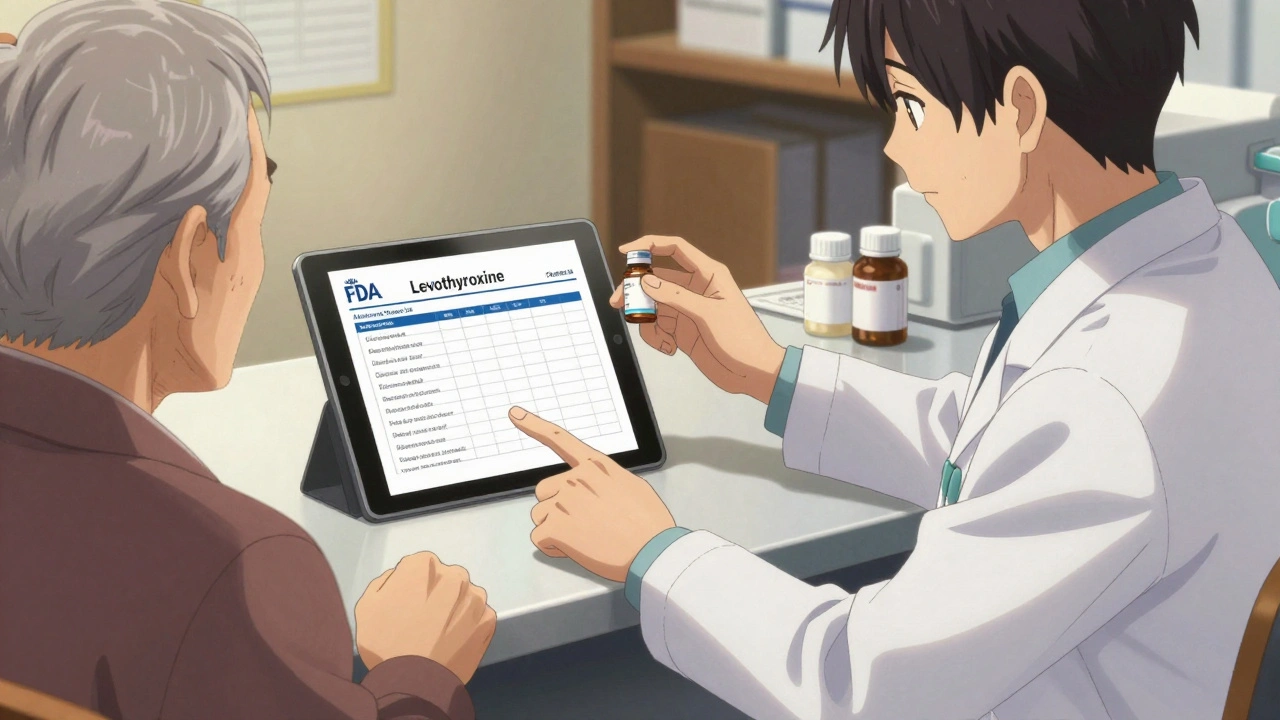
Don’t assume your pharmacy will tell you. Most pharmacists know about authorized generics, but they don’t always mention them unless you ask. Here’s how to check:
- Look up your drug on the FDA’s Authorized Generic List. It’s updated monthly. Search by brand name or generic name.
- Ask your pharmacist: "Is there an authorized generic for this?" Then ask: "Can you order it if it’s not in stock?" Many pharmacies can get it within 24-48 hours.
- Check GoodRx or SingleCare. They often list authorized generics separately from regular generics, with price comparisons.
Pro tip: If you’re on a Medicare Part D plan, authorized generics usually fall under the same tier as regular generics. So your copay won’t be higher - and sometimes it’s lower.
What to Watch Out For
Even though authorized generics are identical to the brand, they often look different. The color, shape, or imprint might change. That can confuse patients. I’ve seen people refuse to take their new pills because they don’t match the old ones - even when the label says "authorized generic."
That’s why counseling matters. Your pharmacist should explain: "This is the same medicine. The only difference is the label. You can switch safely." The American Pharmacists Association recommends saying: "The medication inside is chemically identical to what you’ve been taking. That’s why it’s safe to switch."
Also, not every drug has an authorized version. Only about 10% of brand-name drugs offer one. If yours doesn’t, that doesn’t mean you’re out of luck - just that you’ll need to stick with a traditional generic or pay full price.
Why This Matters for Your Health
For most medications, traditional generics are perfectly safe and effective. But for drugs where tiny changes can cause big problems - like thyroid meds, blood thinners, or seizure drugs - the authorized generic isn’t just a cheaper option. It’s a better one.
Think of it this way: if your car runs best on premium gas, you wouldn’t switch to a cheaper brand just because it’s labeled "equivalent." You’d want the exact same formula. That’s what authorized generics give you for your medicine.
And the savings? Often 30-70% less than the brand. In some cases, you’re paying less than $5 a month for a drug that used to cost $150. That’s life-changing for people on fixed incomes.
What’s Next?
The number of authorized generics is growing. With 17 new ones added in 2025 alone - including Jardiance - this trend isn’t slowing down. Analysts predict 5-7% annual growth through 2027.
But there’s debate. Some experts argue that authorized generics reduce competition, keeping prices higher than they could be. Others say they give patients a reliable, safe option when traditional generics fail.
The bottom line? If you’re paying a lot for a brand-name drug, or if you’ve had trouble with a generic before, ask about the authorized version. It might be the missing piece in your treatment plan.
Are authorized generics as safe as brand-name drugs?
Yes. Authorized generics are made in the same facility, with the same ingredients, and under the same quality controls as the brand-name version. The FDA considers them identical in safety and effectiveness. The only difference is the label.
Can I switch from a brand to an authorized generic without my doctor’s approval?
In most states, pharmacists can substitute a generic - including an authorized one - without contacting your doctor. But for drugs with narrow therapeutic windows (like levothyroxine or warfarin), your doctor may prefer to approve the switch. Always check with your provider if you’re unsure.
Why doesn’t my pharmacy stock authorized generics?
Some pharmacies don’t carry them because they’re less commonly requested. But most can order them within a day or two. Ask for it by name - for example, "Is there an authorized generic for Concerta?" - and they’ll usually find it.
Do authorized generics have the same side effects as the brand?
Yes - because they’re chemically identical, the side effects are the same. But some patients report fewer side effects with authorized generics compared to traditional generics, especially when the brand’s inactive ingredients were causing issues like stomach upset or allergic reactions.
How do I know I’m getting the authorized generic and not just a regular generic?
Check the label. Authorized generics will say the name of the brand drug (e.g., "Colcrys") or include the manufacturer’s name (like "Prasco Laboratories"). Your pharmacy’s system will also show a special code indicating it’s an authorized version. If you’re unsure, ask your pharmacist to confirm.
If you’re paying too much for a prescription, or if you’ve had trouble with a generic before, don’t assume you’re stuck. Ask about the authorized version. It could be the exact same drug - just cheaper.

Geraldine Trainer-Cooper
December 5, 2025 AT 22:21Authorized generics are just the brand in a paper bag
Same pill, same factory, same side effects
Why pay more for a logo?
Nava Jothy
December 6, 2025 AT 09:08Oh my GOD, I can't believe people still don't get this
It's not about money, it's about BIOLOGICAL INTEGRITY
Imagine drinking tap water and calling it 'equivalent' to Evian just because it's H2O
YOU'RE NOT A LAB RAT, HUMAN BEINGS DESERVE CONSISTENCY
😭
Kenny Pakade
December 7, 2025 AT 04:37Why are we letting Big Pharma dictate what we can take?
They're just milking the system again
Let the real generics win, not their little clone
Also, why are we trusting FDA? They're in bed with the big boys
brenda olvera
December 8, 2025 AT 22:08This is actually so cool
I had no idea my thyroid med could be cheaper AND better
My grandma switched last year and she says she finally sleeps through the night
Love when science makes sense
Y'all should ask your doc about this
Kay Jolie
December 10, 2025 AT 01:13The epistemological implications of authorized generics are fascinating
They represent a Hegelian synthesis between capital and consumer welfare
Brand-name pharmaceuticals, as ideological constructs, are sublated into their authentic essence via regulatory fiat
Therapeutic equivalence is not merely pharmacological-it's ontological
And let's not forget the semiotics of the label: the absence of branding as performative humility
pallavi khushwani
December 10, 2025 AT 18:04It's kind of beautiful really
Same medicine, different name
Like how your favorite song sounds the same whether you hear it on vinyl or streaming
Just less money spent
And for people who get sick from filler stuff?
It's not a trick, it's a gift
Dan Cole
December 12, 2025 AT 14:20Actually, the FDA's definition is misleading
"Exact same drug product" is not scientifically accurate
Manufacturing tolerances, batch variability, and excipient interactions are never perfectly identical
Even under the same NDA, minor deviations occur
And you're ignoring that authorized generics are often produced in the same line as the brand-meaning they're subject to the same contamination risks
Also, why is this even a thing? It's corporate consolidation disguised as patient care
Billy Schimmel
December 14, 2025 AT 11:22So you're telling me I could've been paying $5 for my Concerta this whole time?
And I thought I was being smart buying the generic
Man, I feel like a sucker
Also, my kid's teacher said his focus got worse after switching
Guess we're switching back
Thanks for the heads up, I guess
Shayne Smith
December 15, 2025 AT 13:27Wait so if I ask for the authorized generic of Viagra...
is it just a blue pill with no logo?
And does it still make you look like you're having a stroke?
Just wondering for science
Clare Fox
December 17, 2025 AT 01:38So the brand makes the generic version of itself
kinda like if McDonalds started selling their own burger but called it "Cheeseburger Classic"
same beef, same bun, no logo
but now it's cheaper
and somehow the FDA says it's the same
but the original still costs 10x
weird world